
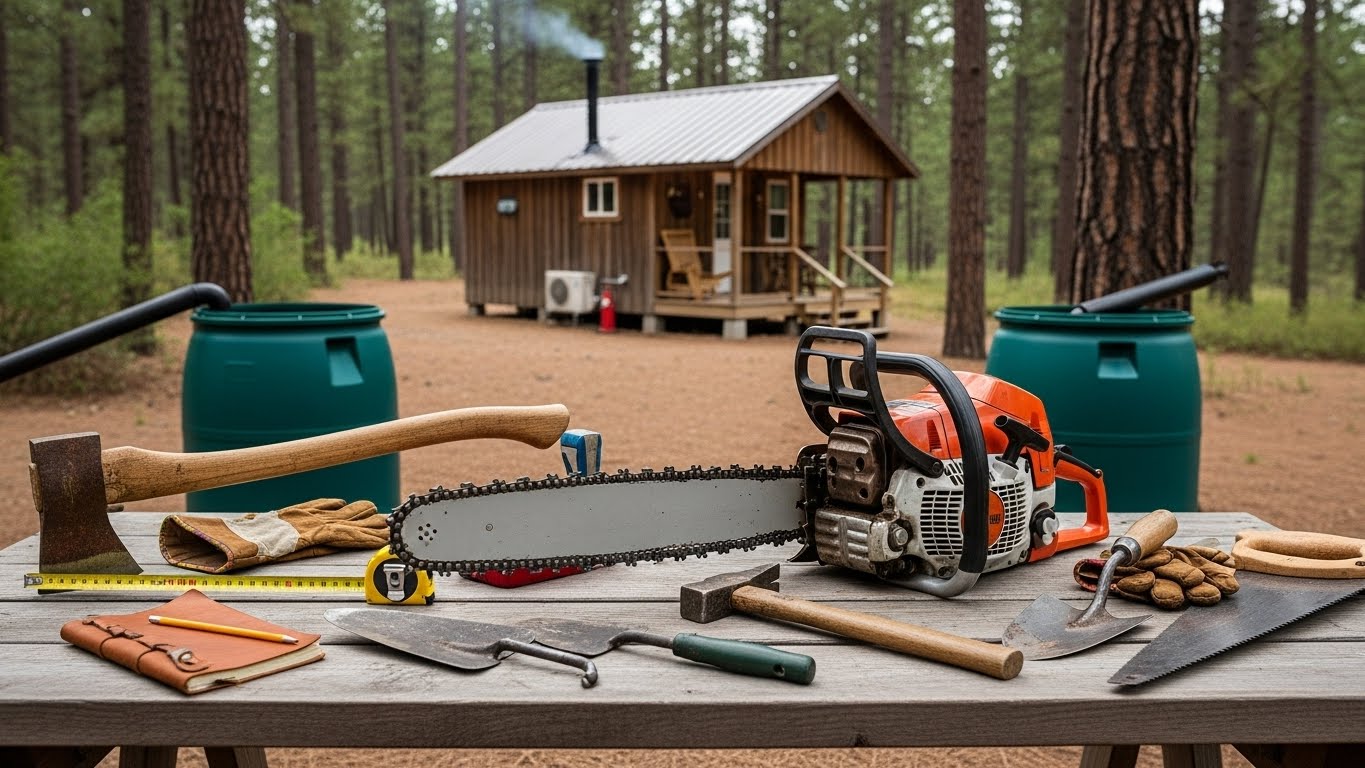
Tools & Gear for Off-Grid Living
Having the right tools can make all the difference when you’re living off-grid. Whether you’re heating with wood, maintaining your property, producing your own power, or hauling water, dependable equipment saves time, reduces physical work, and helps you become more self-sufficient.
This guide brings together our best articles covering the tools, appliances, and equipment used for off-grid living. From chainsaws and log splitters to portable washing machines, rainwater systems, and backup power, you’ll find practical advice to help you choose equipment that will serve you well for years to come.
If you’re just getting started, this page will help you build your equipment one step at a time. If you’ve already established your cabin or homestead, you’ll discover upgrades that can make everyday life easier and more efficient.
Table of Contents
- Essential Off-Grid Tools
- Firewood & Heating Equipment
- Property Maintenance & Seasonal Equipment
- Off-Grid Cabin Appliances
- Water Systems & Equipment
- Power & Energy Equipment
- Choosing Quality Off-Grid Tools
- Related Guides
- Frequently Asked Questions
Essential Off-Grid Tools
Every off-grid property should have a dependable collection of basic tools. While every cabin is different, there are a few items that almost everyone uses regularly.
A quality splitting axe, durable shovel, cordless drill, handsaw, wheelbarrow, and dependable tool set will handle most everyday jobs. Investing in well-built tools usually costs less in the long run than replacing inexpensive equipment every few years.
For property maintenance and emergency preparedness, many off-grid homeowners also keep a multi-purpose survival axe, folding saw, rechargeable headlamp, and heavy-duty work gloves close at hand.
If you’re looking for recommendations, our guides on Off-Grid Survival Axe and Firewood Log Splitter Options for Off-Grid Use explain what to look for before buying.
Firewood & Heating Equipment
If wood is your primary heat source, processing firewood quickly and safely becomes one of the biggest jobs each year.
Whether you’re cutting standing timber or splitting seasoned rounds, the right equipment reduces physical effort while making the job considerably safer.
Helpful guides include:
Many cabin owners also find these tools worthwhile investments:
- a Fiskars splitting axe for smaller jobs
- log tongs for moving heavy rounds without straining your back
- a firewood carrier to reduce trips into the cabin
- a wood moisture meter to ensure firewood is properly seasoned before burning
These simple additions improve stove performance while helping reduce creosote buildup.
Property Maintenance & Seasonal Equipment
Living off-grid means maintaining your own roads, trails, gardens, and buildings throughout the year.
Spring often means clearing brush and repairing winter damage. Summer focuses on mowing, trail maintenance, and building projects, while winter requires dependable snow removal equipment and safe methods for hauling supplies.
Helpful articles include:
- Pelican Sled for Hauling Gear and Firewood
- Best Weed Eater for Clearing Tall Grass
- Off-Grid Survival Axe
Many property owners also rely on a brush cutter attachment for heavy vegetation, hearing and eye protection when operating power equipment, and a sturdy tool organizer that keeps commonly used tools together in one place.
Off-Grid Cabin Appliances
Modern off-grid appliances use far less electricity than older models, making them ideal for cabins powered by solar or generators.
If you’re designing an efficient cabin, start with appliances that provide the biggest improvement in comfort while using the least amount of power.
Explore these guides:
- Mini Fridge for Off-Grid Cabins
- Portable Washing Machine for Off-Grid Living
- Best Off-Grid Appliances (coming soon)
Many cabin owners pair a 12-volt mini fridge with a compact solar system, while a portable washing machine dramatically reduces the time and water required for laundry. Adding LED lanterns and rechargeable work lights provides dependable lighting during power outages or outdoor projects.
Water Systems & Equipment
A dependable water system is one of the most important parts of any off-grid property. Whether your water comes from rainwater collection, a well, or hauled water, reliable storage, filtration, and delivery equipment makes daily life much easier.
Begin with our Off-Grid Water System Guide, then continue with these detailed resources:
- Rainwater Harvesting for Off-Grid Living
- Rain Barrel Starter Kit
- Rainwater Filtration System Setup
- Off-Grid Water Storage Year-Round
- Best Off-Grid Water Filters
- Water Quality Testing Kits
Many systems also benefit from a water transfer pump for filling storage tanks, a sediment filter to remove debris before filtration, and a water testing kit that allows you to monitor water quality throughout the year.
Power & Energy Equipment
Reliable electricity makes cabin life significantly more comfortable while allowing you to power tools, appliances, communications, and lighting.
Whether you’re using a complete solar system or combining solar with a backup generator, choosing efficient equipment helps you get more from every watt you produce.
Helpful guides include:
- Off-Grid Solar Kits
- Best Generators for Off-Grid Cabins
- Generator Fuel Storage
- Backup Power Options
- Off-Grid Lighting
Many off-grid homeowners also keep a portable power station for small jobs, a battery monitor to track system performance, and heavy-duty outdoor extension cords for safely powering equipment around the property.
Choosing Quality Off-Grid Tools
The least expensive tool is rarely the best value.
When buying equipment for off-grid living, look for products that are known for durability, have readily available replacement parts, and require minimal maintenance. Tools that serve multiple purposes often provide the greatest return on your investment because they reduce clutter while handling a wide variety of jobs.
Buying dependable equipment once is usually far less expensive than replacing low-quality tools every few seasons.
Related Tools & Gear Guides
If you’re planning or upgrading your off-grid property, these guides will help you choose the right equipment for every area of cabin life.
Firewood & Heating
- Firewood Log Splitter Options for Off-Grid Use
- Wood Stove Accessories
- Heat-Powered Stove Fans
Outdoor Equipment
- Off-Grid Survival Axe
- Pelican Sled for Hauling Gear and Firewood
- Best Weed Eater for Clearing Tall Grass
Appliances
- Mini Fridge for Off-Grid Cabins
- Portable Washing Machine for Off-Grid Living
Water Systems
- Off-Grid Water System Guide
- Rainwater Harvesting for Off-Grid Living
- Rain Barrel Starter Kit
- Rainwater Filtration System Setup
- Off-Grid Water Storage Year-Round
Power
- Off-Grid Solar Kits
- Best Generators for Off-Grid Cabins
- Generator Fuel Storage
- Backup Power Options
Frequently Asked Questions
What tools are essential for off-grid living?
Every off-grid property should have quality hand tools, a splitting axe, cordless drill, chainsaw, shovel, wheelbarrow, repair tools, and dependable safety equipment.
What appliances use the least electricity?
Mini fridges, portable washing machines, LED lighting, and other energy-efficient appliances are excellent choices for solar-powered cabins.
How do off-grid homes get water?
Most rely on wells, rainwater harvesting systems, springs, or hauled water combined with storage tanks, pumps, and filtration.
Can cordless tools work off-grid?
Yes. Cordless tools work very well when batteries are charged from a solar system or backup generator.
What should I look for when buying off-grid equipment?
Choose tools that are durable, repairable, energy efficient, and built by manufacturers with a proven reputation for reliability.
What safety equipment should every cabin have?
Every cabin should have a fire extinguisher, carbon monoxide detector, smoke alarm, first aid kit, and rechargeable emergency lighting that remains available even during power outages.
Are expensive tools worth the investment?
In many cases, yes. High-quality tools generally last longer, require fewer repairs, and perform better under demanding conditions, making them a smart investment for long-term off-grid living.
Content on this site is for informational purposes only and reflects personal experience and research. Off-grid living laws and conditions vary by location, so readers should always verify local regulations before making decisions. Some links may be affiliate links, which help support this site at no additional cost to you.
updated july 2026