
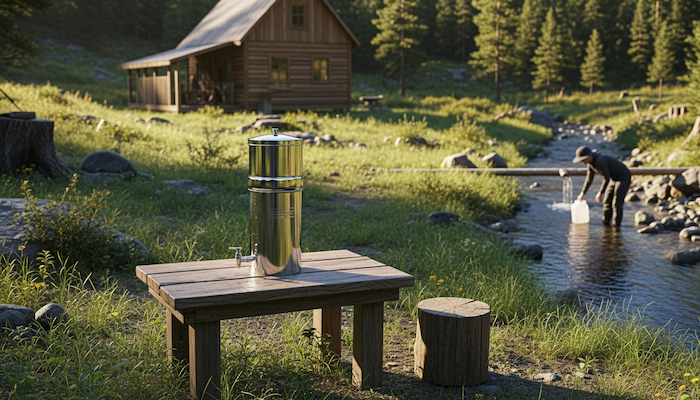
Finding safe, drinkable water is essential if you plan to live off the grid, travel far from the city, or prepare for emergencies. I always keep a reliable water filter close by during remote trips because water sources can be unpredictable—even when they look clean.
On our off-grid property, I’ve relied on rainwater collection, hauled water during dry periods, and filtered water from natural sources when needed. One thing I’ve learned is that clear water isn’t always safe water.
This guide covers everything you need to know about off-grid water filters, how they work, and the safest ways to clean water when you don’t have access to city services or power.
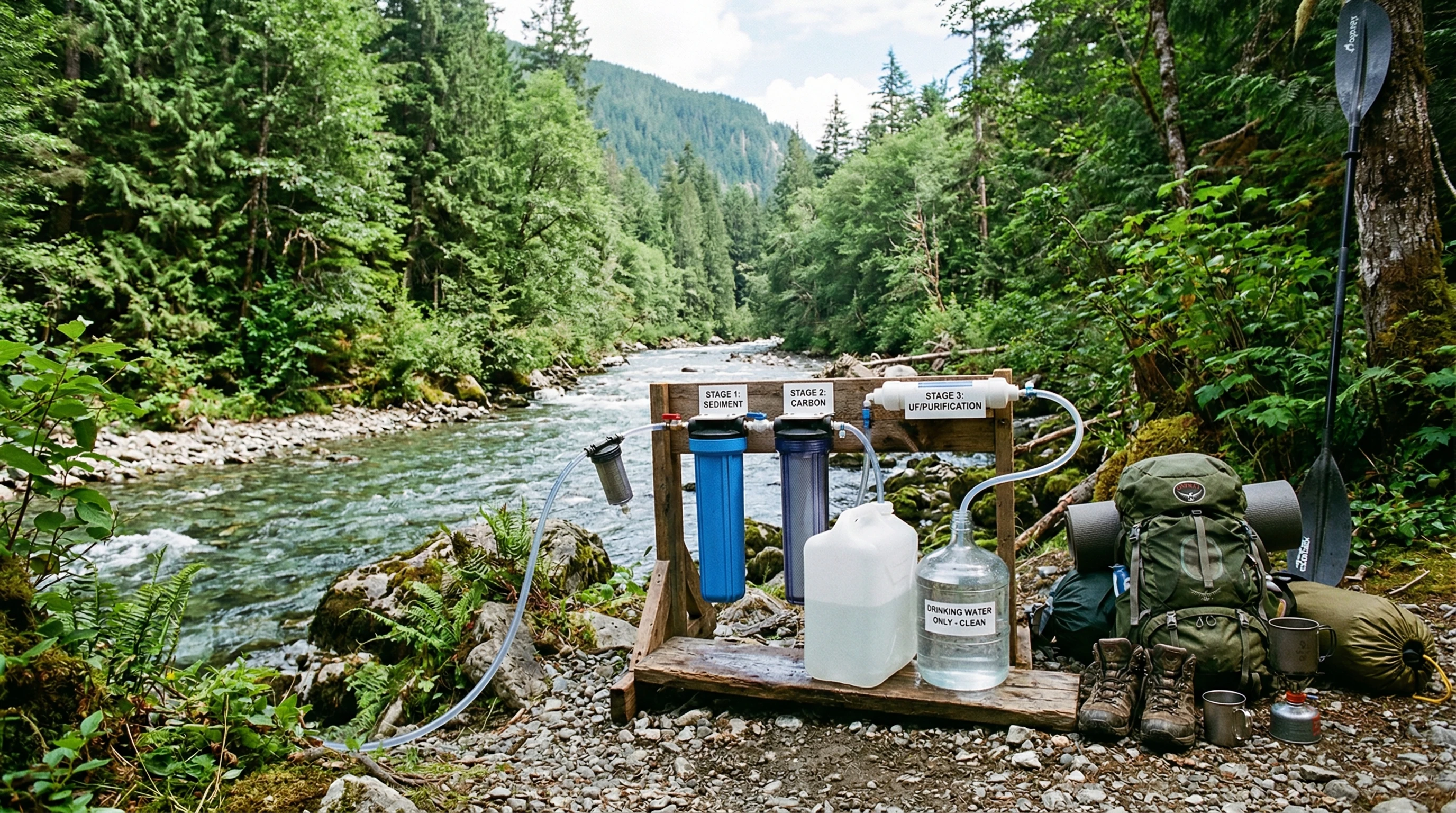
Table of Contents
- Why Off-Grid Water Filters Matter
- How Off-Grid Water Filtration Works
- What Are the Best Water Filter Systems for Off-Grid?
- Gravity Filters (Best for Cabins & Families)
- Pump Filters (Best for Fast Water Access)
- Squeeze Filters (Best Lightweight Option)
- Straw Filters (Best for Emergencies)
- UV Purifiers (Best for Viruses)
- Distillers (Best for Chemicals & Heavy Metals)
- Filtering Water in an Off-Grid System
- Best Ways to Have Water Off the Grid
- How Preppers Purify Water (What Actually Works)
- Things to Consider Before Buying a Water Filter
- Advanced Tips for Off-Grid Water
- Frequently Asked Questions
- Key Takeaways
Why Off-Grid Water Filters Matter
Staying off the grid isn’t just about solar panels and composting toilets—clean water is absolutely critical.
Rivers, lakes, and even rainwater can contain:
- Harmful bacteria
- Parasites (protozoa)
- Viruses
- Chemicals and heavy metals
I’ve learned the hard way that boiling alone isn’t always enough, especially when dealing with chemicals or contaminated runoff.
For a complete setup, check out my guide on building a full water system:
A Complete Guide to Safe Rainwater Collection, Storage & Filtration
Before choosing a filter, it’s important to understand your entire water setup. My complete Off-Grid Water System Guide walks through sourcing, storing, filtering, and protecting your water supply year-round.
Recent floods and wildfires also show how quickly water sources can become unsafe. Having a reliable filter gives you peace of mind whether you’re homesteading, camping, or prepping.
How Off-Grid Water Filtration Works
Off-grid filtration systems remove different types of contaminants:
- Bacteria – Look for filters rated to 0.2 microns (E. coli, Salmonella)
- Protozoa – Giardia, Cryptosporidium
- Viruses – Require UV or advanced filtration
- Chemicals & Metals – Removed with activated carbon or distillation
Pro Tip:
Layering filtration methods (mechanical + carbon) is one of the safest ways to protect your water supply.
What Are the Best Water Filter Systems for Off-Grid?
| Filter Type | Best For | Removes |
|---|
| Gravity Filter | Cabins & Families | Bacteria, Protozoa |
| Pump Filter | Streams & Lakes | Bacteria, Protozoa |
| Sawyer Squeeze | Backpacking | Bacteria, Protozoa |
| LifeStraw | Emergencies | Bacteria, Protozoa |
| UV Purifier | Virus Protection | Viruses |
| Distiller | Chemicals & Metals | Chemicals, Heavy Metals |
Not every filtration method works for every water source. If you’re still deciding on a complete filtration setup, see my comparison of Off-Grid Water Filtration Systems.
Here are the top types of filters I recommend based on real off-grid use:
Gravity Filters (Best for Cabins & Families)
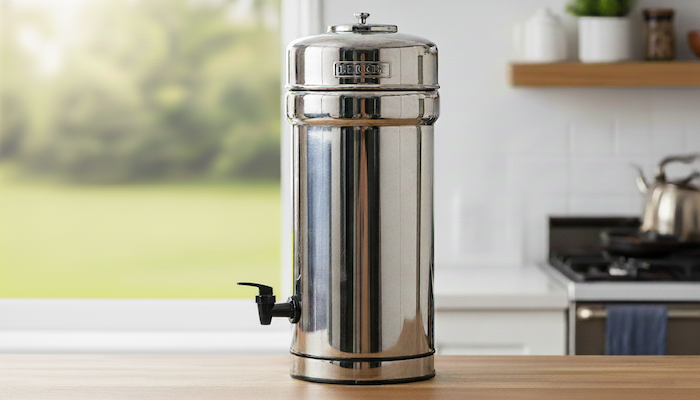
Gravity filters are simple, reliable, and don’t require power.
Top choice: Big Berkey-style systems
“For a dependable long-term setup, I recommend checking out the Big Berkey Gravity Water Filter System —it’s one of the most trusted options for off-grid homes.”
Pump Filters (Best for Fast Water Access)

Great for pulling water quickly from streams and lakes.
The MSR MiniWorks EX Water Filter is a solid, field-tested option that works well in silty or dirty water.
Squeeze Filters (Best Lightweight Option)
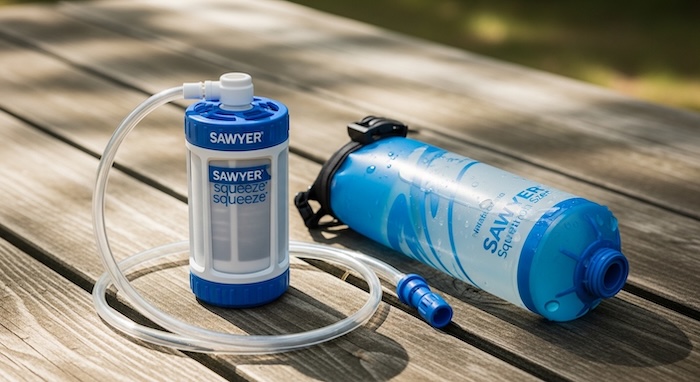
Perfect for backpacking and emergency kits.
The Sawyer Squeeze Water Filtration System is one of the most popular lightweight filters and fits easily into any bug-out bag.
Straw Filters (Best for Emergencies)
Simple, affordable, and effective for personal use.
A LifeStraw Personal Water Filter is a must-have backup—small, affordable, and incredibly useful in emergencies.
UV Purifiers (Best for Viruses)
Kills bacteria and viruses using ultraviolet light.
The SteriPen UV Water Purifier is a great add-on if you want extra protection against viruses.
Distillers (Best for Chemicals & Heavy Metals)
Slow but extremely effective for removing:
- Heavy metals
- Salt
- Chemicals
A countertop water distiller is a smart investment if you’re dealing with questionable water sources long-term.
Filtering Water in an Off-Grid System
Most off-grid setups use multiple filtration stages:
- Surface water: Pump or gravity filter + carbon stage
- Rainwater: Sediment filter → carbon filter
- Wells/springs: Test first, then use multi-stage filtration
Regular testing is one of the most overlooked parts of water safety. I recommend testing any well, spring, or rainwater system before choosing a treatment method. Not sure which test kit to use? See my guide to Water Quality Testing Kits for Off-Grid Water Systems.
If you’re setting up a complete cabin or homestead water system, my Off-Grid Water Filtration Systems Compared guide explains the pros and cons of gravity, ceramic, UV, and whole-house filtration systems.
For extra safety:
- Add unscented bleach (emergency use)
- Use UV purification
- Boil when unsure
Best Ways to Have Water Off the Grid
Here’s what works best in real life:
- Secure a water source (rain, stream, or well)
- Use layered filtration
- Store water properly
- Always have a backup method
Simple additions like rain barrel diverter kits and sediment filters can make a huge difference in water quality and filter lifespan.
If you’re collecting rainwater, start with Rainwater Harvesting: From Roof to Tap to build a safe collection system
If you’re just getting started with rainwater harvesting, my Rain Barrel Starter Kit Guide is a great place to begin. Once you’ve collected water, proper Off-Grid Water Storage Year Round becomes just as important as filtration. Safe storage helps prevent contamination and ensures you have water available during emergencies and freezing weather.
How Preppers Purify Water (What Actually Works)
Preppers rely on redundancy:
- Cloth/coffee filter (prefilter)
- Portable filters (Sawyer, LifeStraw)
- Chemical tablets
- Boiling
Water purification tablets are worth keeping on hand—they’re lightweight and can treat water when filters aren’t an option.
Things to Consider Before Buying a Water Filter
- Micron rating (0.2 or lower is ideal)
- Filter lifespan
- Flow rate
- Ease of cleaning
- Portability
Experience Tip:
I always carry a bandana or coffee filters to pre-filter muddy water—it saves your main filter and extends its life.
A collapsible water container is useful for transporting filtered water back to camp or the cabin.
Advanced Tips for Off-Grid Water
- Test your water regularly
- Keep spare filters
- Use multi-stage filtration
- Rotate stored water every 3–6 months
A simple water testing kit can help you catch contamination issues early before they become a problem.
Frequently Asked Questions
What’s the best filter for long-term off-grid living?
The Big Berkey or Alexapure Pro are excellent for home use.
What about backpacking?
Sawyer Squeeze or MSR MiniWorks are reliable and lightweight.
Do filters remove viruses?
Not all—combine with UV or chemical treatment for full protection.
Are DIY filters enough?
No—use them only as a pre-filter, then follow up with a proper system.
Can rainwater be filtered and used for drinking?
Yes. Rainwater can be a safe source of drinking water when it is collected properly and passed through appropriate sediment and filtration systems.
How long do off-grid water filters last?
The lifespan depends on the filter type and water quality. Some portable filters last hundreds of gallons, while gravity filter elements may last several years with proper maintenance.
Is boiling water better than filtering?
Boiling kills bacteria, viruses, and parasites, but it does not remove sediment, chemicals, or heavy metals. Filtration is often the more complete treatment option.
Key Takeaways
A little planning goes a long way when it comes to off-grid water.
The safest approach is:
- ✔ Use multiple filtration methods
- ✔ Keep backup options
- ✔ Maintain your equipment
Clean water isn’t just about convenience—it’s about survival.
🔒 Affiliate Disclosure
This post may contain affiliate links. If you purchase through these links, I may earn a small commission at no extra cost to you. I only recommend products I trust and would use myself in an off-grid setting.
© 2026, Teresa. All rights reserved.