
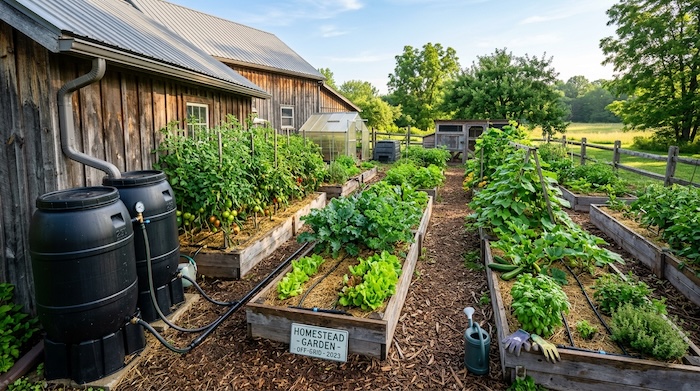
Rainwater irrigation is a game changer for anyone looking to grow a healthy, sustainable garden. Using rainwater not only saves money on water bills, but also gives plants a fresh, natural drink that they tend to love. I’m always surprised at how much healthier my garden looks after a steady rain compared to using tap water. If you’re thinking about setting up rainwater irrigation, there are plenty of ways to make the most of every drop Mother Nature sends your way.
You can also pair this setup with my guides on Off-Grid Water System Guide, Rain Barrel Starter Kit for Safe Everyday Use, and Off-Grid Water Storage Year Round to build a more reliable water system for your garden and homestead.
Whether you’re watering raised beds, greenhouse crops, fruit trees, herbs, or container gardens, a simple rainwater irrigation setup can dramatically reduce water waste while helping plants stay healthier during long stretches of hot summer weather.
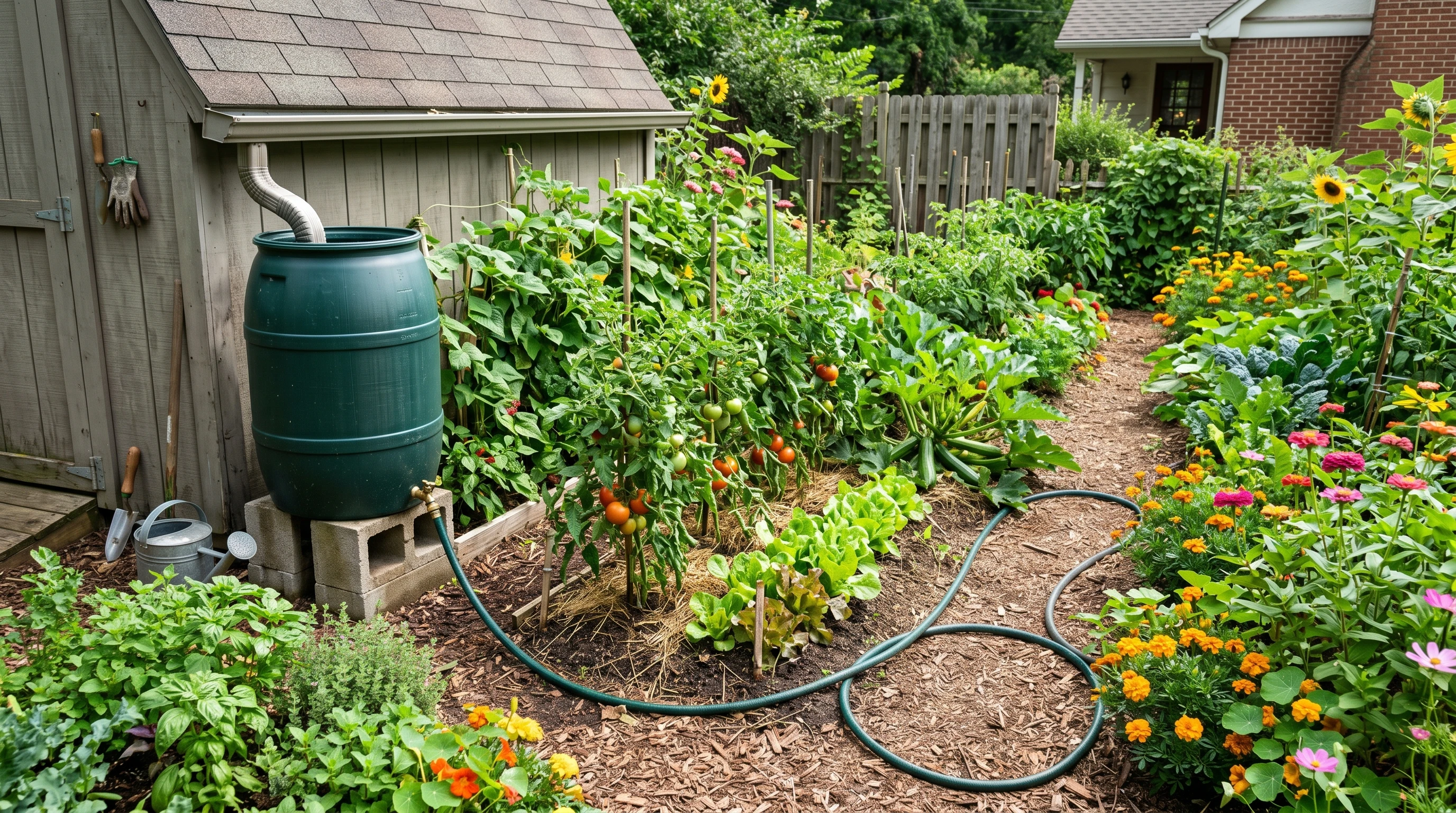
Table of Contents
- Why Harvest Rainwater for Garden Irrigation?
- Rainwater Collection Basics
- The Most Efficient Irrigation Techniques for Rainwater
- Common Rainwater Irrigation Mistakes to Avoid
- What Is the 30/30 Rule for Irrigation?
- The Best Type of Irrigation for Home Gardens
- How to Use Rainwater for Irrigation
- Extra Tips for Successful Rainwater Irrigation
- Rainwater Irrigation Challenges and How to Fix Them
- Real-Life Examples of How Gardeners Use Rainwater Efficiently
- Frequently Asked Questions
- Final Thoughts
Why Harvest Rainwater for Garden Irrigation?
Using rainwater is incredibly important for anyone trying to garden more sustainably. First, rainwater is naturally soft and free of the chemicals often found in tap water, like chlorine and fluoride. Plants usually respond better to this gentle, chemical-free water with stronger growth and deeper green leaves.
Collecting rainwater also helps conserve fresh drinking water, lowers utility bills, and reduces stormwater runoff that can overwhelm local drainage systems. In dry areas or during drought conditions, stored rainwater can keep your plants alive when watering restrictions kick in.
I’ve found that setting up even a small barrel at the end of a gutter makes a huge difference. Over a year, a single rain barrel can collect hundreds of gallons of water, enough to keep tomatoes, herbs, flowers, and raised beds thriving through hot summer weather.
Rainwater also tends to warm naturally outdoors, which plants usually prefer over extremely cold tap water straight from a hose. In my experience, vegetable gardens especially seem to respond better to stored rainwater during the peak of summer.
If you’re new to water collection, my post on Best Off-Grid Water Filters: How To Find Safe Drinking Water Anywhere also explains how to keep collected water cleaner and safer for long-term use.
Rainwater Collection Basics

If you’re just getting started, don’t stress. Rainwater collection can be as simple or as advanced as you want it to be. Most gardeners begin with a basic rain barrel setup by placing a barrel under a roof downspout.
A few things make a big difference when building a reliable system.
Gutter Filters
Keeping leaves and debris out of your barrel helps your water stay cleaner and protects irrigation lines from clogging. A Rainwater Downspout Filter Kit works really well for this and helps reduce maintenance later on.
Overflow Pipes
Overflow pipes prevent flooding once your barrel fills up, safely moving excess water away from your home’s foundation. This is especially important during heavy rainstorms when barrels can fill surprisingly fast.
Tap or Spigot
A good barrel should have a solid spigot near the bottom so you can connect a hose or fill watering cans easily. I’ve had good luck using a Food Grade Rain Barrel Spigot Kit for DIY setups because they’re easy to install and hold up well outdoors.
For larger gardens, you can connect multiple barrels together or even install larger storage tanks. Some gardeners repurpose Food Grade 55 Gallon Water Barrels to save money while recycling useful materials at the same time.
If you want even larger storage capacity, I’d also recommend reading IBC Tote Water Storage: Is It Safe For Drinking Water? because IBC totes can store a huge amount of water for gardens, greenhouses, and homesteads.
I’ve also found that placing barrels closer to the areas you water most often saves a surprising amount of time during the hottest parts of summer when gardens may need daily watering.
The Most Efficient Irrigation Techniques for Rainwater
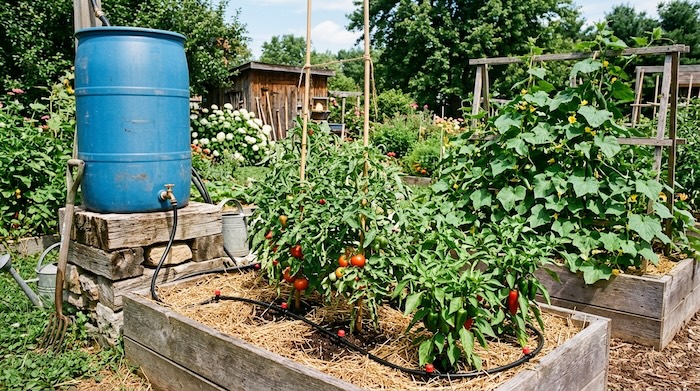
If you want to make every drop count, it helps to understand the most efficient irrigation methods available. From my experience, drip irrigation wins by a mile in most home gardens.
Drip Irrigation
Drip systems deliver water directly to the base of plants. With slow, steady watering, almost no moisture gets lost to evaporation or runoff. Roots receive exactly what they need without wasting water between rows.
These systems work especially well with rain barrels and gravity-fed setups that don’t require electricity or pumps. A Gravity Fed Drip Irrigation Kit for Rain Barrels is one of the easiest ways to get started.
Gravity-fed systems work best when the rain barrel is elevated slightly above garden level. Raising barrels on cinder blocks or a sturdy wooden platform improves water pressure naturally and helps water move more evenly through irrigation lines.
Drip irrigation works beautifully for:
- Raised beds
- Vegetable gardens
- Greenhouses
- Container gardens
- Fruit trees
- Berry patches
One thing I really like about drip irrigation is how expandable it is. You can start with one raised bed and slowly add additional lines as your garden grows.
Soaker Hoses
If drip systems seem too complicated, soaker hoses are a great alternative. These hoses slowly seep water along their entire length, helping moisture soak directly into the soil.
Just snake a Heavy Duty Soaker Hose around your plants, connect it to your rain barrel, and let gravity do the work.
I’ve found soaker hoses work especially well in raised beds because they distribute water evenly without splashing soil onto leaves. Covering them lightly with mulch helps reduce evaporation even more and keeps the soil cooler during hot weather.
Hand Watering
For smaller gardens or delicate plants, hand watering still works well. I often fill a watering can directly from my rain barrel and target the thirstiest plants manually.
Even with automated systems, I still hand water seedlings and newly transplanted vegetables sometimes because young plants often need more careful attention until their roots become established.
A sturdy 2 Gallon Garden Watering Can is still one of the handiest garden tools to keep around, especially during dry spells.
No matter which irrigation method you choose, mulch makes a huge difference. Adding straw, bark, leaves, or grass clippings helps soil hold moisture longer and reduces how often you need to water.
You may also like my post on How To Keep Water From Freezing Off Grid if you use rain barrels in colder climates.
Common Rainwater Irrigation Mistakes to Avoid
One of the biggest mistakes people make is assuming a single rain barrel will provide endless water. During long dry spells, barrels can empty surprisingly fast, especially with larger gardens or greenhouses.
Another common issue is forgetting to clean gutters and filters regularly. Leaves, roof grit, and debris can clog irrigation lines surprisingly quickly if you don’t maintain your collection system.
It’s also important not to place barrels directly on the ground. Elevating them improves water pressure and makes it much easier to connect hoses or drip irrigation systems.
Overwatering is another common problem. Too much water can be just as harmful as too little, especially for tomatoes, peppers, cucumbers, and many herbs that prefer well-drained soil.
What Is the 30/30 Rule for Irrigation?
The 30/30 rule comes up a lot in the gardening world. Here is how it works: water your plants for 30 minutes, then let them rest for 30 minutes to soak everything in before checking moisture levels again.
This rule helps prevent overwatering, which is really important for both garden health and conserving rainwater. After the first 30-minute watering cycle, pause and check the soil. If it still feels moist a few inches down, you probably don’t need to water again.
This keeps roots from becoming soggy and helps your rainwater supply last much longer through dry spells.
I like using the 30/30 rule on raised beds and larger containers because those tend to dry out quickly but can also flood fast if you overdo it.
Remember, every garden is different. Sandy soil drains quickly while clay-heavy soil holds moisture longer. Always poke your finger into the dirt before giving a second round of water. Over time, this simple habit helps you develop a much better feel for your garden’s watering needs.
The Best Type of Irrigation for Home Gardens
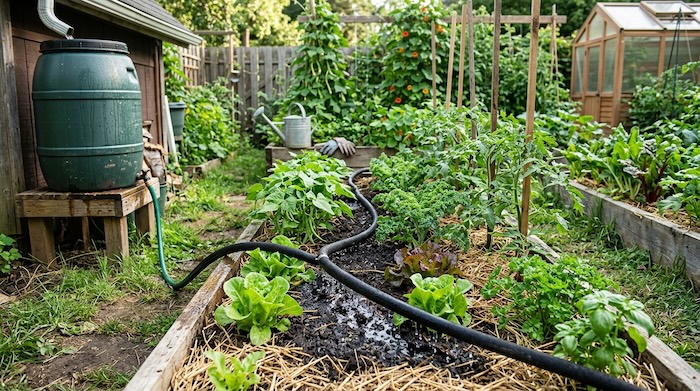
For most gardeners, drip irrigation is still the top choice, especially when using rainwater. It puts water exactly where plants need it, reducing waste and keeping leaves dry.
Wet foliage often leads to fungal issues and mildew problems, especially in humid climates or greenhouses, so dry leaves can mean healthier plants overall.
Gravity-fed drip irrigation kits work right out of a rain barrel as long as the barrel is elevated above your beds. If your garden is larger or spread out over a slope, a small Solar Powered Water Pump for Rain Barrels can help push water through longer irrigation lines.
Pros of Drip Irrigation
- Water goes directly to the roots
- Very little water lost to evaporation
- Easy to expand as gardens grow
- Reduces weeds between rows
- Helps prevent fungal diseases
Cons of Drip Irrigation
- Initial setup takes a little planning
- Tubing needs occasional maintenance
- Emitters can clog if filters are ignored
Soaker hoses rank a close second for ease and price. They work best laying flat on the ground and are more effective when allowed to fully drain between uses.
Both systems are flexible and easy to expand as your garden grows. Most modern irrigation kits allow you to attach extra tubing and connectors whenever needed, making expansion pretty simple over time.
How to Use Rainwater for Irrigation
Getting rainwater to your plants is easier than it sounds. Here’s how I make it work in my garden.
Install a Barrel or Tank
Place your rain barrel under a downspout from the roof. Raise it on cinder blocks or a sturdy stand for more gravity pressure because that’s key for easy water flow.
Connect Irrigation Tubing
Attach a hose, drip line, or soaker hose directly to your barrel’s spigot. Most Drip Irrigation Starter Kits come with built-in filters to help prevent debris from clogging the lines.
Add Filters and Screens
Keep roof debris, insects, and mosquito larvae out by using a tight mesh screen over the downspout or barrel opening.
Let Gravity Do the Work
For smaller systems, gravity usually moves water just fine without a pump as long as the barrel sits at least slightly above garden level.
On days when it hasn’t rained in a while, I sometimes fill a watering can manually and give the thirstiest plants a little extra water by hand. This combination lets me stretch my rainwater supply much further without stressing about the system during dry weather.
Extra Tips for Successful Rainwater Irrigation
Keep an Eye on Water Levels
A clear tube or simple gauge on the side of your barrel helps you quickly see how much water you have stored.
Clean Gutters Regularly
Clogged gutters mean less water reaches your barrels and more debris ends up inside your tank.
Use Mulch Generously
Mulching around plants helps soil stay cool while reducing evaporation and stretching your stored rainwater much further.
Consider a Diverter
A Rain Barrel Downspout Diverter Kit lets you switch between filling the barrel and allowing water to flow normally during major storms once the barrel is already full.
Group Plants With Similar Water Needs
Grouping moisture-loving plants together makes irrigation easier and helps avoid wasting water on plants that prefer drier soil.
If you garden in a greenhouse like I do, rainwater irrigation can be even more valuable because greenhouse plants dry out much faster during hot summer weather. A simple drip irrigation setup inside a greenhouse can save a huge amount of watering time throughout the growing season.
You may also enjoy my post on Starting Seeds Off-Grid: How to Grow Strong Seedlings Without a Garden Center if you grow vegetables from seed.
Rainwater Irrigation Challenges and How to Fix Them
Algae and Mosquitoes
Sunlight on standing water encourages algae growth and attracts mosquitoes. Tight-fitting lids, mesh screens, and dark-colored barrels help solve this problem quickly.
Roofing Materials
Older roofing materials or chemically treated roofs may leach contaminants into collected rainwater. For food gardens, it’s always smart to use clean roofing materials and basic filtration whenever possible.
Freezing Weather
If you live in a cold climate like I do, empty and disconnect barrels before hard freezes arrive to prevent cracking and damage.
Low Water Pressure
Sometimes gravity alone isn’t enough, especially if you’re watering uphill or running long irrigation lines. In those cases, a simple solar-powered or battery-powered pump can give your system a major boost.
Leaks and Drips
Regularly inspecting hoses, barrels, and fittings helps catch leaks early before they waste large amounts of water.
Real-Life Examples of How Gardeners Use Rainwater Efficiently
Small Urban Gardens
Many small-space gardeners use stacked barrels for container gardens and raised beds without needing traditional hose hookups.
Community Gardens
Larger community gardens often collect rainwater in shared tanks and run soaker hoses through long vegetable rows for easy watering.
Food Forests and Fruit Trees
Some gardeners run drip irrigation lines to young fruit trees during their first growing seasons, helping roots establish quickly without relying heavily on city water.
School Gardens
School gardens often collect rainwater in large barrels while teaching students about conservation, gardening, and sustainability at the same time.
Frequently Asked Questions
What irrigation method is most efficient for using rainwater?
Drip irrigation is generally considered the most efficient method because it delivers water slowly and directly to plant roots while minimizing evaporation and runoff.
How does the 30/30 rule apply in home irrigation?
The 30/30 rule helps prevent overwatering by watering for 30 minutes, waiting 30 minutes, then checking soil moisture before watering again.
Which irrigation system works best for home gardens?
Most home gardeners do very well with gravity-fed drip irrigation systems connected directly to rain barrels. Soaker hoses are also a great low-cost option.
Any tips for using rainwater on a budget?
Repurposing food-grade barrels, starting with soaker hoses, and heavily mulching garden beds are all excellent ways to keep costs down.
Can rainwater be stored long term for irrigation?
Yes. As long as containers stay covered, protected from sunlight, and cleaned periodically, rainwater can safely be stored for future irrigation use.
Final Thoughts
Building a rainwater irrigation system is one of the simplest ways to make your garden more self-sufficient while reducing water waste and lowering utility costs. Even a small setup can provide a surprising amount of water throughout the growing season.
The nice thing is you do not need to build a complicated system right away. Start with a single rain barrel, a basic soaker hose, or a simple drip irrigation kit and expand from there as your garden grows.
Over time, you’ll likely find yourself relying more and more on stored rainwater while enjoying healthier plants, lower water bills, and a garden that feels far more sustainable overall.
This post may contain affiliate links, including Amazon affiliate links. If you purchase through these links, I may earn a small commission at no extra cost to you. The information shared on this website is based on personal experience and research and is intended for general informational purposes only. Always use proper safety precautions and follow manufacturer guidelines when using tools, equipment, or outdoor gear.
© 2026, Teresa. All rights reserved.