
Whether you’re preparing for power outages, living off-grid, or simply want reliable backup power, proper fuel storage is just as important as choosing the right generator.
A generator without fuel is little more than an expensive piece of equipment. Unfortunately, many people discover this during an emergency when gas stations are closed, roads are blocked, or fuel supplies are limited.
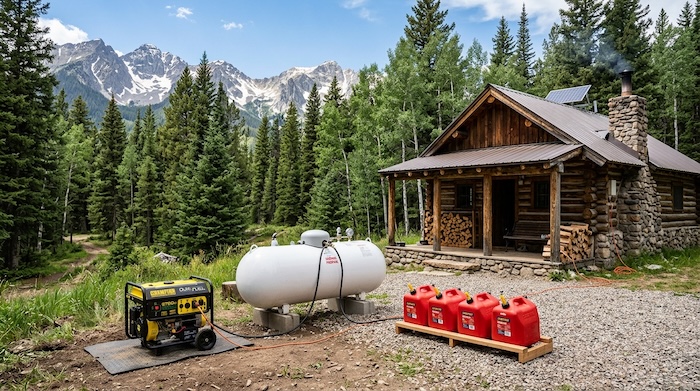
Over the years, we’ve learned the importance of fuel storage firsthand. At our off-grid cabin, we use a dual-fuel generator that can run on either gasoline or propane. We also have a large propane tank because our hot water tank, cooking stove, and furnace all run on propane. Having multiple fuel options gives us flexibility and peace of mind during extended storms, heavy snowfall, or the darkest part of winter when our solar panels may not produce enough power.
For more backup power ideas, see my guide on Backup Power Options for Off-Grid Living.
In this guide, we’ll compare gasoline, propane, and diesel storage, discuss fuel shelf life, and help you decide which fuel storage system works best for your situation.
- Why Fuel Storage Matters
- How Much Fuel Should You Store?
- Gasoline Storage
- Propane Storage
- Diesel Storage
- Fuel Shelf Life Comparison
- Best Fuel Containers
- Fuel Stabilizers Worth Using
- Winter Fuel Storage Tips
- Generator Fuel Safety
- Which Fuel Is Best for Off-Grid Living?
- Fuel Rotation Schedule
- Frequently Asked Questions
- Final Thoughts
Why Fuel Storage Matters
Most people focus on generator wattage, fuel consumption, and runtime, but overlook fuel storage entirely.
Without a proper storage plan, you may face:
- Fuel shortages during emergencies
- Fuel that has gone stale
- Water contamination
- Reduced generator performance
- Difficulty starting your generator when you need it most
A well-planned fuel storage system ensures your generator is always ready to run when needed.
If you’re still choosing a generator, you may also want to read my guide on Best Generators for Off-Grid Living or compare different Off-Grid Power Options for Cabins before deciding on a backup power system.
How Much Fuel Should You Store?
The amount of fuel you need depends on:
- Generator size
- Daily runtime
- Climate
- Length of expected outages
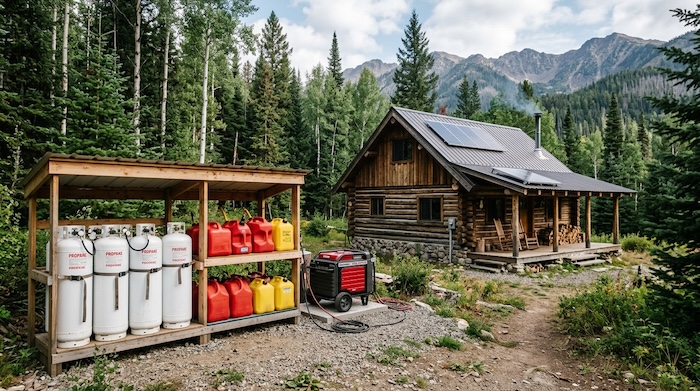
For most cabins and emergency backup systems, storing enough fuel for 3 to 7 days is a good starting point.
A typical 5,000-watt generator may consume:
- 0.5 to 0.75 gallons of gasoline per hour
- Approximately 1 gallon per hour under heavy load
Running a generator for 8 hours per day could require:
- 4 to 8 gallons daily
- 28 to 56 gallons for a week
Knowing your fuel consumption helps determine how much storage you need.
Gasoline Storage
Gasoline is the most common generator fuel because many portable generators use it.
Advantages
- Widely available
- High energy density
- Easy to transport
- Compatible with many generators
Disadvantages
- Limited shelf life
- Can become stale
- Requires stabilizers for long-term storage
- More flammable than propane
Without treatment, gasoline typically lasts only 3 to 6 months.
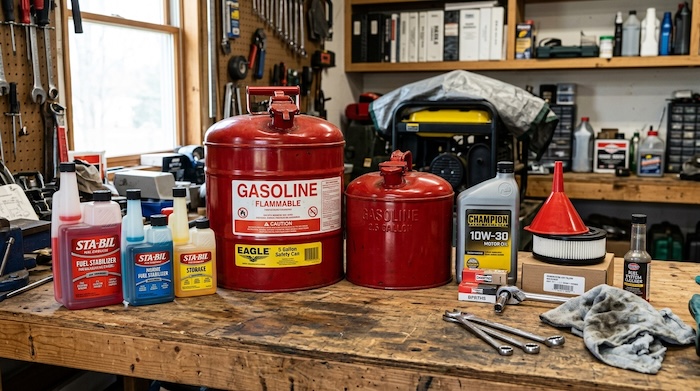
With a quality fuel stabilizer such as STA-BIL Fuel Stabilizer, you can significantly extend gasoline shelf life and help prevent carburetor issues caused by stale fuel.
Recommended Storage
Consider using:
- No-Spill Fuel Cans are popular because they reduce spills during refueling.
- Scepter Military-Style Fuel Cans are known for their durability and large capacity.
- Eagle Safety Fuel Cans are designed for long-term fuel storage and added safety.
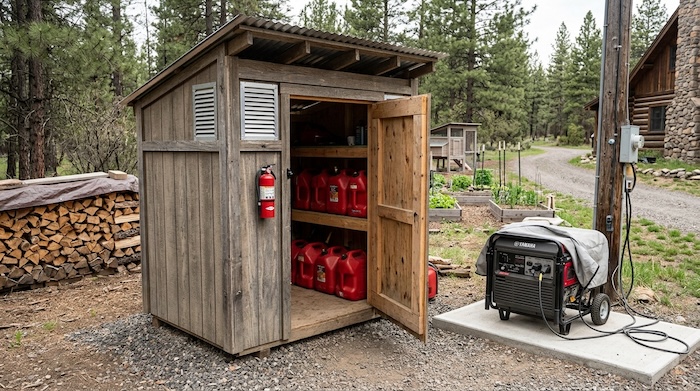
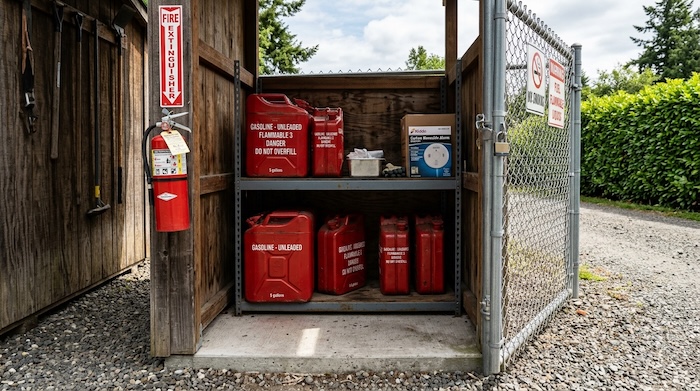
Store containers in a cool, dry, well-ventilated area away from ignition sources.
Propane Storage
Propane is one of the easiest fuels to store long-term.
Unlike gasoline and diesel, propane does not degrade over time.
Advantages
- Indefinite shelf life
- Clean burning
- No fuel stabilizers needed
- Less maintenance for generators
- Excellent for emergency preparedness
Disadvantages
- Tanks take up space
- Refilling may require travel
- Slightly lower energy density than gasoline
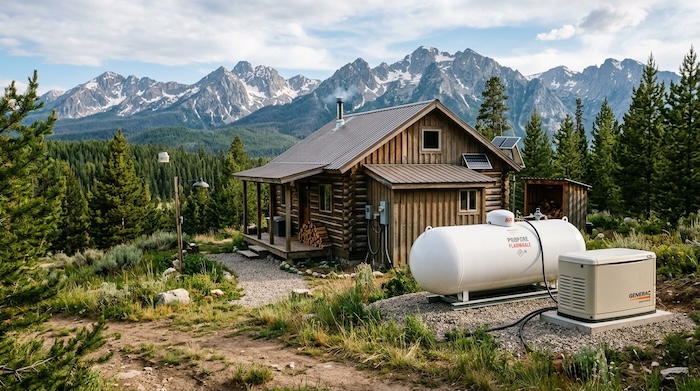
At our off-grid property, propane is a major part of our energy system. Our large propane tank supplies the hot water tank, cooking stove, and furnace. Because our generator can also run on propane, we always have a substantial fuel reserve available.
This setup eliminates concerns about fuel going stale and provides reliable backup power year-round.
Because propane plays such an important role in our cabin setup, it also works well alongside a wood stove. You may also enjoy my guide to Off-Grid Heating Options for Winter Survival.
Recommended Storage
Common tank sizes include:
- 20 lb propane tanks
- 30 lb propane tanks
- 100 lb propane tanks
- Large residential tanks
Adding a propane tank gauge can make monitoring fuel levels much easier.
A propane tank gauge is one of the simplest upgrades you can make, helping prevent unexpected fuel shortages during storms or extended power outages.
Diesel Storage
Diesel generators are often used for larger off-grid homes and farms.
Advantages
- Excellent fuel efficiency
- Long engine life
- High reliability
- Better for large power demands
Disadvantages
- Fuel can grow algae or bacteria
- Water contamination concerns
- Fuel can gel in extremely cold temperatures
With proper treatment, diesel can often be stored for 12 to 24 months.
Many diesel owners use fuel conditioners and water-separating funnels to extend storage life.
A water-separating fuel funnel can help remove moisture and debris before fuel enters your storage tank or generator.
Fuel Shelf Life Comparison
Fuel TypeShelf LifeStabilizer NeededGasoline3–6 monthsYesGasoline (treated)12+ monthsYesPropaneIndefiniteNoDiesel12–24 monthsUsuallySolar Generator BatteriesYearsNo fuel required
For long-term preparedness, propane is difficult to beat.
Best Fuel Containers
Not all fuel containers are created equal.
Look for containers designed specifically for fuel storage.
Good Choices
Gasoline
- No-Spill Fuel Cans
- Eagle Safety Cans
- Scepter Fuel Containers
Diesel
- Heavy-duty diesel transfer tanks
- Approved fuel caddies
Propane
- Certified propane cylinders
- Residential propane tanks
Avoid reusing containers not intended for fuel storage.
Fuel Stabilizers Worth Using
If you store gasoline or diesel, fuel stabilizers can significantly extend shelf life.
Popular options include:
- STA-BIL Storage Fuel Stabilizer for long-term gasoline storage.
- PRI-G Fuel Treatment for preserving stored gasoline.
- Star Tron Fuel Treatment to help maintain fuel quality during storage.
Fuel stabilizers are inexpensive insurance compared to replacing stale fuel or repairing carburetors.
Winter Fuel Storage Tips
Cold weather introduces additional challenges.
Gasoline
- Keep containers full to reduce condensation.
- Rotate fuel regularly.
Propane
- Propane performs very well in winter.
- Keep tank regulators protected from snow and ice.
Diesel
- Use winter-grade diesel when available.
- Add anti-gel treatment in cold climates.
For more winter preparedness ideas, see my guide on How to Prepare for Winter Off-Grid.
Generator Fuel Safety
Always follow safe storage practices.
Do
- Store fuel away from living areas.
- Use approved containers.
- Label all containers clearly.
- Keep a fire extinguisher nearby. A quality ABC-rated fire extinguisher is a worthwhile investment anywhere fuel is stored or generators are operated.
- Inspect containers regularly.
Don’t
- Store fuel inside your home.
- Smoke near fuel containers.
- Overfill containers.
- Store fuel near heat sources.
Installing a carbon monoxide detector is one of the most important safety measures when operating any fuel-powered generator, especially around cabins, garages, and workshops.
You may also want to read my complete Wood Stove Safety Guide for additional off-grid safety tips.
If your generator is part of a larger emergency power plan, Backup Power Options for Off-Grid Living covers additional solutions worth considering.
Which Fuel Is Best for Off-Grid Living?
For most off-grid cabins and backup power systems:
Best Overall
Propane
- Unlimited shelf life
- Low maintenance
- Reliable year-round storage
Most Common
Gasoline
- Easy to obtain
- Portable
- Works with many generators
Best for Heavy-Duty Use
Diesel
- Efficient
- Durable
- Excellent for large systems
A dual-fuel generator offers the best flexibility because you can switch between gasoline and propane depending on availability.
That’s one of the reasons we chose a dual-fuel model for our cabin.
Fuel Rotation Schedule
One of the easiest ways to keep stored fuel fresh is to rotate it regularly.
A simple fuel rotation plan might look like:
- Label fuel containers with the purchase date.
- Use the oldest fuel first.
- Refill containers with fresh fuel.
- Inspect containers for leaks or damage.
- Check propane tanks annually for corrosion or valve issues.
Regular fuel rotation helps ensure your generator will start when you need it most and reduces the risk of storing stale fuel.
For a complete emergency preparedness plan, you may also want to read my guide on Long-Term Food Storage for Off-Grid Living.
Frequently Asked Questions
How long can gasoline be stored for a generator?
Untreated gasoline typically lasts 3 to 6 months. With fuel stabilizer, it can often remain usable for a year or more.
Is propane better than gasoline for emergency preparedness?
For long-term storage, propane is generally better because it does not go stale.
Can fuel be stored in a garage?
Check local regulations. Fuel should always be stored in approved containers away from ignition sources.
How often should stored fuel be rotated?
Many people rotate gasoline every 6 to 12 months and replenish with fresh fuel.
What is the safest generator fuel to store?
Propane is often considered one of the safest and easiest fuels for long-term storage because it remains stable indefinitely.
Final Thoughts
The best generator fuel storage system depends on your generator, climate, and power needs.
For many off-grid homesteads and cabins, propane offers the simplest long-term storage solution. Gasoline remains convenient and widely available, while diesel shines in larger power systems.
Many off-grid homesteaders eventually combine generators with solar systems. If you’re considering that route, my guide on Choosing the Right Solar Panels for Your Off-Grid Lifestyle can help you get started.
No matter which fuel you choose, proper storage, regular rotation, and safe handling will help ensure your generator is ready whenever you need it.
If you’re building a complete off-grid power system, proper fuel storage should be part of your overall backup power plan. A little preparation today can save a lot of frustration during a winter storm, power outage, or emergency situation.
Disclosure
This post may contain affiliate links, including Amazon affiliate links. If you purchase through these links, I may earn a small commission at no extra cost to you. The information shared on this website is based on personal experience and research and is intended for general informational purposes only. Always use proper safety precautions and follow manufacturer guidelines when using tools, equipment, or outdoor gear.
© 2026, Teresa. All rights reserved.