
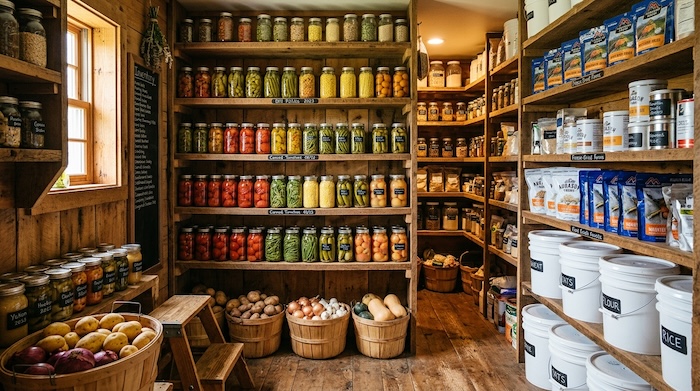
When most people think of pantry storage, they picture neatly organized shelves filled with matching containers. While a tidy pantry certainly looks nice, good pantry storage is about much more than appearance.
Living off-grid has taught me that an organized pantry can save money, reduce food waste, and provide peace of mind during emergencies. Whether you’re storing a few weeks of groceries or building a long-term food supply, having a system in place makes managing your food much easier.
If you’re just getting started, my guide on Building a Long-Term Food Supply walks through the foods I recommend storing first and how to gradually build a pantry that supports both everyday living and emergency preparedness.
Over the years, I’ve experimented with everything from shelves packed with home-canned food to food-grade buckets filled with bulk grains. Some methods worked better than others, but one thing became clear: the more organized your pantry is, the easier it becomes to maintain a reliable food supply.
If you’re looking for practical pantry storage ideas that work for homesteads, off-grid cabins, and emergency preparedness, here are the methods I use and recommend.
Table of Contents
- Why Pantry Organization Matters
- Start With a Pantry Inventory
- Use the First-In, First-Out Method
- Store Food in Clear Containers
- Label Everything
- Use Food-Grade Buckets for Bulk Storage
- Add Shelving for Vertical Storage
- Store Food by Category
- Create an Emergency Food Section
- Use Door and Wall Space
- Protect Food From Pests
- Control Temperature and Humidity
- Pantry Storage Ideas for Small Spaces
- Off-Grid Pantry Storage Tips
- Common Pantry Storage Mistakes
- Recommended Pantry Storage Supplies
- Final Thoughts
- Frequently Asked Questions
Why Pantry Organization Matters
A well-organized pantry helps you:
- Reduce food waste
- Save money by avoiding duplicate purchases
- Rotate food properly
- Track expiration dates
- Simplify meal planning
- Prepare for emergencies
There’s nothing more frustrating than discovering expired food hidden behind newer purchases. A simple organization system prevents this and helps ensure your food supply stays fresh.
If you’re just beginning your food storage journey, you may also want to read my guide on Building a Long-Term Food Supply.
Start With a Pantry Inventory
Before buying containers or adding more shelves, take inventory of what you already have.
Remove everything from your pantry and sort it into categories:
- Canned goods
- Baking supplies
- Dry beans
- Rice and grains
- Snacks
- Freeze-dried foods
- Dehydrated foods
- Emergency supplies
This process often reveals duplicate items, expired foods, and products you forgot you even had.
A simple notebook or spreadsheet can make pantry management much easier.
I also keep a printed inventory sheet near my pantry shelves. It helps me track bulk foods, home-canned goods, and freeze-dried meals so I know exactly what needs to be replenished.
Use the First-In, First-Out Method
One of the most important pantry storage habits is rotating food properly.
The First-In, First-Out (FIFO) method means using older items before newer purchases.
Place newly purchased food behind existing items whenever possible. This simple habit helps reduce waste and ensures your stored food remains fresh.
I make a point of checking expiration dates every few months and moving older products to the front of the shelf.
Store Food in Clear Containers
Clear containers make it easy to see what you have at a glance.
They’re particularly useful for:
- Flour
- Sugar
- Rice
- Pasta
- Oats
- Beans
Being able to quickly see inventory levels helps prevent unnecessary purchases and makes meal planning easier.
Choose containers with airtight lids to help protect food from moisture and pests.
For everyday pantry foods, I like using clear airtight food storage containers because they make it easy to see inventory levels while helping keep flour, rice, pasta, and baking supplies fresh.
Label Everything
Even if you think you’ll remember what’s inside a container, label it anyway.
Include:
- Product name
- Purchase date
- Packaging date
- Expiration date (if applicable)
This is especially important for foods stored in buckets, jars, or Mylar bags.
Trust me, six months from now you’ll appreciate having clear labels.
A simple label maker or waterproof food storage labels can make pantry organization much easier, especially when you’re storing large amounts of food in buckets, jars, or Mylar bags.
Use Food-Grade Buckets for Bulk Storage
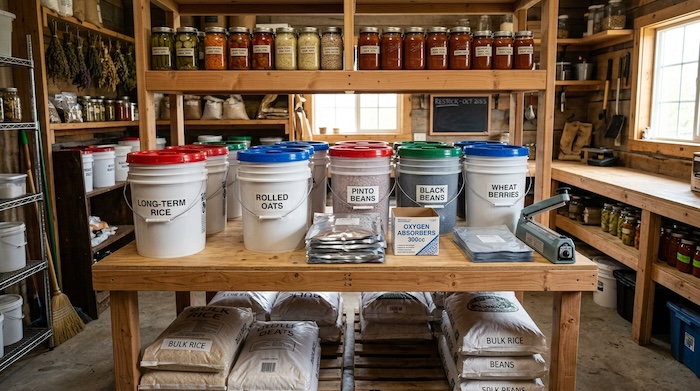
For serious food storage, food-grade buckets remain one of the most economical options available.
They’re ideal for:
- Rice
- Beans
- Wheat berries
- Flour
- Oats
- Sugar
For long-term storage, I recommend placing food inside Mylar bags with oxygen absorbers before sealing the bucket.
This combination protects food from:
- Moisture
- Oxygen
- Light
- Rodents
- Insects
Gamma Seal lids can make frequently used buckets much easier to access.
If you’re storing food for several years, I recommend using food-grade buckets, Mylar bags, oxygen absorbers, and Gamma Seal lids together. This is the same basic system many homesteaders and preparedness-minded families use for storing rice, beans, oats, and wheat long term.
Best Storage Methods for Common Pantry Foods
| Food | Best Storage Method | Expected Shelf Life |
|---|---|---|
| White Rice | Mylar Bag + Bucket | 20-30 Years |
| Dry Beans | Mylar Bag + Bucket | 10-25 Years |
| Rolled Oats | Mylar Bag + Bucket | 10-20 Years |
| Pasta | Airtight Container | 5-10 Years |
| Flour | Mylar Bag + Bucket | 5-15 Years |
| Sugar | Airtight Bucket | Indefinite |
| Salt | Airtight Bucket | Indefinite |
| Freeze-Dried Foods | Original Packaging | 20-30 Years |
You may also want to read my guide on Best Foods for Long-Term Storage, where I break down which pantry staples offer the longest shelf life.
Add Shelving for Vertical Storage
One mistake many people make is not using vertical space efficiently.
Additional shelving can dramatically increase storage capacity.
Heavy-duty metal shelving units are one of my favorite pantry upgrades because they can safely hold hundreds of pounds of canned goods and food storage buckets without sagging.
Options include:
- Wooden shelves
- Adjustable metal shelving
- Wire shelving units
- Heavy-duty garage shelving
Strong shelving is especially important if you’re storing large quantities of canned goods or food-grade buckets.
Always secure tall shelving units to the wall when possible.
Store Food by Category

Grouping similar foods together makes pantry management much easier.
My pantry sections typically include:
Baking Supplies
- Flour
- Sugar
- Baking powder
- Baking soda
- Yeast
Canned Goods
- Vegetables
- Soups
- Fruits
- Meat
Dry Staples
- Rice
- Beans
- Pasta
- Oats
Food Preservation Supplies
- Canning lids
- Pectin
- Vacuum sealer bags
If you preserve your own food, you’ll likely accumulate a growing collection of canning supplies throughout the year. My guides on Food Preservation Methods and Best Foods for Root Cellar Storage can help you decide which preservation methods work best for your homestead.
Emergency Foods
- Freeze-dried meals
- Energy bars
- Instant foods
Freeze-dried foods have become a permanent part of my emergency food storage because they require very little space and can last for decades when stored properly.
This system allows me to quickly find what I need and see which supplies are running low.
Create an Emergency Food Section
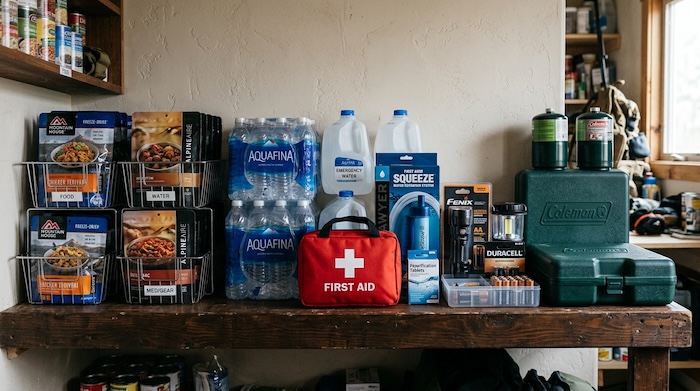
Every pantry should have a dedicated emergency preparedness area.
This section might include:
- Freeze-dried foods
- Bottled water
- Water purification tablets
- First aid supplies
- Flashlights
- Batteries
- Portable stove fuel
During power outages, having everything in one location saves valuable time. I also keep a small camp stove, water filter, emergency lanterns, and backup batteries nearby.
Keeping emergency items together makes them easy to access during power outages or other unexpected situations.
Use Door and Wall Space
Small pantries can benefit greatly from unused wall space.
Consider adding:
Even a narrow wall can often provide valuable storage for smaller items.
Protect Food From Pests
Nothing ruins a pantry faster than rodents or pantry insects.
To reduce problems:
- Use airtight containers
- Store grains in sealed buckets
- Clean spills immediately
- Inspect food regularly
- Rotate stock frequently
Glass jars, metal containers, and sealed buckets offer excellent protection.
A little prevention goes a long way.
Rodents can destroy an entire food supply surprisingly quickly. Sealed buckets, glass jars, and metal containers provide far better protection than cardboard boxes or thin plastic packaging.
Control Temperature and Humidity
Food lasts longest when stored in cool, dry, dark conditions.
Ideal pantry conditions are:
- 50°F to 70°F (10°C to 21°C)
- Low humidity
- Minimal temperature fluctuations
Heat, moisture, and sunlight all reduce shelf life.
This is one reason root cellars remain such valuable food storage spaces for homesteaders.
If you’re fortunate enough to have a root cellar, it can dramatically extend the shelf life of many fruits and vegetables without using any electricity.
Pantry Storage Ideas for Small Spaces
Not everyone has a dedicated pantry room.
If space is limited, consider:
- Under-bed storage bins
- Under-stair storage
- Basement shelving
- Utility room shelves
- Closet pantries
- Garage food storage areas
The key is maximizing every available space while maintaining good organization.
Many off-grid cabins have limited square footage, so creative storage solutions become essential. Even a simple shelving unit installed in an unused corner can dramatically increase storage capacity.
Off-Grid Pantry Storage Tips
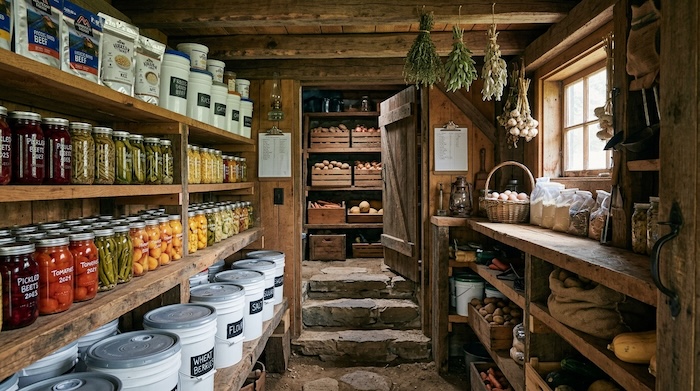
Off-grid living often requires storing larger quantities of food than the average household.
Some strategies that work well include:
Store Foods in Multiple Locations
I never rely on a single storage area.
Food may be stored in:
- Pantry shelves
- Root cellar
- Freezer
- Freeze-dried storage area
This spreads risk and improves organization.
Separating food between multiple storage locations also helps protect your food supply from temperature swings, pests, moisture problems, and unexpected equipment failures.
Preserve Seasonal Harvests
Home-grown food can dramatically reduce grocery bills.
Methods I use include:
- Canning
- Freeze drying
- Dehydrating
- Root cellar storage
Preserving your own harvest is one of the best ways to reduce grocery bills while creating a more self-sufficient lifestyle.
Keep a Written Inventory
A simple inventory sheet helps prevent overbuying and makes meal planning easier.
It’s surprising how quickly food supplies can grow once you start preserving your own harvests.
A written inventory also helps reduce duplicate purchases, which can save a surprising amount of money over the course of a year.
Common Pantry Storage Mistakes
Avoid these common mistakes:
- Buying more than you can rotate
- Ignoring expiration dates
- Storing food in hot garages
- Using non-food-grade containers
- Forgetting to label foods
- Not protecting food from pests
Good pantry storage is about creating a system you can maintain consistently.
Recommended Pantry Storage Supplies
If you’re building or upgrading your pantry, these are some of the most useful items I’ve added over the years:
- Food-grade storage buckets
- Gamma Seal lids
- Mylar bags
- Oxygen absorbers
- Mason jars
- Vacuum sealer
- Heavy-duty metal shelving
- Airtight food storage containers
- Label maker
- LED emergency lanterns
These simple tools can help extend food shelf life, improve organization, and make pantry management much easier.
Final Thoughts
A well-organized pantry does more than look good—it provides security, saves money, and makes daily life easier.
Whether you’re building a long-term food supply, preparing for emergencies, or simply trying to make better use of your storage space, a few simple organizational habits can make a huge difference.
Start small, stay organized, and build a pantry system that works for your lifestyle. Over time, you’ll create a food storage system that supports both everyday living and long-term self-sufficiency.
Frequently Asked Questions
What is the best way to store dry food long-term?
Mylar bags with oxygen absorbers placed inside food-grade buckets provide excellent long-term protection against moisture, oxygen, insects, and rodents. This method is commonly used for storing rice, beans, oats, wheat berries, and other pantry staples for many years.
How often should pantry food be rotated?
I recommend checking your pantry every few months and using older products first. Following the First-In, First-Out (FIFO) method helps reduce waste and ensures your stored food remains fresh.
Can food be stored in a garage?
Food can be stored in a garage if temperatures remain relatively stable. Excessive heat, humidity, and freezing temperatures can significantly reduce shelf life and damage packaging. A cool basement, pantry, or root cellar is usually a better option.
What foods store the longest?
White rice, dry beans, wheat berries, sugar, salt, honey, and freeze-dried foods are among the longest-lasting pantry staples when stored properly. Some of these foods can remain usable for decades.
What is the ideal pantry temperature?
Most foods store best between 50°F and 70°F (10°C and 21°C). Cool, dry, and dark conditions help maximize shelf life and preserve food quality.
Are food-grade buckets worth it for pantry storage?
Absolutely. Food-grade buckets provide excellent protection against pests, moisture, and physical damage. When combined with Mylar bags and oxygen absorbers, they are one of the best options available for long-term food storage.
How do I keep pantry pests out of stored food?
Use airtight containers, food-grade buckets, glass jars, or metal containers whenever possible. Regularly inspect stored food, clean spills promptly, and avoid storing grains in their original paper or cardboard packaging.
Should I store food in plastic containers or glass jars?
Both have advantages. Glass jars are excellent for visibility and pest protection, while quality airtight plastic containers are lightweight and practical for everyday pantry use. For long-term storage, Mylar bags inside food-grade buckets provide the best protection.
How much food should I keep in my pantry?
The amount depends on your household size and goals. Many preparedness experts recommend starting with a two-week supply of food and gradually building toward several months of storage. Even a small pantry reserve can provide peace of mind during emergencies.
What is the biggest mistake people make with pantry storage?
One of the most common mistakes is buying more food than can be properly rotated. An organized system that tracks inventory, expiration dates, and food usage is often more valuable than simply having a large amount of food stored.
Disclosure
This post may contain affiliate links, including Amazon affiliate links. If you purchase through these links, I may earn a small commission at no extra cost to you. The information shared on this website is based on personal experience and research and is intended for general informational purposes only. Always use proper safety precautions and follow manufacturer guidelines when using tools, equipment, or outdoor gear.
© 2026, Teresa. All rights reserved.