
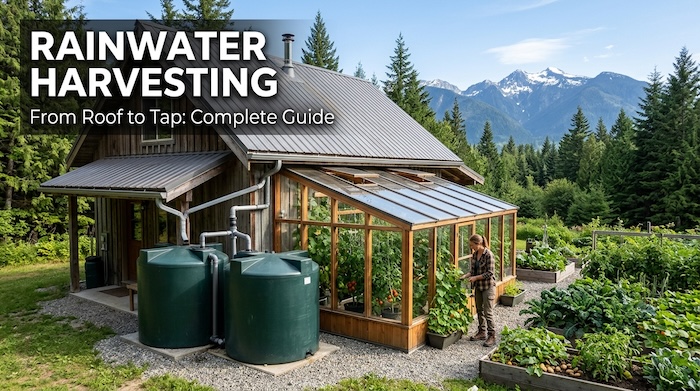
Rainwater harvesting is one of those practical ways to become more self-sufficient and less dependent on municipal water systems. Whether you’re watering a backyard garden, maintaining a homestead, or building a fully off-grid water system, understanding how rainwater travels from your roof to your tap can help you create a reliable and safe setup.
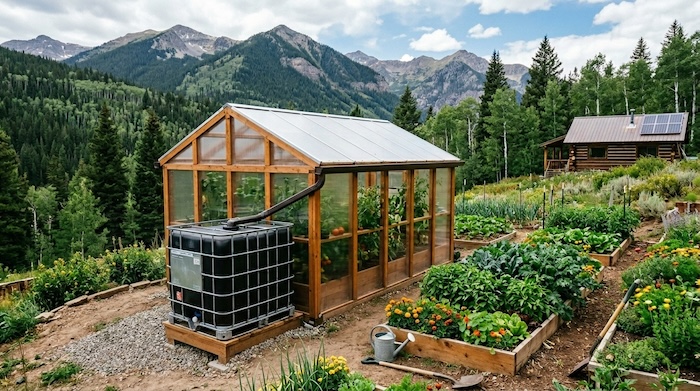
When we built our off-grid property, our primary water source was a well, but we quickly learned the value of collecting rainwater for the greenhouse and garden. Having extra stored water has saved us during dry periods and while making repairs to our water system. Even a simple rain barrel can provide a surprising amount of water throughout the growing season.
If you’re new to off-grid water systems, you may also want to read my Off-Grid Water System Guide and Rain Barrel Starter Kit guides.
This article is part of my Water Systems category, where I cover rainwater harvesting, water storage, filtration, water pressure systems, pumps, and complete off-grid water solutions for cabins and homesteads.
Recommended Rainwater Harvesting Products
If you’re building your first rainwater harvesting system, these are some of the products worth considering.
| Product | Best For | Why I Recommend It |
|---|---|---|
| Food-Grade Rain Barrel | Beginners | Easy and affordable way to start collecting rainwater. |
| First Flush Diverter Kit | Water Quality | Helps keep dirt and debris out of storage tanks. |
| IBC Tote Water Storage Tank | Large Storage | Cost-effective way to store hundreds of gallons. |
| Shurflo 12V Water Pump | Off-Grid Systems | Reliable water pressure for cabins and gardens. |
| Berkey Gravity Water Filter | Drinking Water | Excellent filtration without electricity. |
| Water Quality Test Kit | Safety | Helps monitor water quality and contamination. |
Table of Contents
- How Rainwater Harvesting Works
- Rainwater Harvesting System Types
- Core Components of a Rainwater Collection System
- Roofing Materials: Where Everything Starts
- Gutters, Downspouts and Flow Control
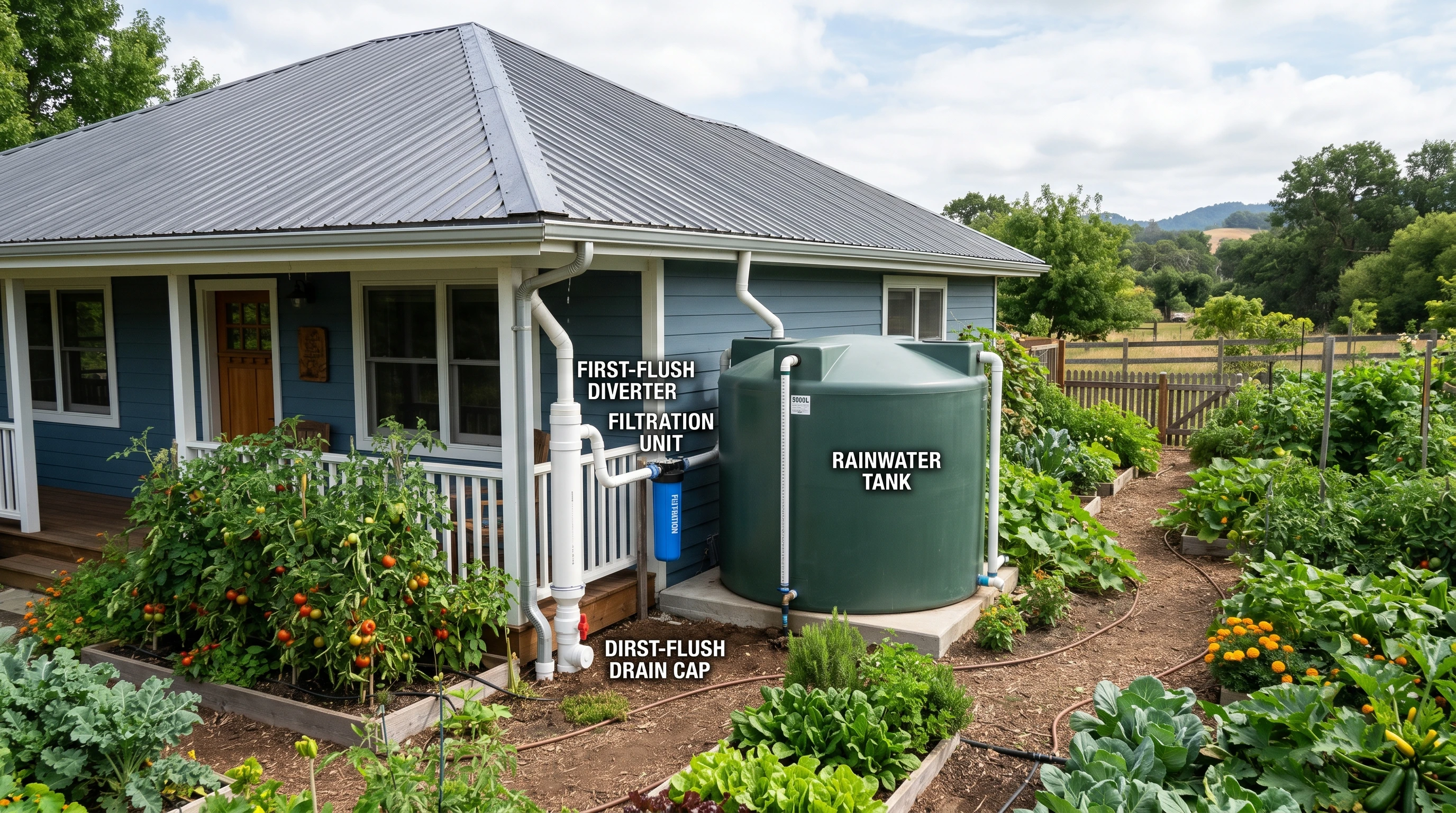
- What Is a First Flush Diverter?
- Filtration Systems
- Storage Tanks: Holding Water Safely
- Rainwater Collection Calculator
- Rainwater Harvesting in Cold Climates
- Typical Rainwater Harvesting Costs
- Frequently Asked Questions
- Final Thoughts
How Rainwater Harvesting Works
Rainwater harvesting begins with something simple: rainfall landing on your roof.
Instead of allowing that water to run onto the ground, gutters and downspouts direct it into a storage system where it can be used later. Depending on your setup, that water may be used for:
- Watering gardens
- Irrigating greenhouses
- Livestock watering
- Washing equipment
- Emergency water storage
- Household use
- Drinking water (when properly filtered and treated)
The basic process looks like this:
Roof → Gutters → First Flush Diverter → Filtration → Storage Tank → Pump → Final Filtration → Tap
Each step plays an important role in keeping water clean and safe.
If you’re designing an entire off-grid water setup rather than simply collecting rainwater, my Off-Grid Water System Guide explains how collection, storage, filtration, water pressure, and delivery systems work together.
Rainwater Harvesting System Types
| System Type | Cost | Complexity | Best Use |
| Rain Barrel | Low | Easy | Garden Watering |
| Intermediate Tank System | Medium | Moderate | Homestead Use |
| Whole House System | High | Advanced | Full-Time Off-Grid Living |
Core Components of a Rainwater Collection System
A rainwater harvesting system doesn’t have to be complicated. Most systems consist of the following components:
- Roof catchment area
- Gutters and downspouts
- First flush diverter
- Filtration system
- Storage tank
- Pump
- Water purification system (if drinking water is desired)
The larger your water needs, the more important each component becomes.
Roofing Materials: Where Everything Starts
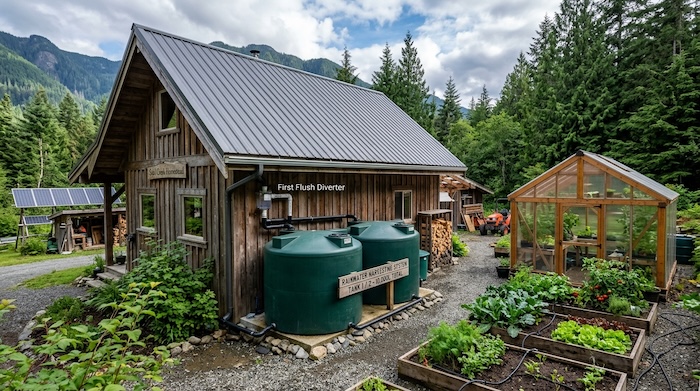
Your roof acts as the collection surface for every drop of rainwater you harvest.
Some roofing materials work much better than others.
Roofing Materials: Where Everything Starts
- Metal roofing
- Zincalume roofing
- Galvanized steel roofing
Metal roofs are usually considered the best choice because they:
- Shed water quickly
- Collect less debris
- Are easy to clean
- Last for decades
- Don’t absorb moisture
Roofing Materials to Avoid for Drinking Water Systems
- Treated wood shingles
- Old asphalt shingles
- Roofs painted with lead-based paints
If your roof isn’t ideal, you can still collect rainwater safely for gardening and irrigation purposes.
Gutters, Downspouts and Flow Control
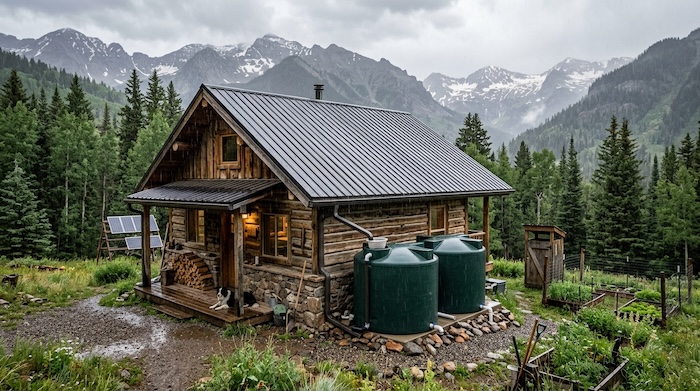
Once rainwater hits your roof, gutters move it toward storage.
Keeping gutters clean is one of the most important maintenance tasks in any rainwater harvesting system.
I try to inspect mine several times each year, especially after storms and during fall leaf season.
To improve water quality:
- Install gutter guards-Micro-Mesh Gutter Guards can significantly reduce maintenance by keeping leaves and debris out of your gutters while still allowing water to flow freely.
- Use leaf screens
- Remove debris regularly
- Repair leaks promptly
- Ensure proper slope for drainage
Standing water in gutters can encourage mosquitoes and contribute to ice buildup during winter.
What Is a First Flush Diverter?
One of the smartest additions to any rainwater system is a first flush diverter.
The first rainfall after a dry spell often contains:
- Dust
- Bird droppings
- Pollen
- Leaves
- Airborne contaminants
A first flush diverter captures this initial dirty water before it reaches your storage tank.
This simple device can dramatically improve water quality and reduce filter maintenance.
Rain Harvesting First Flush Diverter Kit — one of the easiest upgrades you can make to improve water quality before water reaches your storage tank.
Filtration Systems
Even the cleanest roof and gutter system won’t keep everything out of your water supply. Dust, pollen, leaves, bird droppings, insects, and other contaminants can all find their way into your storage tank. That’s why filtration is one of the most important parts of any rainwater harvesting system.
Think of filtration as a series of barriers that gradually remove contaminants as the water moves through your system.
Leaf Screens
Leaf screens are the first line of defense. They help prevent leaves, twigs, insects, and other large debris from entering your gutters and storage tanks.
These screens are inexpensive, easy to install, and can significantly reduce maintenance requirements.
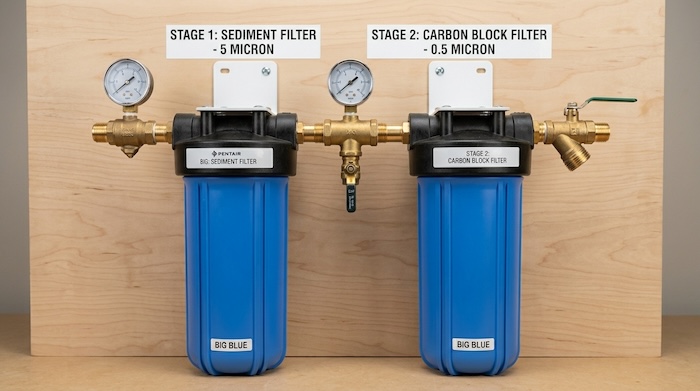
Sediment Filters
Sediment filters remove dirt, sand, rust particles, and other suspended material that may enter the system.
These filters are especially useful if water is being pumped into a home, greenhouse, or irrigation system where sediment could clog valves, sprinklers, or appliances.
iSpring Sediment Filters are popular for off-grid and homestead water systems because they are affordable, easy to replace, and available in multiple micron ratings
Cartridge Filters
Cartridge filters provide finer filtration and can remove smaller particles such as dust, pollen, and organic matter.
Many off-grid systems use multiple cartridge filters with progressively smaller micron ratings to improve water quality while extending filter life.
Activated Carbon Filters
Activated carbon filters help improve the taste and smell of water by removing organic compounds, odors, and some chemical contaminants.
These filters are often used as one of the final stages before water enters household plumbing or drinking water systems.
UV Purification Systems
Ultraviolet (UV) purification systems use light to destroy bacteria, viruses, and other microorganisms that may be present in the water.
UV systems do not remove sediment, so they work best when combined with other filtration methods.
HQUA UV Water Purifier Systems are commonly used in off-grid cabins and rainwater harvesting systems to provide an additional layer of protection against bacteria and viruses.
Gravity Water Filters
For off-grid cabins and emergency preparedness, gravity-fed water filters are one of my favorite options. They don’t require electricity, are easy to maintain, and can provide safe drinking water even during power outages.
We’ve always liked having a gravity filter available as a backup because it provides an extra layer of protection if there is ever a problem with the primary water system.
If you’re comparing different filtration options, be sure to read my Best Off-Grid Water Filters guide where I compare gravity filters, ceramic filters, UV systems, and whole-house filtration setups.
The Berkey Gravity Water Filter remains one of the most popular off-grid drinking water filters because it requires no electricity and can filter large quantities of water quickly.
Building a Multi-Stage Filtration System
For drinking water, I recommend using several layers of filtration rather than relying on a single filter.
A typical setup might look like this:
Leaf Screen → Sediment Filter → Cartridge Filter → Activated Carbon Filter → UV Purifier
Using multiple filtration stages helps improve water quality, extends filter life, and provides additional protection against contamination.
You may also want to read:
Recommended Filtration Products
- Berkey Gravity Water Filter
- Waterdrop Filtration Systems
- iSpring Water Filtration Systems
- Water Quality Test Kits
If rainwater will be used for drinking, I strongly recommend testing the water at least once per year. Water quality can change depending on roof materials, local wildlife activity, and environmental conditions. A simple water test kit can identify potential issues before they become a problem.
Storage Tanks: Holding Water Safely
Storage tanks are the heart of the system.
Options include:
- Rain barrels
- Poly storage tanks
- Fiberglass tanks
- Metal cisterns
- IBC totes
Choose the largest tank your budget and available space will allow.
One thing I’ve learned living off-grid is that nobody ever complains about having too much stored water during a dry summer. We’ve had years where rainfall was lower than expected, and having extra storage capacity made a huge difference for keeping the greenhouse and garden productive.
Use:
- Opaque tanks
- Secure lids
- Mosquito screens
- Overflow protection
Shurflo 12V Water Pumps are one of the most reliable options for moving stored rainwater to gardens, greenhouses, cabins, and pressure systems.
You may also want to read:
Rainwater Collection Calculator
Use this formula to estimate how much water your roof can collect:
A 1,000 square foot roof receiving one inch of rain can collect approximately 623 gallons of water. To estimate annual collection, multiply your roof area by your average yearly rainfall and then multiply by 0.623.
This simple calculation helps determine storage requirements before purchasing tanks.
Example Water Collection Estimates
| Roof Size | 1 Inch of Rain |
|---|---|
| 500 sq ft | 311 gallons |
| 1,000 sq ft | 623 gallons |
| 1,500 sq ft | 935 gallons |
| 2,000 sq ft | 1,246 gallons |
Rainwater Harvesting in Cold Climates
Living in British Columbia has taught me that winter changes everything.
Cold weather can create challenges such as:
- Frozen gutters
- Ice dams
- Frozen pipes
- Frozen tank outlets
- Pump damage
To prevent problems:
- Insulate exposed pipes
- Bury water lines below frost depth
- Drain seasonal systems
- Install tank heaters if necessary
- Keep overflow lines clear
For more winter water system ideas, see my guide on How to Keep Water From Freezing Off-Grid.
Typical Rainwater Harvesting Costs
| Component | Typical Cost |
| Rain Barrel | $100-$300 |
| First Flush Diverter | $30-$150 |
| Storage Tank | $500-$5,000+ |
| Pump | $100-$500 |
| Filtration System | $100-$2,000+ |
Many homesteaders start with a simple rain barrel system and gradually upgrade as their water needs grow. Starting small can spread the cost over several years while allowing you to learn how the system performs in your local climate.
Frequently Asked Questions
Question: Can I drink rainwater collected from my roof?
Answer: With the right steps—safe roofing material, regular cleaning, and proven purification—you can drink rainwater. Just make sure to test and treat it reliably. I also recommend reviewing my Water Quality Testing Kits guide so you can monitor water safety throughout the year.
Question: How much water can I expect to collect in a year?
Answer: It depends on your roof size and local rainfall. A 1,000 squarefoot roof with 1 inch of rain can yield over 600 gallons. Multiply your total roof area by the average rainfall, then factor in about 80% efficiency for losses.
Question: Are there any legal concerns with collecting rainwater?
Answer: In some states and counties, rainwater harvesting is encouraged and even rewarded. In a few places, you’ll need a permit or there might be restrictions, so always double check your local rules before setting up a big collection system.
Question: How often should rainwater storage tanks be cleaned?
Answer: Most tanks should be inspected annually and cleaned as needed. The frequency depends on your roof type, filtration system, and local environmental conditions.
Rainwater harvesting connects you with nature, cuts your utility bills, and gives peace of mind in water shortages. Keep things clean, use reliable parts, and aim for a setup that fits your needs. The trip from roof to tap looks simple, but a little know how goes a long way in making it a dependable part of your sustainable lifestyle.
For additional guides on rainwater collection, filtration, storage, water pressure systems, and year-round water management, visit my Water Systems category.
Final Thoughts
Rainwater harvesting doesn’t need to be complicated.
Many off-grid homesteaders start with a simple rain barrel and gradually expand into larger storage tanks, filtration systems, and household water supplies.
That’s exactly how many successful homesteads are built—one step at a time.
Whether you’re collecting water for your garden, greenhouse, livestock, or an entire off-grid cabin, understanding how rainwater travels from roof to tap will help you build a system that’s reliable, efficient, and ready when you need it most.
For more off-grid water resources, be sure to read:
- Off-Grid Water System Guide
- Rain Barrel Starter Kit
- Off-Grid Water Storage Year-Round
- Best Off-Grid Water Filters
- Water Quality Testing Kits
- Rainwater Filtration System Setup
Disclosure:
Content on this site is for informational purposes only and reflects personal experience and research. Off-grid living laws and conditions vary by location, so readers should always verify local regulations before making decisions. Some links may be affiliate links, which help support this site at no additional cost to you.
© 2026, Teresa. All rights reserved.
I remember seeing a few houses with rain barrels connected to the gutters. After reading your post, it’s apparent that this application requires attention. Water isn’t just collected; it goes through a process to become useful.
I think I know just how I want my garden to be built. A rainwater collection site is perfect to keep the crop hydrated.
Awesome post
Using this method for our vegetable garden has been a game changer. Thanks for the comment and let me know how your garden goes.