
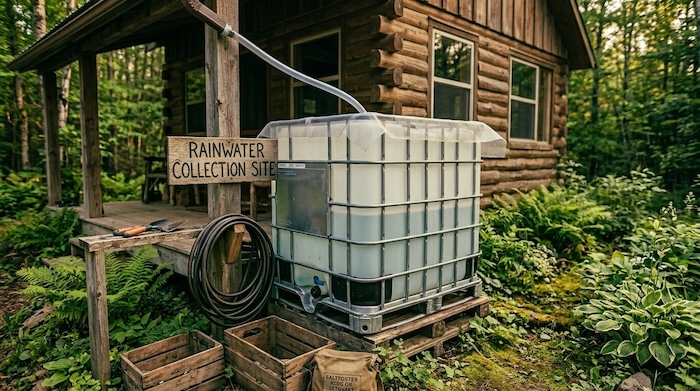
If you’ve ever driven by a farm supply store or scrolled through online ads, you’ve probably spotted those big plastic tanks in metal cages out back. They’re called IBC totes, and I run into questions about them all the time. With their size and how affordable they are, it’s pretty tempting to use them for storing water—especially if you’re setting up off-grid or prepping for emergencies. But the real question is, can you actually use an IBC tote to store drinking water without risking your health? The short answer is yes, but only if you’re super picky about the kind you get and how you use it. Here’s what you need to know before taking that first sip.
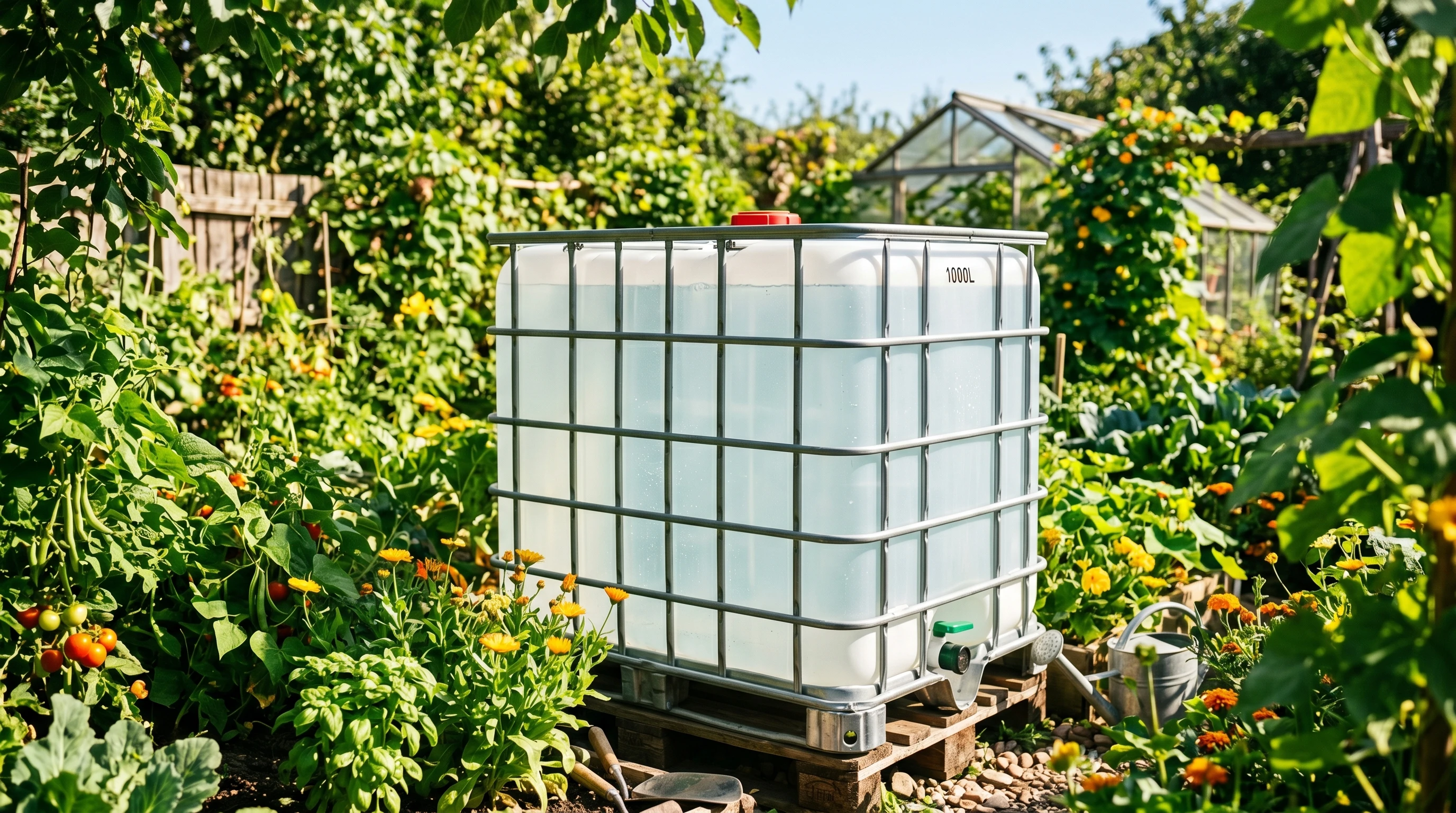
Table of Contents
- What Is an IBC Tote?
- Are IBC Totes Food Safe?
- Risks of Used IBC Totes
- How to Tell If an IBC Tote Is Safe
- When Is It Safe to Use an IBC Tote?
- How to Clean an IBC Tote
- Do You Still Need to Filter the Water?
- How to Make Water Safer to Drink
- Pros and Cons
- Common Mistakes
- Better Alternatives
- IBC Tote FAQ
What Is an IBC Tote?
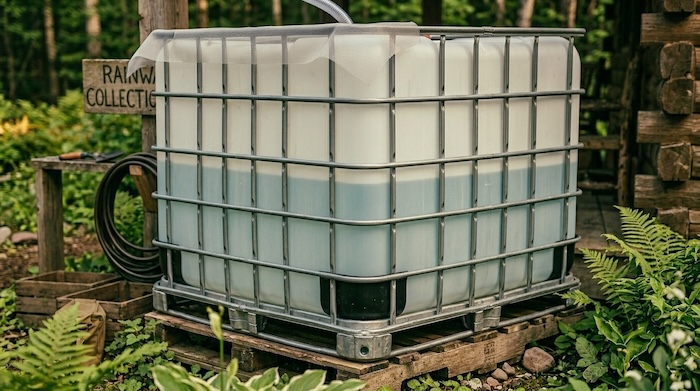
IBC stands for Intermediate Bulk Container. These are those big rectangular tanks, usually white or translucent, caged in steel and sitting on a pallet for easy moving with a forklift. The most common size holds 275 gallons, but you might see the larger 330-gallon ones too. Both sizes are very efficient for bulk storage needs.
The main part of an IBC tote is made from HDPE plastic (high-density polyethylene), which is known for being tough and chemical-resistant. The outer cage is metal—usually galvanized steel—helping the tote stay stable when it’s full.
Originally, these tanks were designed to haul all kinds of liquids, from food syrups to harsh industrial substances. That’s where things get interesting, because what an IBC tote used to hold is really important for its current safety.
The Big Question: Are IBC Totes Food Safe?
Not all IBC totes are created equal, especially when it comes to water you plan to drink. Here’s how it breaks down.
Food-Grade vs. Non-Food-Grade
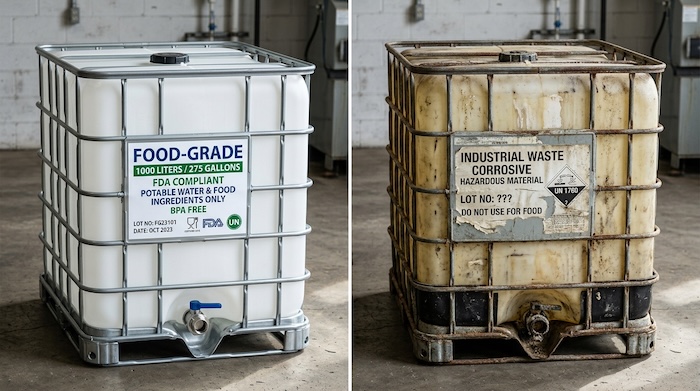
Some totes were made specifically with food or drink in mind—think juices, syrups, or even vinegar. These are considered food grade. Usually, they’ll be marked with an NSF or FDA stamp somewhere on the tank, and ideally, you’ll see labels mentioning what it held before.
Non-food-grade totes are a whole different story. These could have transported herbicides, solvents, dyes, or other chemicals that can soak into the plastic and stick around, no matter how much you scrub. Even a tiny trace of some chemicals can make water unsafe.
What Really Matters Most
The biggest factor is what was in the tote before you got it. Even totes made from food-safe plastic can pose problems if they ever held something toxic.
Some sellers claim their totes are “rinsed out and ready,” but unless you know the tote’s history, that’s taking a gamble.
Risks of Used IBC Totes
Chemical residues can absorb into the plastic and never fully come out.
Missing or suspicious labels, odd chemical smells, or any seller who can’t tell you what the tote was used for are major red flags. Avoid these at all costs when considering a tote for drinking water.
Even if the tank looks spotless, dangerous residues might still be present. Clear water doesn’t always mean safe water.
Examples of things you really do not want remaining inside your tote include industrial degreasers, unknown “industrial blends,” or even just “cleaners” with no specific name. These can be risky even at extremely low levels.
How to Tell If an IBC Tote Is Safe for Water Storage
- Check the tank for a food-grade stamp (like NSF, FDA, or a fork-and-cup symbol).
- Look for the original label—this tells you what it previously held.
- Don’t be shy about asking the seller for clear details. Reputable sellers should know their own stock.
- If the tote smells like chemicals, fuel, or anything “off,” skip it. The old sniff test isn’t perfect, but it can help catch obvious issues.
- Steer clear of “unknown contents” or unlabeled tanks. If you have any doubt, treat it as unsafe for human consumption.
Taking just a few minutes to check these details can save you from making a costly mistake with your water storage.
When Is It Safe to Use an IBC Tote for Water?
IBC totes are very useful for all sorts of water needs, but there are only a few scenarios where I’m comfortable using one for drinking water:
- It’s a brand-new, never-used, food-grade tote—straight from the supplier with the seal still intact.
- It’s a previously used food-grade tote, and you have proof it only held something safe for eating or drinking (like syrup or vinegar), and you’ve cleaned it properly.
For everything else, you’re better off using those totes for collecting rainwater, garden irrigation, or even livestock watering (as long as you keep an eye on the animals’ health).
If there’s any doubt about what’s been inside, don’t risk your health for a few dollars saved.
If you’re building a full system, this fits into a bigger setup—see my guide on Off-Grid Water System Guide to understand how storage, filtration, and backup all work together.
How to Clean an IBC Tote for Drinking Water Storage
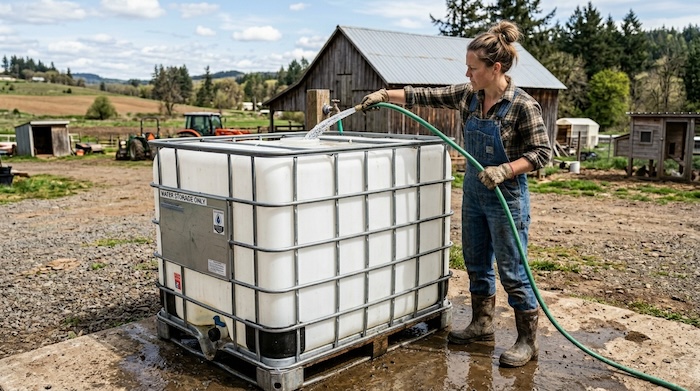
If you score a verified food-grade tote, cleaning is the next big job. Here’s my own cleaning routine, which lines up with most disaster prep and water storage guides:
- Rinse the inside several times, dumping each rinse to remove any residual liquid or particles.
- Fill with hot water and add a food-grade detergent. If possible, use a hose or brush to scrub the interior surfaces, focusing on corners and seams where buildup can hide.
- Drain and rinse again—make sure all soap residue is removed.
- Sanitize with a diluted bleach solution (about 1 tablespoon of unscented, plain household bleach per gallon of water), using just enough to fully coat all interior surfaces. Let it sit for at least 30 minutes.
- Rinse several more times with clean water.
- Let the inside air dry completely with the lid off.
Keep in mind, if you even suspect that a harsh chemical was previously stored in the tote, no amount of cleaning can make it safe for drinking water. Move on and use a different tank for potable water.
Do You Still Need to Filter the Water?
Even with a squeaky-clean, food-grade IBC tote, I never trust water straight from the tank for drinking. Microbes, bacteria, and whatever’s in your water source are always a possibility.
That’s where proper filtration comes in. I’m a big fan of using heavy-duty off-grid water filters, gravity filters, and UV purifiers.
If you’re not sure what to choose, take a look at my full breakdown of Best Off-Grid Water Filters or compare setups in Off-Grid Water Filtration Systems Compared.
How to Make Water from an IBC Tote Safer to Drink
- For rainwater collection setups, install a first flush diverter to send the dirtiest roof runoff away from your tank.
- Add an inline sediment filter to keep sand, bugs, and debris out before it even reaches your storage.
- Run your water through a carbon water filter system before drinking to remove odors, chlorine, and organic contaminants.
- For a top-notch setup, use a UV water purifier for home use as a final step to kill bacteria and viruses.
This is where your system really starts to feel reliable, not risky.
If you’re collecting rainwater, you’ll also want to read Rain Barrel Starter Kit for Safe Everyday Use to set things up properly from the beginning.
Pros and Cons of IBC Tote Water Storage
Pros:
- High capacity for the price
- Stackable
- Durable
- Easy to connect to plumbing or hoses
Cons:
- Safety depends on previous use
- Can grow algae if left in direct sunlight
- Bulky and hard to move when full
- Not always easy to find one that’s truly safe for drinking water
Common Mistakes People Make with IBC Totes
- Buying unknown or “mystery” totes from questionable sellers
- Skipping filtration after storage, even if the water looks clear
- Leaving totes in direct sunlight, encouraging algae growth
- Not sealing the tote properly, allowing contamination
- Assuming clear water is safe to drink
Being cautious at each step is much safer than dealing with contaminated water later.
Better Alternatives to IBC Totes for Drinking Water
If you want simple, reliable drinking water storage, there are better options:
- New food-safe barrels like food-grade 55 gallon water storage barrels
- Purpose-built potable water tanks (often blue or opaque)
- Underground cisterns for larger setups
For a deeper dive into long-term storage options, check out Off-Grid Water Storage Year Round: How To Store Water Safely In Every Season.
IBC Tote Drinking Water Safety FAQ
Can you drink rainwater stored in an IBC tote?
Only if the tote is food grade, you know its full history, it’s been cleaned and sanitized properly, and the water has been filtered and purified. Rainwater alone is not automatically safe.
How long can water sit in an IBC tote?
If everything is clean and sealed, and the water is treated or rotated every six months, it can be stored for long periods. Always test before drinking—using a home water testing kit for drinking water safety is a smart move.
Do IBC totes leach chemicals?
Food-grade HDPE is fairly stable, but heat, sunlight, or prior use with chemicals can increase the risk. Keep totes shaded and use only verified food-grade containers.
Are black IBC totes better for water storage?
Black or opaque totes block sunlight, which helps prevent algae growth. Just make sure they’re still food grade.
Can you bury an IBC tote?
You can, but only if it’s fully supported. Otherwise, the walls can collapse. Tanks designed for burial are a better option.
Where to Go Next
If you’re serious about building a safe and reliable off-grid water system, it’s worth putting the whole setup together properly—not just the storage.
Start with your water source, add safe storage, and finish with solid filtration and testing.
If you haven’t already, take a look at:
And always test your water before drinking—it’s cheap insurance and gives you real peace of mind.
This post is for informational purposes only and based on personal experience. Always verify water safety for your own setup and consult a professional if needed. This post may also contain affiliate links, which help support the site at no extra cost to you.
© 2026, Teresa. All rights reserved.
Hi Teresa,
Water storage is one of those subjects people usually ignore until there’s a supply problem or emergency nearby. I liked that this article didn’t just assume every IBC tote is automatically safe for drinking water, because a lot of people buy second-hand containers without really thinking about what was stored inside them previously.
I’ve looked into off-grid water storage myself before, and the cleaning and food-grade certification side always seemed to be the biggest issue. In my opinion, saving money on a used tote is not worth the risk if you can’t fully verify its history. Water contamination is one of those problems you often won’t notice immediately until it becomes serious.
Heat, sunlight, and stagnant water can change things pretty quickly if the system is not maintained properly. Overall, this felt practical instead of overly alarmist, which is rare with off-grid topics now.
Regards
BRoman
Thanks for you comment, we did use the totes when we first got off grid, we made sure they were covered, away from direct sunlight and kept as cool as possible, and I tested the water with Water Quality Testing Kits. We now have a well and the IBC Totes are now up about 20 feet on a platform near the garden for watering it.
This was a very useful and practical article on using IBC totes for water storage, especially for off-grid or emergency preparedness situations. I appreciate how it highlights both the convenience and the potential risks involved, since the safety really depends on whether the tote is food-grade and properly cleaned.
One question I had while reading is how easy it is for the average person to verify the previous contents of a used IBC tote when buying one second-hand. I’m also curious about how long-term storage conditions, such as heat exposure or sunlight, might affect the safety of drinking water stored in these containers over time.
it’s a topic that seems simple at first but clearly requires careful attention to detail to avoid health risks.
Knowing what the previous contents of an IBC tote was is easy if the original sticker is on it. If not, then you really would have no idea other than what the seller tells you when buying one second hand.
Sunlight and heat can encourage growth of algae inside the tote if not stored properly. We keep ouir totes shaded, covered and as cool as possible. I also test the water frequently Water Quality Testing Kits