

If you’re living off-grid or getting your water from natural sources, keeping tabs on water quality is really important. Even if water looks crystal clear, that doesn’t mean it’s actually safe to drink. I’ve learned that a stream, well, or rain barrel can all hide problems you wouldn’t spot without a proper test.
A water quality testing kit is a tool used to detect contaminants such as bacteria, nitrates, heavy metals, pH imbalances, and dissolved solids in drinking water. Testing helps identify water safety issues before they affect health or damage equipment.
That’s where water quality testing kits come in pretty handy. They help you spot issues before they can cause trouble for your health and daily life.
Before choosing any filtration system, I always recommend starting with a test. If you’re still building your setup, you can start here: Off-Grid Water System Guide.
- Why Testing Your Water Is Worth Your Attention
- What You Should Be Testing For
- Types of Water Testing Kits
- Common Mistakes When Testing Water
- How to Pick the Right Water Testing Kit
- How Often to Test Your Water
- How to Use a Water Testing Kit
- Understanding Your Results
- What to Do If Your Water Isn’t Safe
- Best Water Quality Testing Kits to Keep an Eye On
- FAQs About At-Home Water Testing
- Wrapping Up
Why Testing Your Water Is Worth Your Attention
Water is something you drink, cook with, and use every day, so there’s plenty riding on its safety. Off-grid setups don’t have the same strict monitoring as city water, so you’re responsible for knowing what’s in your supply.
Even if you’re using a private well, rain harvesting system, or stream, water can pick up contaminants from:
- The surrounding environment
- Animal activity
- Aging pipes or storage systems
- Runoff after storms
Rainwater can also pick up contaminants from roofing materials, gutters, and storage tanks. If you’re collecting rainwater, my guide on Rainwater Harvesting: From Roof to Tap explains how to build a safer collection system from collection to storage.
Things like bacteria, nitrates, heavy metals, or just a switch in pH can pop up with little warning, especially after storms or season changes.
Health-wise, contaminated water can cause anything from mild stomach upset to serious illnesses. Testing your water is a simple, cost-effective way to stay ahead of those problems.
What You Should Be Testing For
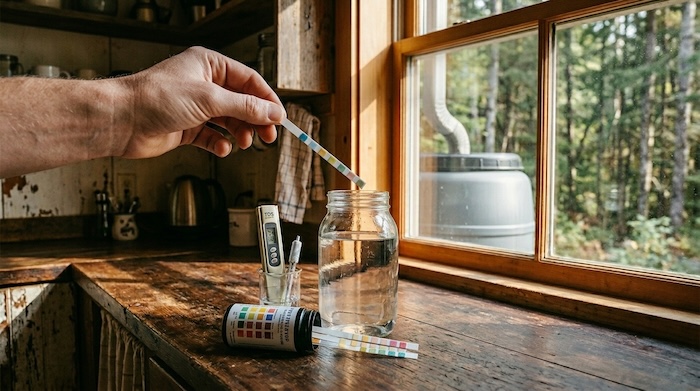
Not all water tests are the same. Here’s what I always look for:
Bacteria
- Coliform and E. coli
- Invisible, but one of the biggest risks
- Any detection = treat immediately
Nitrates and Nitrites
- Often come from fertilizers or animal waste
- Especially important if kids or pregnant women are drinking the water
pH Levels
- Too acidic or too alkaline can affect both health and plumbing
- Ideal range: around 6.5–8.5
Heavy Metals
- Lead, arsenic, mercury
- Can come from natural sources or old pipes
- Build up in the body over time
Total Dissolved Solids (TDS)
- A general measure of everything dissolved in your water
- Not always dangerous, but changes can signal problems
If you’re storing large amounts of water in containers, you may also want to read IBC Tote Water Storage: Is It Safe for Drinking Water? since storage containers can affect water quality over time.
If you’re unsure what to do with your results, this ties directly into choosing the right system in my guide on Best Off-Grid Water Filters.
Types of Water Testing Kits
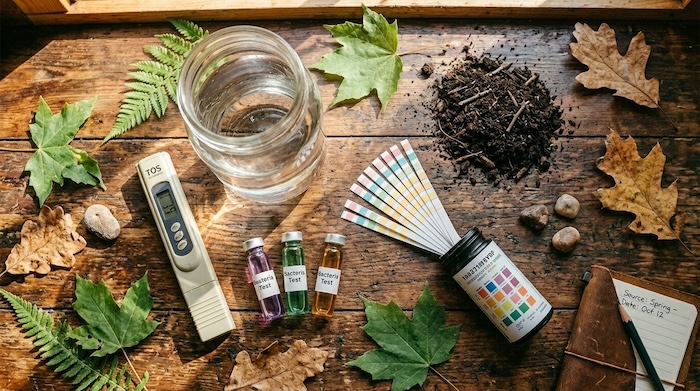
There are several different types of kits for testing water at home. The one you choose will depend on how detailed you want to get.
Test Strips
Quick and simple.
- Dip in water and compare colors
- Budget-friendly
- Great for regular checks
For quick testing, I like using a multi-parameter water test strip kit since it checks several things at once.
Bacteria Test Kits
Important for drinking water safety.
- Detect E. coli and coliform
- Usually take 24–48 hours
- Essential for well and rainwater users
If you rely on untreated water, having a home bacteria water test kit for E. coli is something I consider non-negotiable.
Digital Meters
Fast and reusable.
- Measure TDS and pH
- Instant readings
- Great for tracking changes over time
A digital TDS water meter is one of the easiest tools to keep around for regular monitoring.
A digital pH meter is another useful tool because it helps track changes that could affect both water quality and plumbing systems.
Lab Testing Kits
Most detailed option.
- Mail your sample to a lab
- Tests for a wide range of contaminants
- Best for new properties or unknown sources
If you want a full picture of your water quality, lab testing is worth doing at least once. Results take some time but are super detailed, covering everything from bacteria and metals to pesticides and more. This one is worth checking out if you want an all-in-one overview or need results for property sales.
If you want a little more accuracy but don’t want to wait for a lab, combining digital meters and test strips can help you spot changes quickly and dig into specific concerns further if needed.
⚠️ Common Mistakes When Testing Water
This is where a lot of people go wrong (I’ve done a few of these myself):
- Testing once and assuming the water is always safe
- Skipping tests after heavy rain or seasonal changes
- Relying only on TDS readings
- Misreading test strip colors in poor lighting
- Not testing for bacteria at all
Water changes more than people expect—testing needs to be ongoing.
How to Pick the Right Water Testing Kit
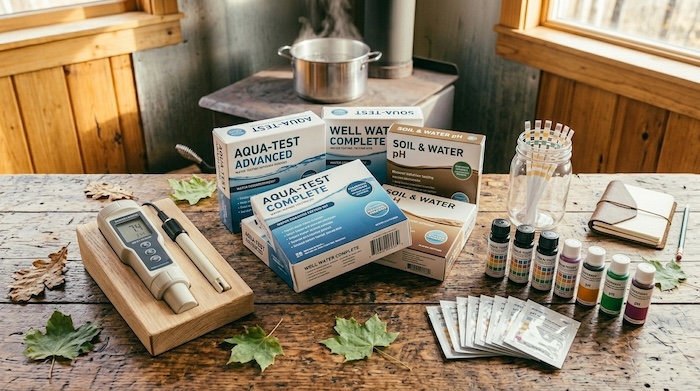
Choosing a kit depends mostly on where your water comes from and what you want to know. Here’s how I break it down:
Well Water
- Test for bacteria, nitrates, pH, and metals
- Seasonal changes can affect quality
Rainwater
- Test for bacteria, nitrates, and contaminants from roofing
- Especially important if you’re drinking it. A proper Rainwater Filtration System Setup can remove many common contaminants before they reach your storage tanks or household taps.
Surface Water (lakes, streams)
- High risk of contamination
- Test broadly and often
If it’s safe drinking water, I’d suggest kits that focus on bacteria and metals. For gardening or livestock, total dissolved solids and pH meters are quick and useful. For seasonal cabins or part-time off-grid living, running a test in the spring and fall can help you avoid surprises.
How Often to Test Your Water
Testing isn’t just a one-time thing and you’re done. Water quality can change throughout the year, after big storms, or when you fix or change plumbing.
I recommend testing:
- Every 3–6 months
- After heavy storms or flooding
- If water changes color, smell, or taste
- After installing a new system
If you’re storing water long-term, water quality can change during storage. My guide on Off-Grid Water Storage Year Round covers how to safely store water through every season.
How to Use a Water Testing Kit
Most kits are pretty simple, but it’s smart to follow the instructions. The general steps go like this:
- Collect a Sample: Use clean bottles or vials. If you’re testing for bacteria, avoid touching inside the cap or rim. Sometimes, you’ll want to run your tap for a few minutes before filling.
- Run the Test: For strips, simply dip and wait. For digital meters, calibrate if needed, then submerge. Bacteria kits typically need you to add water to a vial and wait a while (sometimes up to 48 hours).
- Read and Record Results: Compare colors against the included chart or check meter readings. Take notes or photos—it’s good to keep a record in case you spot trends or plan to show results to a pro later.
If you’re using a mailing lab kit, follow those instructions exactly. Shipping delays or improper packaging can give you inaccurate results.
Understanding Your Results
Here’s what to watch for:
Safe:
- No bacteria detected
- Low nitrates and metals
- pH between 6.5–8.5
Unsafe:
- Any E. coli or coliform
- High nitrates or heavy metals
- Unusual spikes in readings
If something looks off, don’t ignore it. If you’re unsure, you can call your local health department for extra advice. They’re a good resource if you get an odd result or want help to make sense of something tricky.
What to Do If Your Water Isn’t Safe

Getting a bad result isn’t the end of the world. There are simple things you can do to make water safer:
Boiling
- Kills bacteria and viruses
- Short-term fix
Filtration
- Removes contaminants depending on the system
- Learn more here: Water Filtration Systems Compared
Switch Water Sources
- Use bottled water temporarily if needed
Always retest after fixing an issue. After handling any contamination, always retest your water to make sure your efforts worked.
Best Water Quality Testing Kits to Keep an Eye On
There’s a pretty wide range of kits to choose from. These are some of the ones that people, including myself, have found super useful:
- Safe Home Premium Water Test Kit: Gives you a broad look at 50+ possible contaminants. You send off a sample, and results come back from a lab.
- Health Metric Well Water Test Kit: Focuses on the biggest well water problem points, including bacteria, lead, copper, pH, and more. Results at home, no mailing needed.
- Varify Drinking Water Test Kit: Offers test strips for ten different parameters, including bacteria. It’s a solid, affordable option for regular home checks.
- HoneForest TDS Meter: A digital stick you can use daily to keep a casual eye on your water’s total dissolved solids. It won’t tell you exactly what’s wrong, but it will help you catch sudden changes fast.
These cover most off-grid situations without overcomplicating things.
FAQs About At-Home Water Testing
Here are some questions I get all the time when it comes to water test kits:
Are home water testing kits accurate?
Home kits are good for regular checks, but they don’t match a certified lab for precision. They’re still super useful for spotting sudden changes or obvious red flags, though.
How often should I test my water?
Shoot for at least every 3 to 6 months, or after major storms or system changes. It’s a simple schedule that pays off in peace of mind.
Should I ever use a lab instead of a home kit?
If you need super detailed data for a house sale, health concern, or ongoing problem, I’d go with a lab test. They cover more contaminants and are more trustworthy if you’re making big decisions.
Can I drink untreated rainwater if it tests clean?
I wouldn’t risk it. Even if results look clean, rainwater can pick up stuff after it falls, like roof particles or bird droppings. Stick with good filtration or boiling before drinking.
Can a TDS meter tell if water is safe to drink?
No. A TDS meter only measures dissolved solids. It cannot detect bacteria, viruses, or specific contaminants.
What is the most important water test for off-grid homes?
Bacteria testing is usually the most important because E. coli and coliform contamination can cause serious illness and often cannot be detected by sight, smell, or taste.
Wrapping Up
Making water safety a priority is a whole lot easier than dealing with health issues later. Testing helps you catch problems early, and it gives you confidence in the water you’re using every day.
Water testing is just one piece of a reliable water setup. For a complete overview of collection, storage, filtration, pressure systems, and treatment, see my Off-Grid Water System Guide.
I’ve made the mistake before of assuming water was fine just because it looked clean—testing proved otherwise pretty quickly.
Start with a test, then move to treatment. If you’re not sure what filtration setup makes sense for your situation, I break it down step-by-step in my guide on Best Off-Grid Water Filters.
Disclosure
This post contains affiliate links. I may earn a small commission at no extra cost to you.
This information is based on personal experience and general research. Water quality can vary a lot depending on your location and setup, so if you have any concerns about your water safety, it’s always a good idea to consult a local professional or have your water tested by a certified lab.
© 2026, Teresa. All rights reserved.
I liked that your article focused on testing before making assumptions, because clear water does not always mean safe water.
I’ve looked into off-grid water systems before, and honestly the amount of different testing kits available gets confusing fast. Some seem designed for basic peace of mind, while others go much deeper into bacteria, heavy metals, pesticides, and chemical contamination. In my opinion, a lot of people probably buy the cheapest kit they can find without really understanding what it does or does not test for.
Water conditions can change over time depending on storage, pipes, flooding, seasonal runoff, or even nearby construction. That part often gets ignored.
How accurate do you think most home water testing kits really are compared to professional lab testing? Are there specific contaminants that DIY kits tend to miss or underestimate? Also, for someone using rainwater collection or well water long term, how often would you personally recommend doing a full detailed water analysis instead of just quick routine testing?
Hi, thanks for your comments and questions. We had our water tested by a professional lab and when we first got off grid, since then I have been testing periodically with the home tests and they work well for us. If there were to be a heavy storm with flooding or a strange taste or smell I would definitely get it checked professional again.