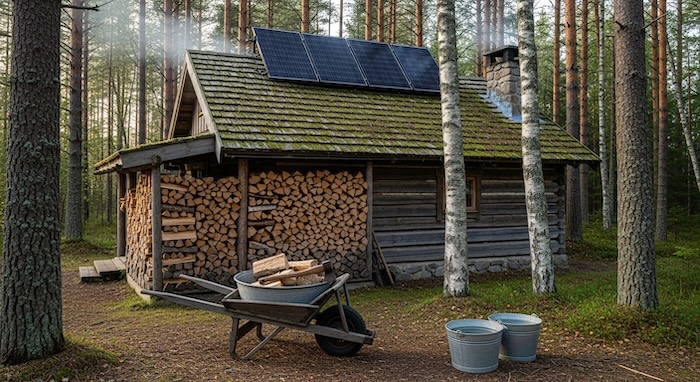
Moving off-grid sounds like a dream for anyone tired of city life. I always imagined days filled with chopping wood, growing my own food, and a total escape from modern comforts.
At first, I was sure I could do without all the small conveniences and just get by with the basics.
It didn’t take long to realize that some tools and comforts people call “luxuries” are actually super important for comfort and survival.
If you’re still in the planning stage, I highly recommend starting with my guide on off-grid living for beginners, because there are quite a few things you don’t realize you’ll need until you’re actually
Making the Switch Isn’t Always Simpler
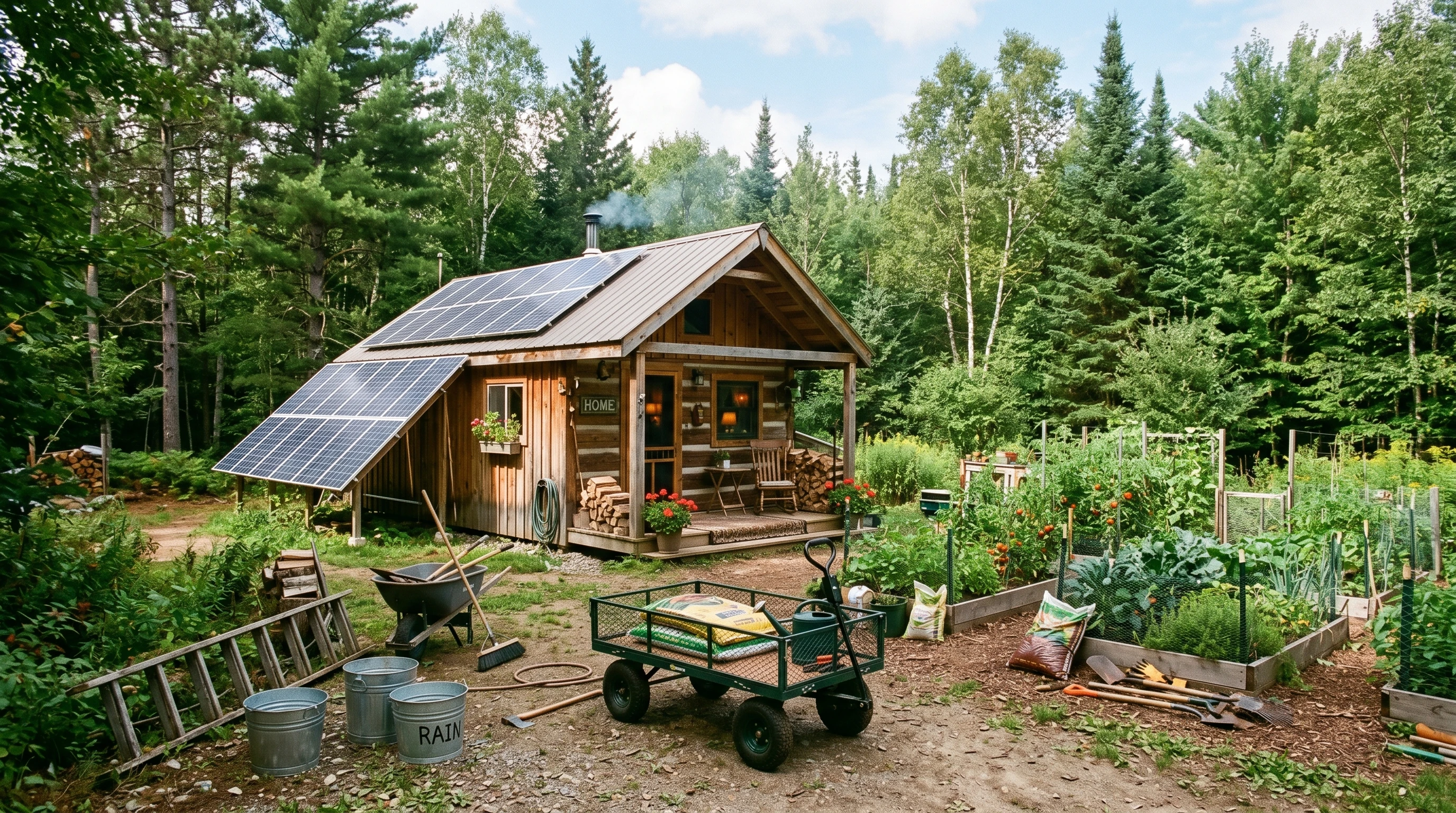
Making the switch to off-grid living comes with this idea that life will be way simpler. And in a lot of ways, it is—but not always in the ways you expect.
The truth is, certain things I didn’t think I’d need are now the very items I rely on daily. Some of them make life more comfortable, while others honestly make it possible to keep everything running smoothly without constant frustration.
Here’s what caught me off guard and why I now keep them close at hand.
Modern “Luxuries” That Turned Out to Be Really Handy
I pictured off-grid life as disconnecting from screens and relying just on my own skills. But a few pieces of tech and comfort gear have ended up being tough to give up, even far from city lights.
High-Speed Internet (Starlink, etc.)
At first, I thought I would use the internet less. Turns out it’s really important for staying in touch, managing banking, looking up how to fix things, and even ordering supplies.
I tried getting by with a simple cell connection, but a proper satellite setup like Starlink quickly became something I rely on daily. When you’re off-grid, being able to troubleshoot problems or order parts without driving hours into town is a huge advantage.
Small Kitchen Appliances
I figured I’d bake everything using my wood stove or open fire. Using the wood stove in the summer was not a good idea. We now have a propane stove.
Reality check: solar panels often give you extra electricity in the summer, so it actually makes sense to use it.
Now I regularly use things like an air fryer for off-grid cooking, a slow cooker, and even a freeze dryer for preserving the garden harvest. When the sun is out the panels charge and we use the energy. Not only does this save propane, but it also makes food prep and preservation much easier.
If you’re working on your setup, this ties in well with my guide on choosing the right solar power system for off-grid cabins, especially when it comes to handling small appliance loads.
If you are interested in preserving food with a freeze dryer learm more here: How To Preserve Food For Decades
Basic Air Conditioning or Dehumidifier
Nobody told me how brutal the humidity could get inside a cabin during peak summer. We started out with fans, but with the amount of power our solar produced we were able to upgrade.
A small compact dehumidifier for small cabins and off-grid spaces can make a huge difference. Skipping this can make sleeping uncomfortable and, honestly, wear you down after a few weeks of muggy nights.
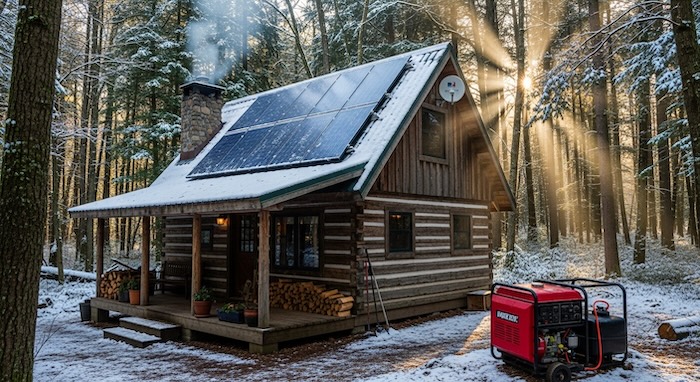
Backup Generator (One of the Biggest Game Changers)
One added tip—having a generator to boost your batteries makes life way smoother, especially in winter.
We use a portable inverter generator for off-grid backup power every couple of days when sunlight is limited. It lets you run what you need without worrying about draining your entire system.
Tools I Brushed Off But Can’t Live Without
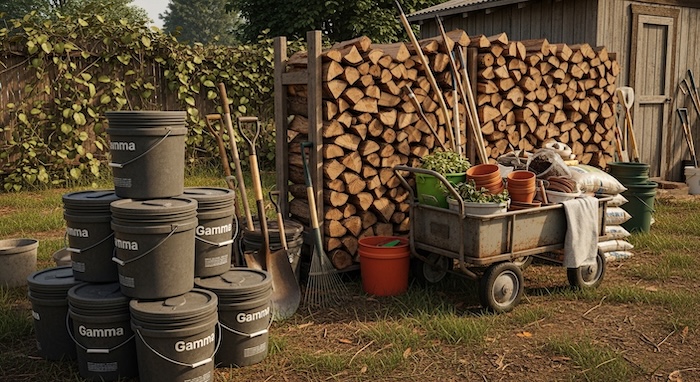
The right tools make the difference between a project that lasts an hour and one that drags on for days.
Five-Gallon Buckets
I completely underestimated how many buckets I’d need.
I keep several food-grade 5 gallon buckets for water, feed, and storage around at all times. They get used for everything—moving water, collecting rain, storing grain, even hauling garden produce.
I also keep one near the water stand for taking water out to the chickens. I am fortunate to have many of these buckets. I am a soap maker and most of my supplies come in food grade 5 gallon buckets.
Gamma Seal Lids
Once I discovered these, I never went back.
Adding gamma seal lids for 5 gallon bucket food storage turns regular buckets into airtight, waterproof containers. They keep out mice, moisture, and bugs—especially important if you’re storing flour, rice, or animal feed long term.
Utility Cart or Heavy Duty Wheelbarrow
Dragging logs, gravel, or firewood gets old fast.
A sturdy heavy-duty garden cart for hauling firewood and supplies saves your back and speeds everything up. I use mine for everything from garden harvests to feed bags.
Battery Powered Nail Gun
I thought hammers were fine for everything.
Once I started building more regularly, a cordless battery-powered nail gun for DIY projects cut my work time in half. If you’re putting up sheds, fencing, or doing repairs, this becomes one of those tools you reach for constantly.
Also don’t overlook simple multi-use items like:
- heavy-duty waterproof tarps for protecting firewood and supplies
- adjustable bungee cords for securing loads and quick fixes
I use both of these almost daily.
Food, Water, and Waste: Not Fancy, But Essential
It’s easy to assume you’ll get by with the basics, but some everyday items make a huge difference when you can’t just run to the store.
Manual Grain Mill
Pre-ground flour doesn’t store well long-term.
Switching to whole grains and using a manual hand crank grain mill for fresh flour at home changed how I store food. It lasts longer and tastes better, especially when baking bread.
Composting Toilet Setup
The classic bucket works—but it’s not ideal long-term.
A proper self-contained composting toilet for off-grid living makes dealing with waste much easier, especially if you’re living off-grid year-round.
Mason Jars (All Sizes)
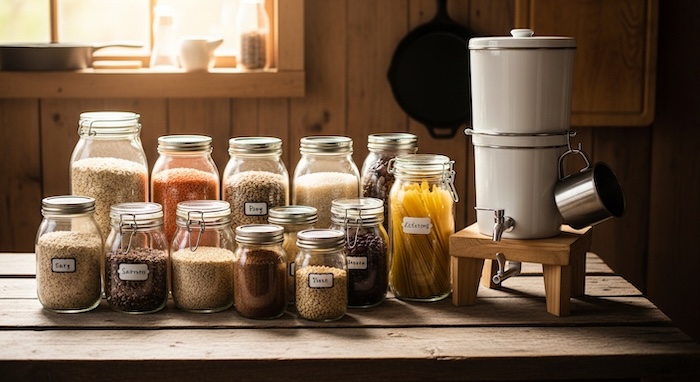
I use wide mouth mason jars for canning and dry food storage for just about everything—canning, leftovers, pantry storage, and more.
If you’re building up your food storage, you might also want to read my guide on best foods for long-term storage off-grid.
Water Filtration (Absolutely Critical)
Water safety is easy to overlook—until something goes wrong.
I always recommend having a reliable gravity-fed water filtration system for off-grid drinking water along with backup purification options.
You can dive deeper into that in my full guide on off-grid water filtration systems and safe drinking water.
Maintenance Gear That’s Easy to Forget
Living off-grid means you’re responsible for everything—maintenance, safety, and repairs.
Scythe or Manual Grass Cutter
Gas tools break. Batteries die.
A manual cutter is always ready to go, and once you get used to it, it’s actually pretty satisfying to use.
Headlamps (Not Just Flashlights)
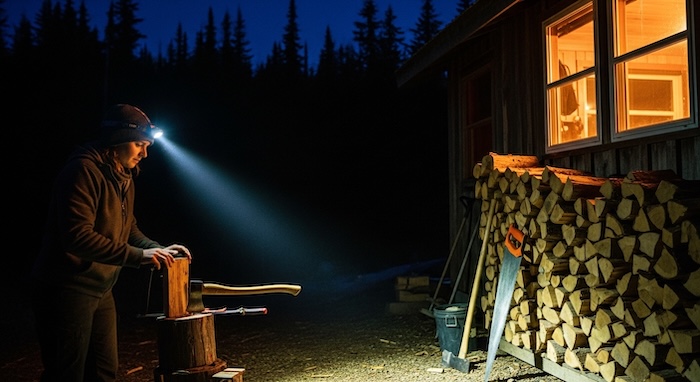
A good LED headlamp for hands-free lighting while working at night makes a huge difference, especially during winter months.
I keep one in the cabin, one in the barn, and one in the truck.
Two-Way Radios
Cell service isn’t reliable.
A set of long-range two-way radios for off-grid communication makes it easy to stay connected across the property or when working alone.
Fire Extinguishers (Multiple Locations)
Wood stoves, propane, candles—it all adds risk.
I keep multi-purpose fire extinguishers for cabin and workshop safety in multiple buildings.
If you heat with wood, make sure to also read my post on wood stove safety and fire prevention tips.
Also, always keep a stash of repair basics like duct tape, wire, spare fuses, and plumbing parts. These small items can save you when something breaks at the worst time.
Gear and Clothing That Keep Me Comfortable
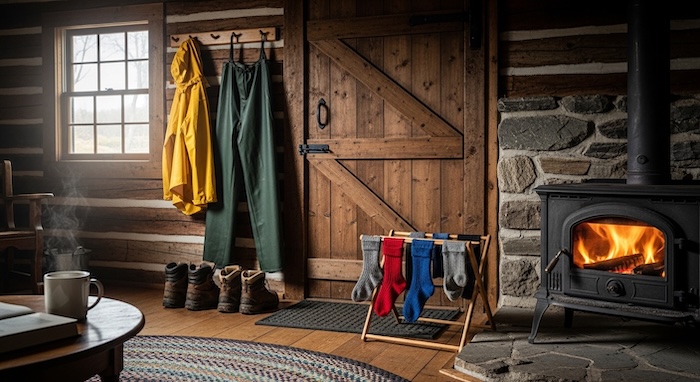
This was something I didn’t take seriously at first—but it matters.
Wool Socks
Dry feet make all the difference.
A few pairs of merino wool socks for cold and wet off-grid conditions last longer, stay warm when damp, and dry quickly near the stove.
Heavy Duty Rain Gear
It rains—a lot.
Reliable waterproof rain gear for outdoor work and homesteading keeps you productive instead of stuck inside.
Work Gloves
Your hands take a beating off-grid.
Durable heavy-duty leather work gloves for chopping wood and fencing protect your hands and last much longer than cheap pairs.
Layering is also key. I always keep spare hats and gloves nearby, especially in winter.
Common Questions About Must-Have Off-Grid Items
Is running appliances like air conditioners or bread makers worth it?
Absolutely—as long as your solar system can handle it. Summer is the best time to take advantage of extra power.
Can you get by with hand tools?
Yes—but cordless tools save time and energy, especially for repeated tasks.
What’s the best way to handle waste?
A proper composting toilet setup is the most practical long-term solution.
What comfort items surprised you most?
Things like blackout curtains, bug netting, and even a simple solar shower made a bigger difference than I expected.
Tips for Deciding What to Bring Off-Grid
Every setup is different, but I always ask:
- How easy is it to repair?
- Can it serve more than one purpose?
- Does it actually make life easier here?
Final Thoughts
After years of trial and error, my best advice is this: don’t dismiss “luxuries” too quickly.
A lot of these items improve comfort, save time, and make off-grid life sustainable long-term.
It’s not about going without—it’s about choosing what truly matters.
Disclosure
This article is for informational purposes only and reflects personal experience. Some links may be affiliate links, which means I may earn a small commission at no extra cost to you.
© 2026, Teresa. All rights reserved.