
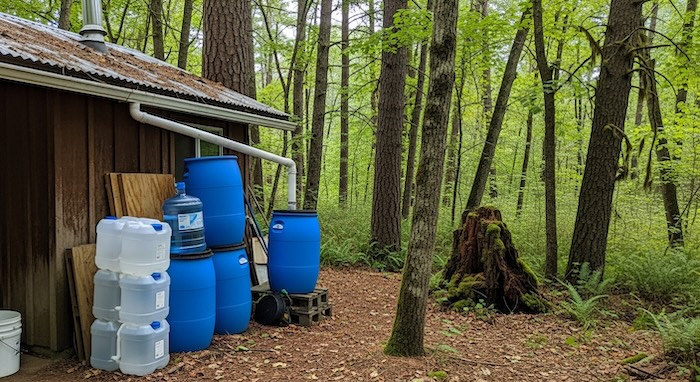
Storing water off-grid is something I get asked about a lot, and for good reason. Safe long-term water storage might sound simple, but it can make life a whole lot easier when you live away from municipal water or just want to be better prepared for emergencies.
Water goes from a nice convenience to an absolute necessity very quickly when regular access is interrupted. Whether you rely on rainwater, hauled water, a well, or a mix of all three, having a safe storage system in place gives you peace of mind.
In this guide, I’m walking you through what I’ve learned about off-grid water storage, from choosing the right containers to handling freezing winter temperatures and algae-prone summer heat.
Why Safe Water Storage Matters Off Grid
When you live off-grid, you’re responsible for every part of your water system. That includes collecting it, storing it, protecting it, and making sure it stays safe to use.
If stored water becomes contaminated, the problem is bigger than bad taste. Unsafe water can lead to stomach bugs, bacteria issues, and other health problems that are a lot harder to deal with when you’re living remotely.
Even if your main water source is reliable, it still makes sense to keep stored water on hand. Pipes freeze. Pumps fail. Drought happens. Winter storms can cut access off fast. A backup supply helps you stay comfortable and gives you breathing room when something goes wrong.
This is also one of those mindset shifts that comes with off-grid living. Water storage isn’t just an emergency prep task — it becomes part of everyday self-reliance. If you’re working toward that lifestyle, it pairs well with my guide on building a fully independent setup in Off-Grid Living: A Practical Guide to Self-Sufficient Cabin Life.
Best Containers for Water Storage
Not all containers are good for long-term water storage. Over the years, I’ve found a few that work much better than others.
Food-Grade Plastic Barrels
Blue 55-gallon food-grade barrels are popular for a reason. They’re durable, easy to find, and hold a useful amount of water without taking up too much space.
If you’re setting up a reliable system, these food-grade 55-gallon water storage barrels are one of the easiest and most durable ways to store a large amount of clean water off grid.
Just make sure anything you use is clearly labeled food-grade and has never been used for chemicals.
Stackable Water Containers
If you’re tight on space or want something easier to move around, stackable containers are a great option. They store neatly, fit into smaller areas, and are much easier to carry than large barrels.
I like keeping a few stackable water storage containers inside the cabin for backup water, especially in winter when access to outdoor storage can get tricky.
Glass Jars
Glass doesn’t leach chemicals, which is a plus, but it’s heavy and breakable. I mostly use glass for smaller indoor amounts or short-term storage where it won’t be exposed to freezing temperatures or rough handling.
Stainless Steel Tanks or Drums
If you want something long-lasting, stainless steel is a great option. It resists corrosion, doesn’t affect taste, and works well for long-term storage. It’s especially useful for rainwater systems or larger setups.
Large Cisterns or Poly Tanks
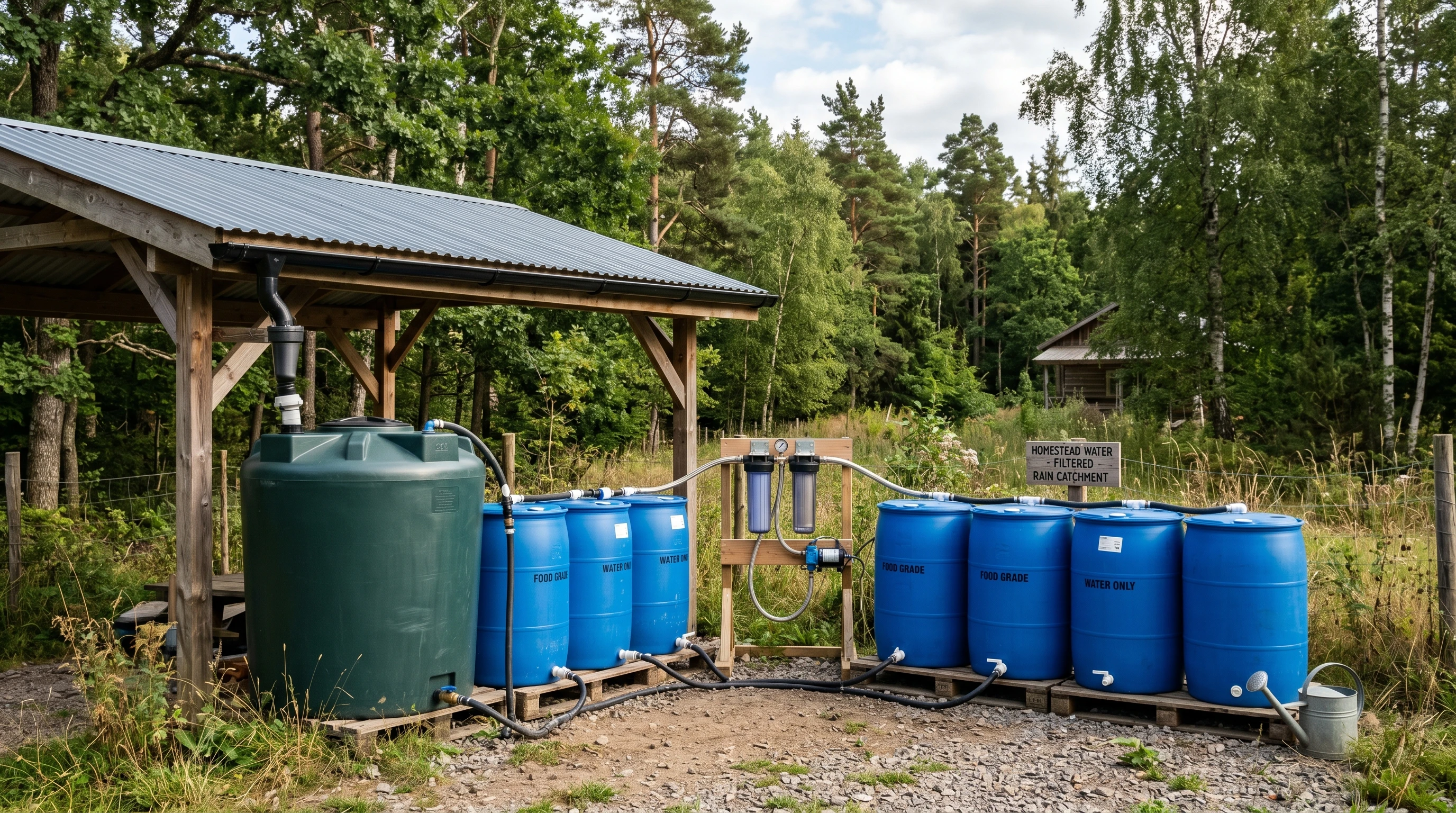
For bigger off-grid systems, a cistern or large polyethylene tank makes a lot of sense. These can hold hundreds or even thousands of gallons.
If you’re planning to collect rainwater to fill these, it’s worth reading my full guide on A Complete Guide to Safe Rainwater Collection, Storage, and Filtration so you’re starting with clean water from the beginning.
Collapsible Water Containers
Collapsible containers are great for temporary use, travel, or backup storage. They’re lightweight and store flat when not in use, which makes them handy to keep around.
Containers You Should Never Use
Some containers just aren’t worth the risk, even if they’re free.
- Buckets or barrels that held chemicals, oil, or paint
- Milk or juice jugs that break down quickly
- Non-stainless metal containers that can rust
- Random recycled containers with unknown history
When it comes to water, it’s always better to be safe than sorry.
How to Store Water Properly
Safe water storage starts before you even fill the container.
Here’s what I do:
- Wash and sanitize each container before filling
- Use water from a trusted source
- Seal containers tightly
- Label them with the fill date
- Store them in a cool, dark location
If I’m storing water long term, I sanitize containers with a mild bleach solution and rinse them well first.
Keeping water cool and out of direct sunlight makes a big difference. Heat and light can break down containers and encourage bacteria or algae growth. A basement, shed, or shaded area works much better than leaving containers in full sun.
How to Keep Stored Water Safe
Water storage isn’t a one-and-done job. You need to stay on top of it.
Here’s what works:
- Rotate water every 6 to 12 months
- Check for cloudiness or strange smells
- Keep containers off the ground
- Use only plain unscented bleach if needed
- Filter water before drinking if there’s any doubt
If I’m unsure about water quality, I run it through a filter first.
A reliable gravity-fed water filter system is one of the best tools you can have for off-grid living, especially when dealing with stored or collected water.
If you’re still deciding which one to use, I break down the best options in my post on best off-grid water filters, including what works without power.
Storing Water in Winter (Off-Grid Reality)
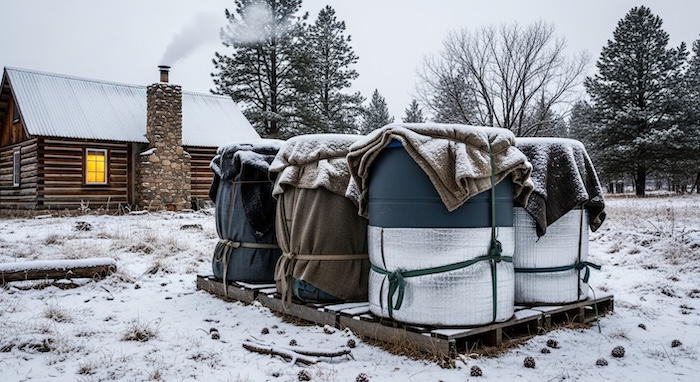
Winter is where things get tricky. Water can freeze solid fast if you’re not prepared.
Here’s what helps:
Keep Some Water Indoors
Even a few jugs inside can make a big difference.
I always keep a couple of 5-gallon water storage jugs in a heated space so I have access to water no matter what’s happening outside.
Insulate Outdoor Storage
If you store water outside, insulation is key.
Using something like an insulated tank wrap for water storage or even basic materials like blankets or straw can help prevent freezing.
Raise Containers Off the Ground
Setting barrels on pallets helps reduce how much cold transfers from frozen ground.
Leave Room for Expansion
Water expands when it freezes. Don’t overfill containers — leave space to prevent cracking or damage.
Summer Water Storage Tips
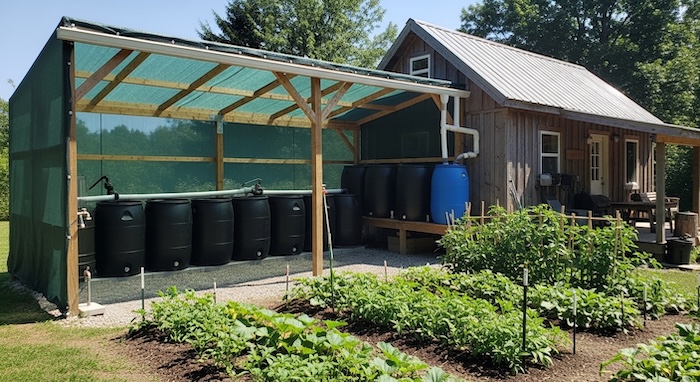
Summer brings a different set of challenges.
Heat, sunlight, and insects can turn clean water into a problem quickly.
Here’s what I do:
- Keep containers in the shade
- Use opaque tanks or barrels
- Make sure lids are sealed tightly
- Check regularly for algae or buildup
Sunlight is the biggest issue in summer, so blocking it makes a big difference.
Storing Rainwater Safely
Rainwater is one of the best off-grid water sources, but it needs to be handled properly.
To keep it safe:
- Use a first-flush diverter
- Screen your downspouts
- Keep gutters clean
- Store water in food-grade containers
- Filter before drinking
The first flush helps keep dirt, debris, and contaminants out of your main storage.
For a full breakdown of how to set this up properly, see my guide on A Complete Guide to Safe Rainwater Collection, Storage, and Filtration.
And if you’re planning to drink rainwater, you’ll definitely want to check out best off-grid water filters to make sure it’s safe.
Common Water Storage Mistakes
I see these mistakes all the time:
- Using non-food-safe containers
- Forgetting to rotate stored water
- Letting sunlight hit storage tanks
- Leaving lids loose
- Assuming clear water is safe
Staying on top of these small details makes a big difference.
Helpful Tools and Gear
A few simple tools make water storage much easier.
A hand water transfer pump makes it easy to move water without spills.
A food-grade drinking water hose helps keep your water clean while filling containers.
A gravity water filter for off-grid living gives you a reliable way to make water safe to drink.
Keeping emergency water treatment tablets on hand is a smart backup for travel or unexpected situations.
And if you want a quick way to check water quality, a TDS water quality meter can give you a fast reading.
A Simple Off-Grid Water Storage Setup
You don’t need a complicated system to get started.
A simple setup might include:
- Two 55-gallon barrels for bulk storage
- A few smaller containers indoors
- A gravity-fed filter for drinking water
- A basic rainwater catchment system
This kind of setup is affordable, reliable, and easy to manage without power.
Frequently Asked Questions
How long does stored water last?
With proper storage, most water is good for 6 to 12 months. I rotate mine twice a year to be safe.
Does stored water need treatment?
Tap water usually doesn’t for shorter storage. Rainwater and well water should always be filtered or treated.
How do I know if water is bad?
If it smells, looks cloudy, or has debris, don’t risk it. Clean the container and refill.
Can I store water outside?
Yes, but you need to protect it from freezing in winter and heat in summer.
How do I move water without power?
A siphon, gravity, or a simple hand pump works just fine.
Wrapping Up
Safe off-grid water storage isn’t just about filling a few barrels and forgetting about them. With the right setup and a few simple habits, you can have clean, reliable water ready all year long.
It doesn’t have to be complicated — just consistent.
And when you live off grid, knowing you have safe water on hand is one of the best kinds of peace of mind you can have.
Disclosure: This content is for informational purposes only and reflects personal experience. Always evaluate safety and security solutions for your specific location. Some links may be affiliate links.
© 2026, Teresa. All rights reserved.