
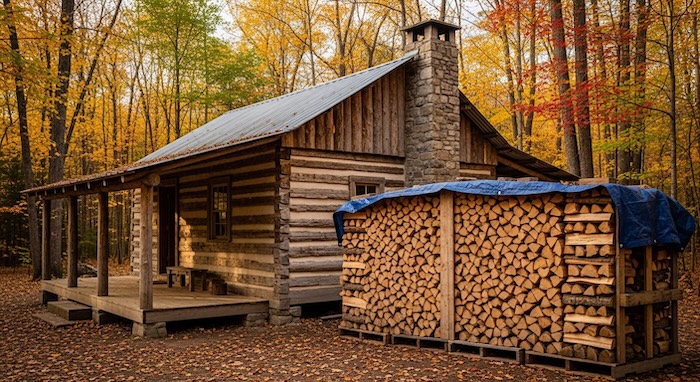
If you’ve ever tried to start a cozy fire and ended up with a smoky room and barely any heat, you already know how frustrating poorly stored firewood can be.
Storing firewood properly isn’t just about keeping things neat. When it’s done right, your wood burns hotter, lights easier, and produces far less smoke. Over the years, heating off-grid with a wood stove has taught me that a good fire starts long before you strike a match—it starts with how you store your wood.
Here’s what actually works if you want reliable heat all winter without the headaches.
Why Proper Firewood Storage Matters
Having a pile of firewood close to your cabin might seem convenient, but how you store it makes a huge difference in how it burns—and how safe your setup is.
Wood that sits on wet ground, gets soaked by rain, or can’t breathe ends up holding moisture inside. Wet firewood is hard to light, burns cooler, and creates excessive smoke. That smoke leads to creosote buildup in your chimney—the stuff that can cause dangerous chimney fires.
If you’re running a wood stove regularly, this isn’t something to ignore. I go deeper into that in my guide on Wood Stove Safety: What to Know Before You Burn.
When firewood is stored properly, you’ll notice:
- Hotter, cleaner fires
- Less smoke and mess
- Better efficiency (less wood used)
- Fewer pest problems
How to Store Firewood: The Basics
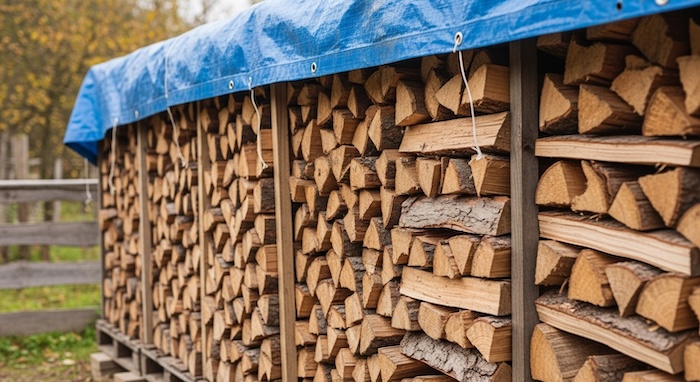
There are a few simple rules that make all the difference when it comes to storing firewood properly:
Keep Firewood Dry
Moisture is the biggest enemy of good firewood. Store your wood where rain and snow won’t soak it, but still allow airflow so it can dry out properly.
Get Wood Off the Ground
If firewood sits directly on the ground, it will absorb moisture and attract bugs.
A simple fix is using pallets or a raised rack. You can use something like a sturdy outdoor log rack to keep everything elevated and organized.
Cover the Top, Not the Sides
A tarp or firewood cover should protect your stack from above—but don’t wrap the whole pile.
A breathable firewood cover works best for this setup.
Airflow is what actually dries your wood, so the sides need to stay open.
Choose the Right Location
Pick a spot that gets:
- Sun exposure (helps dry wood faster)
- Good airflow (wind is your friend)
- Slight elevation (avoid low, damp areas)
Getting these basics right means hotter fires and far less frustration once winter hits.
Firewood Stacking Ideas That Actually Work
How you stack your firewood matters more than most people think. Good stacking improves airflow, stability, and drying speed.
Here are a few methods that actually work:
Traditional Row Stack
The most common method. Stack wood in rows, bark side up, alongside a wall or fence.
✔ Easy access
✔ Simple to build
✔ Works well for most setups
Holzhausen (Round Stack)
This circular stack is both practical and space-saving. Wood is stacked in a ring with the center acting like a chimney for airflow.
✔ Excellent drying
✔ Saves space
✔ Looks great
Crib-Style Ends
Logs are crisscrossed at the ends of rows (like Lincoln Logs) to keep stacks stable.
✔ Prevents collapse
✔ Adds strength to larger stacks
Quick Comparison
| Method | Best For | Pros | Cons |
|---|---|---|---|
| Traditional Stack | Most homes | Easy, organized | Takes space |
| Holzhausen | Small areas | Great airflow | Takes practice |
| Log Rack | Convenience | Keeps wood dry | Costs more |
No matter what method you use, aim for stacks around 4 feet high for safety and stability.
Best Gear for Storing Firewood
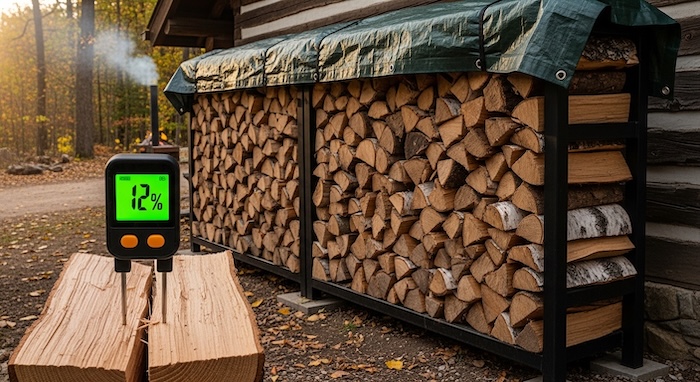
A few simple tools make firewood storage a lot easier and more efficient:
Log Rack
Keeps wood off the ground and improves airflow.
If you want something that lasts, a metal log rack is worth it.
Firewood Cover
Protects from rain and snow without trapping moisture.
Look for one designed specifically for firewood stacks.
Moisture Meter
Takes the guesswork out of knowing when your wood is ready.
Firewood burns best under 20% moisture, and this tool tells you exactly where you’re at.
Firewood Carrier
Makes hauling wood into your cabin way easier and keeps debris outside.
A durable firewood carrier or canvas tote saves a lot of trips.
If you’re using a wood stove daily, having the right setup matters just as much as the wood itself. I break down more useful tools in my post on Wood Stove Accessories That Are Actually Worth Having.
Common Problems with Poor Firewood Storage
Bad storage leads to more than just inconvenience—it causes real problems:
- Low heat output – energy is wasted drying wet logs
- Creosote buildup – increases chimney fire risk
- Hard-to-start fires – frustrating and time-consuming
- Pests – bugs, mice, and insects move in
If you’ve ever struggled to light damp wood, you already know how quickly it turns into a headache.
Tricks to Keep Firewood Dry (Even in Wet Weather)
When you live off-grid or rely on wood heat, weather can work against you. These small tricks help keep your firewood dry year-round:
- Face stacks toward the sun (south-facing if possible)
- Leave space between rows for airflow
- Only cover the top of the stack
- Keep stacks away from walls or buildings
- Store bulk wood 15–30 feet from your cabin
Bringing in only a few days’ worth at a time keeps your indoor space cleaner and bug-free.
The Science Behind Seasoning Firewood
“Seasoned” firewood simply means it’s been dried long enough to burn properly.
Fresh-cut (green) wood can contain over 50% moisture, while good firewood should be under 20%.
To speed up seasoning:
- Split logs early
- Stack immediately
- Allow full airflow
- Use a moisture meter to confirm readiness
You’ll know wood is ready when:
- It looks gray and cracked on the ends
- It sounds hollow when knocked together
Taking the time to season wood properly gives you hotter fires, less smoke, and a much safer setup overall.
Where NOT to Store Firewood
Avoid these common mistakes:
- Directly on bare soil
- Wrapped tightly in plastic
- Pressed against your house
- In shaded, damp areas
These setups trap moisture and create the exact problems you’re trying to avoid.
Firewood Storage FAQs
How far from my house should I store firewood?
Keep main stacks about 15–30 feet away. This helps prevent pest issues and improves airflow.
Should firewood be covered year-round?
Cover during wet weather, but allow exposure during dry periods to improve seasoning.
Can I store firewood indoors?
Only bring in what you’ll use soon. Large indoor stacks attract insects and create mess.
What wood burns best?
Hardwoods like oak, maple, and ash burn hotter and longer than softwoods like pine.
Final Thoughts: Small Changes, Big Difference
If you rely on wood heat like I do, getting your firewood storage right makes a huge difference.
A few simple adjustments—keeping wood dry, stacked properly, and off the ground—can turn frustrating fires into steady, reliable heat all winter long.
Once you’ve got a solid system in place, everything else gets easier.
Extra Tips for Cleaner, Safer Fires
If you want the absolute best burn and the least hassle, here are a few habits to pick up:
- Rotate your wood; use the oldest, driest wood first, and add new wood to the back.
- Double-check your tarp or cover after storms or windy weather. Fixing it right away avoids long-term problems.
- Set aside time each spring or fall to restack and check for rot or critters.
- Always keep your chimney or stove pipe clear. Regular checks and sweeps keep your fires burning bright and safe, and help you spot creosote buildup before it becomes a problem.
With the right setup, you end up with a reliable stash of clean, dry wood and way fewer headaches all season. Take these small steps, and you’ll jump into winter ready to enjoy eye-catching, roaring fires every time you want them.
Disclosure: This content is for informational purposes only and reflects personal experience. Always evaluate safety and security solutions for your specific location. Some links may be affiliate links.
© 2026, Teresa. All rights reserved.