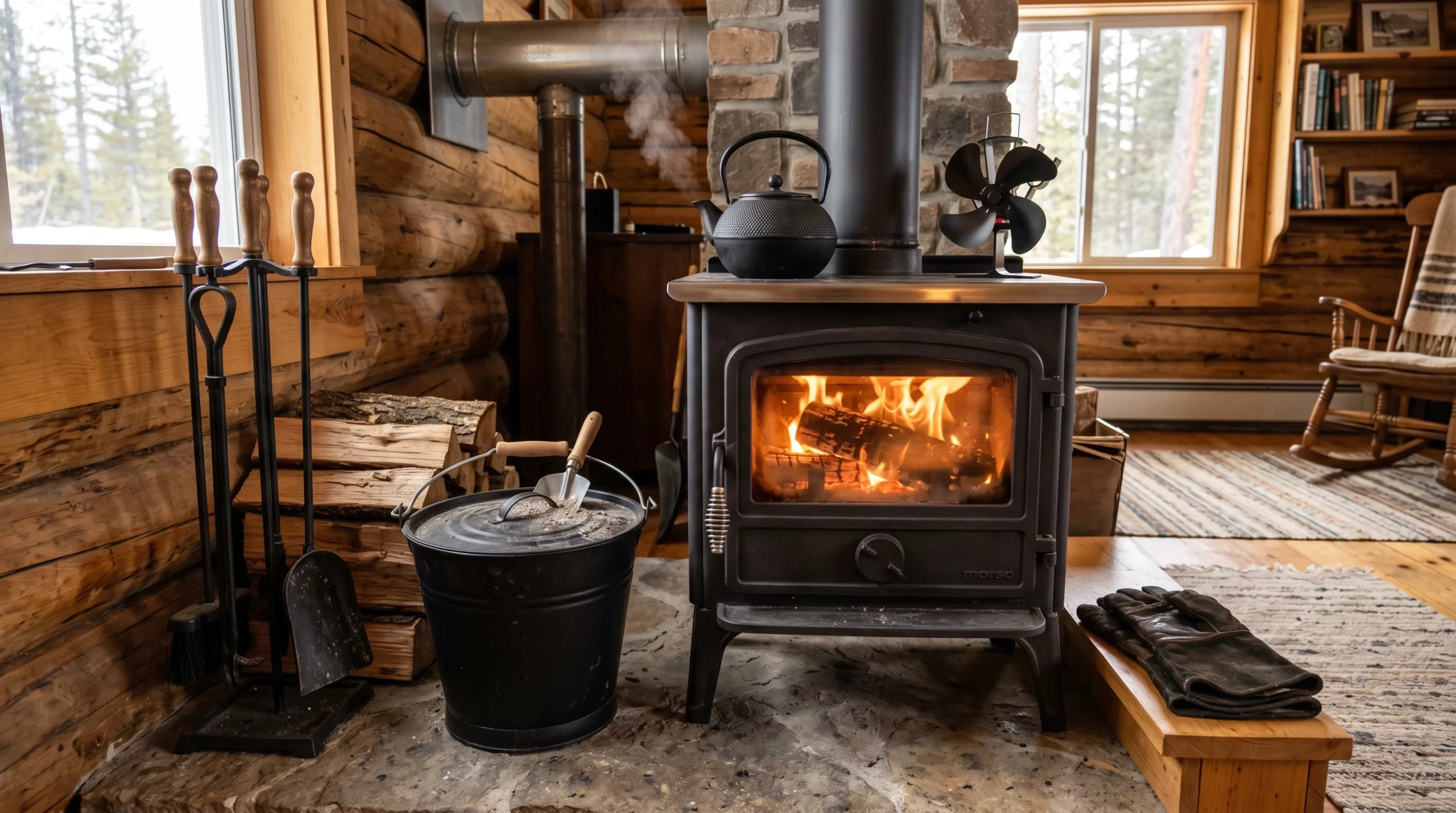
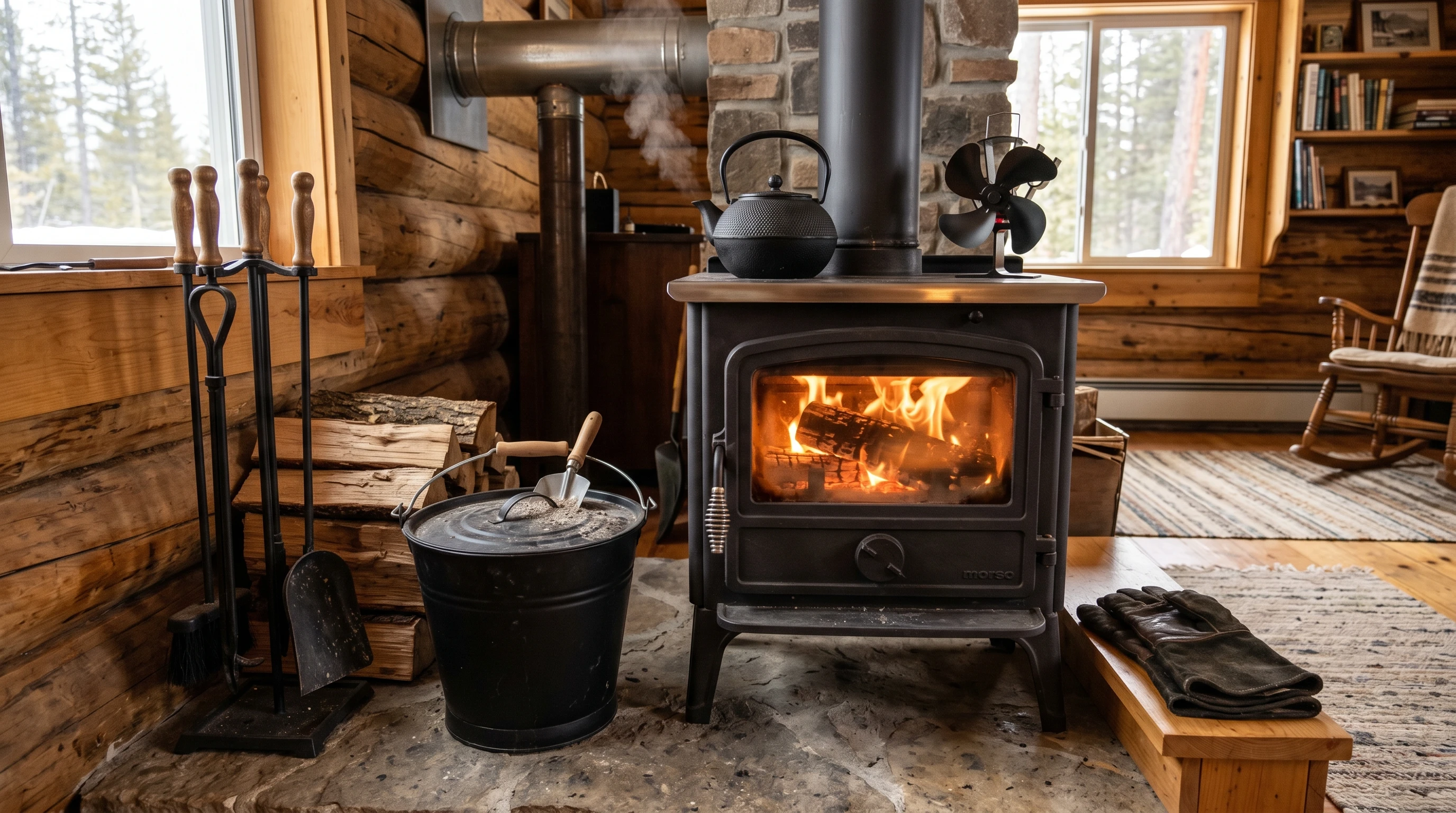
If you heat your place with a wood stove like I do, you already know it’s the heart of the cabin once the cold sets in. But the stove itself is only part of the setup. Having the right accessories makes everything easier, safer, and a whole lot more efficient.
Over the years, I’ve tried a few different tools and setups. Some things I now use every single day—others just sit there. So here are the wood stove accessories that are actually worth having, whether you’re off-grid or just heating with wood at home.
Why Wood Stove Accessories Matter Off-Grid
Heating with wood when you’re off-grid is all about reliability and making the most of your resources.
With the right accessories, you can:
- Burn less wood while getting more heat
- Keep your space cleaner
- Reduce fire risks
- Make daily stove use easier
If you’re running a wood stove regularly, safety matters too. I go into more detail in my guide on wood stove safety and what to know before you burn, especially around creosote buildup and proper airflow.
Fireplace Tool Set (Poker, Shovel, Brush)
A basic tool set is the first thing I grab when firing up the stove. The poker helps position wood for steady burns, the shovel makes ash cleanup straightforward, and a sturdy brush keeps the hearth area clean.

This is one of those things you don’t think much about—until you need it.
A basic set usually includes:
- Poker for moving logs around
- Shovel for ash cleanup
- Brush to keep things tidy
You’ll use these constantly through the winter.
I like having a sturdy cast iron fireplace tool set with a solid stand so it stays put on uneven floors and doesn’t tip over when you grab something quickly.
🪵 Metal Ash Bucket (With Lid)
Nothing beats a heavy-duty metal bucket with a secure lid for ash disposal. Safe ash handling prevents fires and keeps the area around the stove tidy.

Ash builds up faster than you expect, especially if you’re running the stove daily.
One thing I learned early—never use plastic, and never assume ashes are cold.
A metal ash bucket with a tight-fitting lid is a must. I keep mine right near the stove so I can clean out the firebox safely without making a mess.
Even ashes that look dead can stay hot for days, so that lid really matters.
🌡️ Wood Stove Thermometer
Getting the most from your fire doesn’t mean stuffing the firebox full of wood. A stove thermometer helps you burn smarter.
It shows if your stove is:
- Too cool (which leads to creosote buildup)
- Too hot (which wastes wood and can damage your stove)

This is one of the most overlooked tools—and one of the most useful.
A thermometer helps you:
- Burn at the right temperature
- Avoid overheating your stove
- Reduce creosote buildup
I added a magnetic wood stove thermometer on the flue pipe, and it made a noticeable difference in how efficiently the stove burns.
It’s a simple upgrade that saves wood and keeps things safer.
🪵 Indoor Firewood Rack
Hauling in armloads of wood gets old—and messy—fast.

Keeping a small supply of wood inside just makes life easier.
It helps:
- Keep wood dry
- Reduce dirt and bugs
- Keep things organized
A compact indoor firewood rack near the stove is perfect for your daily supply without cluttering up your space.
I usually keep a couple days’ worth inside and the rest stacked outside.
🔥 Heat-Powered Stove Fan
A heat-powered fan is one gadget that makes a noticeable difference in comfort. These fans sit right on top of the stove and use heat to spin the blades; no plugs or batteries needed. The moving air helps distribute warmth throughout the space.

This is one of my favorite upgrades for off-grid living.
It runs entirely off the heat from your stove—no power needed.
What it does:
- Moves warm air through the room
- Reduces cold spots
- Makes the whole cabin feel warmer
A heat-powered stove fan is one of those small additions that makes a big difference, especially in larger or drafty spaces.
🔥 Fire Starters (Natural or DIY)
Lighting a fire shouldn’t be a struggle.
Natural fire starters—like wax cubes, wood chips, or even homemade dryer lint starters—make things a lot easier, especially with damp wood.

Nobody wants to fight with a stubborn fire first thing in the morning.
You can make your own pretty easily with:
- Wax and sawdust
- Dryer lint
- Egg cartons
I still keep a box of natural fire starters on hand for those damp days when kindling just doesn’t cooperate.
🧤 Heat-Resistant Stove Gloves
Stove surfaces, doors, and even tools get dangerously hot pretty quickly. I always use thick, heat resistant gloves when handling the stove, adjusting the damper, or reloading wood.

If you use your stove daily, this one’s a no-brainer.
You’ll want gloves for:
- Opening hot doors
- Adjusting logs
- Handling tools
👉 A good pair of heat-resistant stove gloves saves your hands more times than you’d think.
🧹 Chimney Cleaning Kit
Creosote buildup can:
- Reduce airflow
- Lower efficiency
- Lead to chimney fires
Having a chimney cleaning kit with flexible rods lets you handle basic maintenance yourself without waiting on a service call.
Wood Stove Safety: What to Know Before You Burn
☕ Cast Iron Kettle or Stove Humidifier
🔥 Final Thoughts
When you’re heating with wood, the right setup makes all the difference. These aren’t fancy extras—they’re the tools that make daily life smoother, safer, and more comfortable.
Start with the basics, and over time you’ll figure out what works best for your space.
And if you’re anything like me, your wood stove setup will keep evolving every season.
Common Questions About Wood Stove Accessories Kits
© 2026, Teresa. All rights reserved.