
Living off-grid means having reliable backup power when you need it most. Whether you’re running lights, charging batteries, powering tools, or keeping your freezer cold during bad weather, a dependable generator can make cabin life much easier.
Over the years we’ve learned that no single generator works perfectly for every off-grid setup. Some are better for quiet evenings at the cabin, while others are built for heavy-duty winter backup power.
In this guide I’ll compare some of the best generators for off-grid cabins, including solar generators, inverter generators, and larger dual fuel models so you can decide what works best for your situation.
| Generator | Best For | Fuel Type | Noise Level | Power |
|---|
| Honda EU2200i | Quiet cabins | Gas | Very Quiet | Small-Medium |
| Jackery 2000 Plus | Solar backup | Solar | Silent | Small-Medium |
| Champion 5000W | Budget option | Gas | Quiet | Medium |
| Westinghouse Dual Fuel | Winter backup | Gas/Propane | Moderate | Medium-Large |
| DuroMax XP13000EH | Full off-grid homes | Gas/Propane | Loud | Large |
Table of Contents
- Why Every Off-Grid Cabin Needs Backup Power
- Things to Consider Before Buying a Generator
- Types of Generators for Off-Grid Living
- Best Generators for Off-Grid Cabins
- How Much Generator Power Does an Off-Grid Cabin Need?
- Gas vs Solar Generators
- Generator Safety for Cabin Life
- Frequently Asked Questions
- My Personal Thoughts on Choosing a Cabin Generator
- Final Thoughts
Why Every Off-Grid Cabin Needs Backup Power
Even with a good solar setup, there are times when an off-grid generator becomes essential.
Winter storms, cloudy weeks, running power tools, charging battery banks, or keeping food frozen can quickly drain your power system.
At our cabin we rely heavily on backup power during the darker months when solar production drops. Having a generator available gives peace of mind and helps prevent frozen water lines, dead batteries, and spoiled food.
You may also want backup power for:
- Running a freezer or refrigerator
- Charging deep cycle batteries
- Emergency heating systems
- Power tools and construction
- Water pumps
- Cabin lighting
- Small appliances
- Internet or communication equipment
You may also enjoy reading How To Keep Water From Freezing Off-Grid During Winter.
Things to Consider Before Buying a Generator
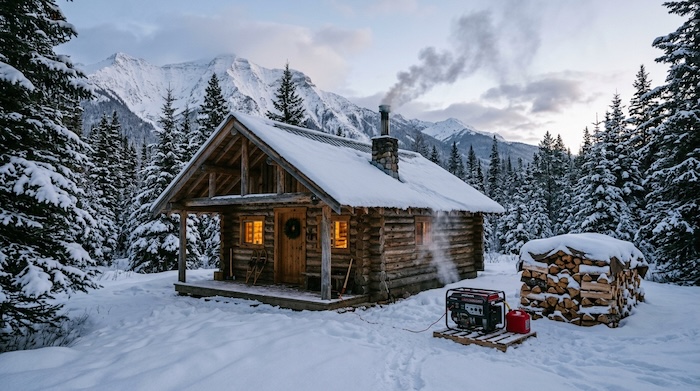
Before buying a generator for your cabin, there are a few important things to think about.
Noise Level
Some generators are surprisingly loud. If you enjoy quiet evenings outdoors or have nearby neighbors, an inverter generator is often worth the extra cost.
Fuel Type
Generators may run on:
- gasoline
- propane
- diesel
- solar battery systems
Propane stores longer than gasoline and is often easier to manage for seasonal cabins.
Runtime
Longer runtime means fewer fuel refills during storms or overnight use.
Portability
Smaller inverter generators are easier to move around the property, while large backup generators can be extremely heavy.
Wattage Requirements
Think carefully about what you actually need to run:
- lights
- refrigerators
- freezers
- pumps
- tools
- battery chargers
Buying too small can become frustrating very quickly.
Cold Weather Reliability
Not all generators start well in freezing temperatures. If your cabin sees harsh winters, reliability matters.
Types of Generators for Off-Grid Living
Before choosing a generator, it helps to understand the different types available.
Solar Generators
Solar generators are quiet, portable battery systems that can be recharged using solar panels or wall power.
They work well for:
- lights
- electronics
- CPAP machines
- small appliances
- charging tools
Pros:
- Quiet
- No fuel required
- Safe indoors
- Low maintenance
Cons:
- Expensive upfront
- Limited heavy appliance use
- Slower recharge times in winter
Good for:
- small cabins
- weekend cabins
- backup emergency power
Inverter Generators
Inverter generators are fuel-powered but much quieter and more efficient than traditional generators.
They’re excellent for:
- battery charging
- electronics
- cabins with neighbors nearby
- fuel efficiency
Pros:
- Quiet operation
- Fuel efficient
- Cleaner power for electronics
Cons:
- More expensive
- Lower power output
Dual Fuel Generators
Dual fuel models run on gasoline or propane.
These are extremely popular for off-grid cabins because propane stores longer and is easier to manage in winter.
Pros:
- Flexible fuel options
- Great backup systems
- Longer fuel storage
Cons:
- Larger units can be noisy
- Heavier to move
Best Generators for Off-Grid Cabins
Best Quiet Generator for Cabin Life
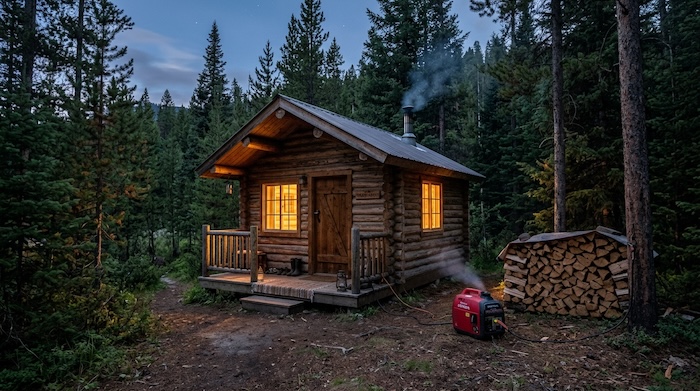
Honda EU2200i Inverter Generator
The Honda EU2200i is one of the quietest and most reliable inverter generators available.
If you spend long periods at your cabin and value peace and quiet, this generator is hard to beat.
Why it works well:
- Extremely quiet
- Excellent fuel efficiency
- Reliable cold-weather starting
- Safe for electronics
- Easy to transport
Best for:
- small cabins
- charging battery banks
- lights and electronics
- quiet evenings outdoors
Honda EU2200i Inverter Generator
Best Solar Generator for Off-Grid Cabins
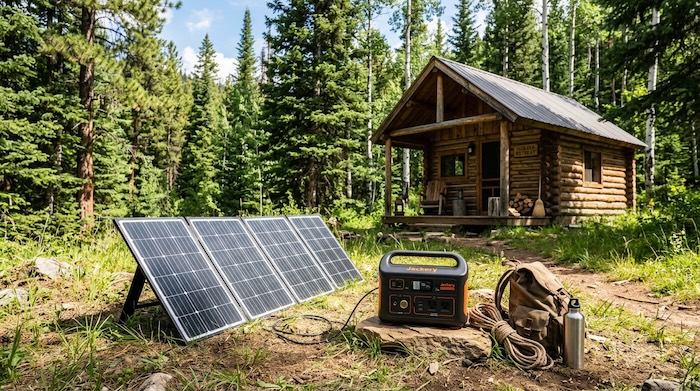
Jackery Solar Generator 2000 Plus
For quiet backup power without fuel storage, the Jackery system is one of the best solar generator options for cabin owners.
This setup works especially well for:
- weekend cabins
- emergency backup
- charging electronics
- small appliances
Why people like it:
- Silent operation
- No gasoline fumes
- Indoor safe
- Expandable battery storage
Best for:
- solar-powered cabins
- backup emergency power
- portable energy needs
Jackery Solar Generator 2000 Plus
You may also enjoy reading Best Off-Grid Solar Panels for Cabins.
Best Budget Generator
Champion 5000-Watt Inverter Generator
If you want a balance between price, power, and quieter operation, this Champion inverter generator is a solid choice.
Why it stands out:
- More affordable than Honda
- Quiet for its size
- Electric start
- RV-ready outlets
- Good runtime
Best for:
- mid-sized cabins
- occasional backup use
- battery charging
Champion 5000-Watt Inverter Generator
Best Dual Fuel Generator
Westinghouse Dual Fuel Portable Generator
Dual fuel generators are excellent for off-grid cabins because propane stores longer than gasoline and is often easier to manage during winter.
This generator gives flexibility during emergencies.
Why it works well:
- Runs on propane or gas
- Long runtime
- Good power output
- Ideal emergency backup
Best for:
- winter backup power
- larger cabins
- off-grid homesteads
Westinghouse Dual Fuel Portable Generator
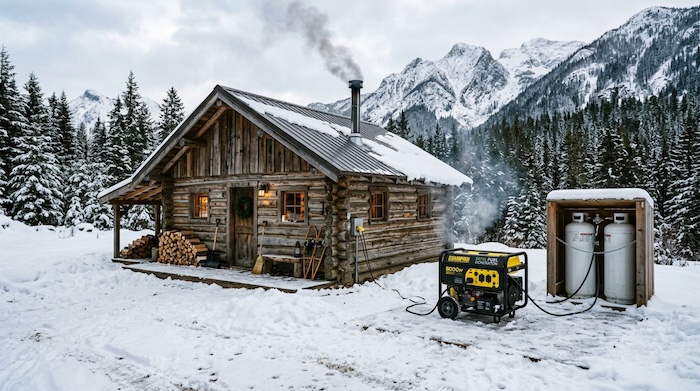
Best Heavy-Duty Backup Generator
DuroMax XP13000EH Dual Fuel Generator
For larger off-grid systems, workshops, or cabins with freezers and pumps, a heavy-duty generator can be essential.
This model is capable of powering:
- well pumps
- multiple appliances
- power tools
- backup heating systems
Why it’s popular:
- High wattage output
- Dual fuel capability
- Great emergency backup
- Suitable for larger cabins
Best for:
- full-time off-grid living
- larger solar systems
- winter emergency backup
DuroMax XP13000EH Dual Fuel Generator
How Much Generator Power Does an Off-Grid Cabin Need?
The right generator depends on what you plan to run.
Here are some rough estimates:
| Appliance | Approximate Watts |
|---|---|
| LED Lights | 10–20 watts |
| Laptop | 50–100 watts |
| Small Fridge | 300–800 watts |
| Microwave | 800–1200 watts |
| Power Tools | 1000–2000 watts |
| Well Pump | 1000–3000 watts |
| Freezer | 500–1200 watts |
If you only need lights and battery charging, a smaller inverter generator may be enough.
If you run pumps, freezers, or tools, you’ll likely want a larger dual fuel system.
You may also enjoy reading Off-Grid Water Pressure Systems
Gas vs Solar Generators
Gas Generators
Best for:
- heavy power loads
- long runtimes
- tools and appliances
Downside:
- noise
- fuel storage
- maintenance
Solar Generators
Best for:
- quiet operation
- electronics
- emergency backup
Downside:
- higher upfront cost
- limited large appliance support
Many off-grid cabin owners eventually use both systems together.
Generator Safety for Cabin Life
Never run a fuel-powered generator inside your cabin, shed, or enclosed area.
Carbon monoxide can become deadly very quickly.
Generator safety tips:
- Keep generators outdoors
- Protect from rain and snow
- Use heavy-duty extension cords
- Install carbon monoxide detectors
- Store fuel safely away from heat sources
Good Amazon additions for this section:
- Kidde Carbon Monoxide Detector
- Heavy Duty Outdoor Extension Cord
- Generator Weatherproof Cover
- 5 Gallon Fuel Storage Can
You may also enjoy reading Wood Stove Safety for Off-Grid Cabins.
© 2026, Teresa. All rights reserved.