
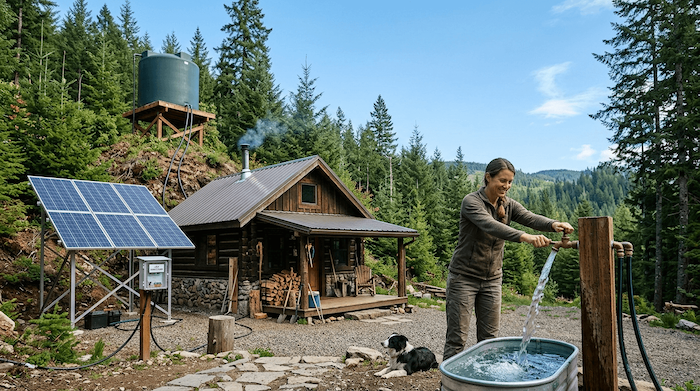
One of the first things you notice when living off-grid is how different water feels without pressure.
A bucket works. A gravity line works. But when you try to take a shower or wash dishes, low pressure gets frustrating fast.
I’ve been there—turning on a tap and getting more of a trickle than a stream.
The good news is, you don’t need a complicated setup to get reliable water pressure off-grid. With the right system, you can have steady flow for everyday use without relying on the grid.
Whether you’re using a rainwater harvesting system, well water, spring water, or stored water in tanks, the right pressure setup can make everyday tasks much easier.
This guide walks through the simplest and most effective ways to get water pressure off-grid—from basic gravity systems to pump setups that feel a lot more like home.
Table of Contents
- Why Water Pressure Matters Off-Grid
- Option 1: Gravity-Fed Water Systems
- Option 2: 12V Water Pump Systems
- Option 3: AC Pump Systems
- Choosing the Right Setup
- Improving Water Pressure
- Don’t Forget Filtration
- Cold Weather Considerations
- Common Mistakes
- Final Thoughts
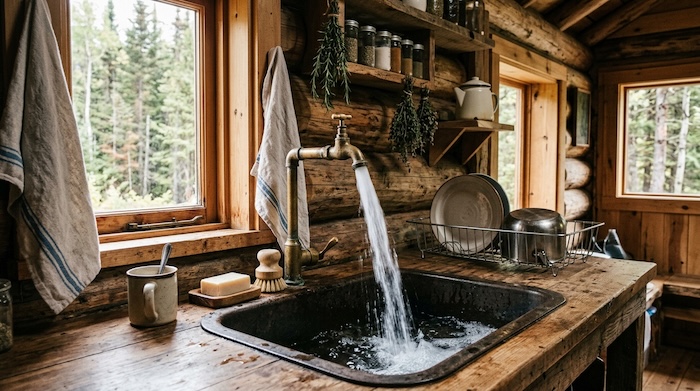
Water pressure isn’t just about comfort—it affects how usable your system really is.
Low pressure can make it hard to:
- Run a shower
- Wash dishes properly
- Use sinks or faucets efficiently
- Run certain appliances
A good pressure setup makes your system feel reliable instead of frustrating.
If you’re still building your setup, this ties directly into your overall system design: https://off-grid-cabin.com/off-grid-water-system-guide/
Gravity is the simplest way to create water pressure.
The concept is straightforward:
The higher your water tank, the more pressure you get.
How It Works
- Water is stored in a tank above your home
- Gravity pulls water down through your pipes
- The vertical height creates pressure
Many off-grid cabins collect their water from roof catchment systems. If you’re just getting started, see my guide on Rainwater Harvesting: From Roof to Tap to learn how to collect and store rainwater safely.
How Much Pressure Can You Get?
As a rough guide:
- 2.3 feet of height = 1 PSI
- 23 feet = about 10 PSI
- 50 feet = around 20+ PSI
That’s enough for basic use, but usually not enough for a strong shower.
What You’ll Need
- Elevated water tank or tower
- Strong support structure
- Piping and shut-off valves
Many setups use large tanks or even IBC totes mounted on a raised platform.
Many off-gridders also install a water level gauge, bulkhead fittings, and IBC tote adapters to make storage systems easier to monitor and maintain.
If you’re planning storage, this helps: https://off-grid-cabin.com/off-grid-water-storage-year-round/
Pros
- No electricity required
- Simple and reliable
- Low maintenance
Cons
- Limited pressure
- Requires elevation
- Not ideal for modern fixtures
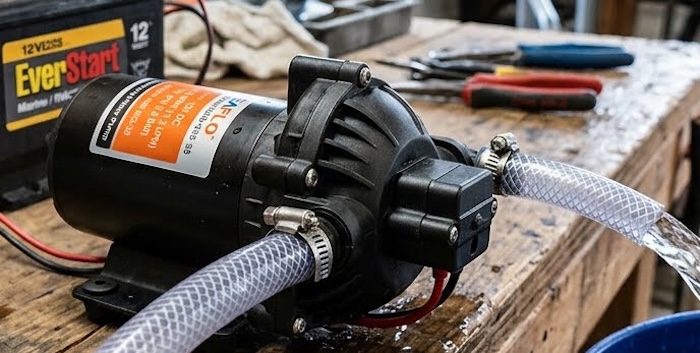
This is the setup most off-grid homes eventually move to.
A 12V water pump pulls water from your tank and pushes it through your system with consistent pressure.
Popular choices include RV-style 12V water pumps designed specifically for cabins, tiny homes, and off-grid water systems.
How It Works
- Pump draws water from storage
- Pressure switch turns pump on/off automatically
- Water flows through your plumbing like a standard system
Many pumps are designed specifically for RV and off-grid use.
What You’ll Need
- 12V water pump
- Power source (solar system or battery bank)
- Basic plumbing connections
A 12V diaphragm water pump is a common choice—it’s reliable and easy to install.
Optional Upgrade (Highly Recommended)
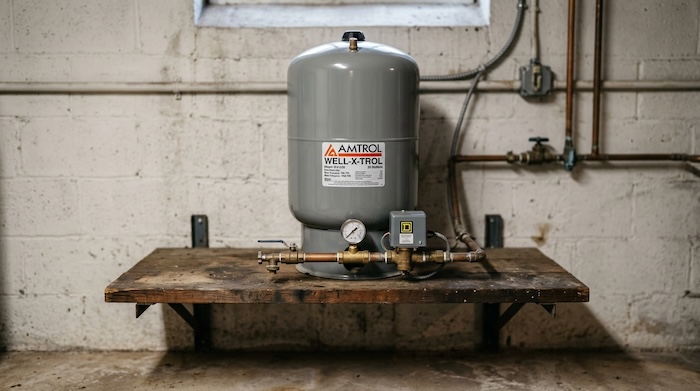
Add a small pressure tank.
This helps:
- Smooth out water flow
- Reduce pump cycling
- Extend pump life
A small pressure tank is one of the best upgrades you can make because it reduces wear on your pump and provides smoother water flow throughout the cabin.
Pros
- Strong, consistent pressure
- Works with normal fixtures
- Easy to expand
Cons
- Requires power
- More components
If you’re running a larger off-grid system, an AC pump can provide even stronger pressure.
These setups are more common when you have:
- A larger solar system
- Inverter setup
- Full household plumbing
They often include:
- Pressure tank
- Pressure switch
- Filtration system
👉 If you’re building a full system, see: https://off-grid-cabin.com/off-grid-water-filtration-systems-compared/
Here’s a simple way to decide:
Go with gravity if:
- You want a no-power system
- You only need basic flow
- Your terrain allows elevation
Go with a 12V pump if:
- You want reliable daily use
- You have solar power
- You want a normal-feeling system
Go with AC pump if:
- You’re running a full home setup
- You need higher pressure
- You already have a strong power system
If your pressure isn’t where you want it, try:
- Raising your water tank higher
- Shortening pipe runs
- Using wider pipes to reduce resistance
- Cleaning filters regularly
- Adding a pressure tank
Even small changes can make a noticeable difference.
Pressure is only part of the system.
You still need clean water.
A basic setup usually includes:
- Inline sediment filter
- Carbon water filter
- Optional gravity filter for drinking water
See full filter options read best-off-grid-water-filters
Many off-grid homeowners also keep a gravity-fed emergency water filter on hand for drinking water during power outages or maintenance periods
Pressure systems can fail quickly in winter if not protected.
Make sure to:
- Insulate pipes
- Protect pumps from freezing
- Drain unused lines
Full winter guide: https://off-grid-cabin.com/how-to-keep-water-from-freezing-off-grid/
- Common Mistakes
- Choosing a pump that’s too small
- Skipping a pressure tank
- Running long pipe distances without planning
- Ignoring filtration
- Not protecting the system in winter
Getting water pressure off-grid doesn’t have to be complicated.
Start simple:
- Gravity for basic setups
- 12V pump for everyday use
- Expand as needed
A good pressure system turns your water setup from “barely working” into something you can rely on every day.
If you’re still building your full system, this guide walks you through everything from source to storage to filtration:
👉 https://off-grid-cabin.com/off-grid-water-system-guide/
This post is for informational purposes only and based on personal experience. Always verify water safety for your own setup and consult a professional if needed. This post may also contain affiliate links, which help support the site at no extra cost to you.
© 2026, Teresa. All rights reserved.