When you live off-grid, you start looking at energy a little differently.
Every appliance that doesn’t need electricity, propane, gasoline or firewood is one less thing taking from your power system or fuel supply. That’s what makes solar ovens so interesting.
A solar oven uses sunlight.
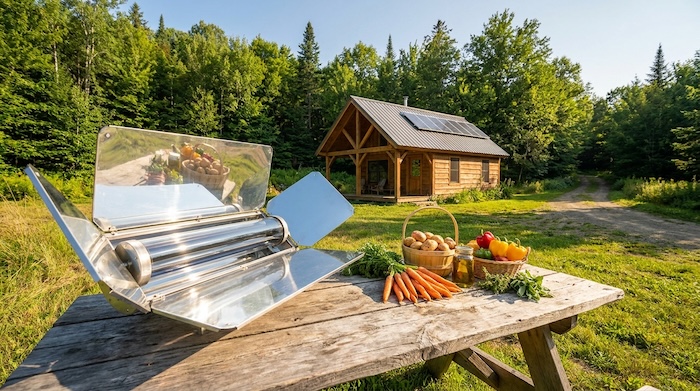
GoSun solar ovens take the traditional idea of solar cooking and make it much more practical. Instead of a large box-style solar cooker, GoSun uses reflective panels and an insulated cooking chamber to capture solar energy and turn it into cooking heat.
For an off-grid cabin, homestead, camping setup, or emergency preparedness kit, that’s an interesting concept.
But GoSun ovens aren’t inexpensive.
So, are they actually worth buying for off-grid living?
Let’s have a look at how they work, where they make sense, their limitations, and which GoSun model may be the best choice for an off-grid setup.
Product: GoSun Solar Oven Series
Fuel Source: Solar
Best For: Off-grid cabins, camping, RVs and emergency cooking
Models: GoSun Go, Sport and Fusion
Portable Solar Ovens with GoSun.co
If you want a portable kitchen that doesn’t rely on flames or power outlets, GoSun ovens are really in their own lane. The biggest selling point? These things cook food just about anywhere the sun shines. All you need is clear weather and a little patience.
Table of Contents
- Why Solar Cooking Makes Sense Off-Grid
- What Is a GoSun Solar Oven?
- Which GoSun Solar Oven Is Best?
- What Can You Cook in a Solar Oven?
- A Solar Oven Can Reduce Your Off-Grid Power Use
- Solar Ovens for Power Outages and Emergencies
- Solar Cooking and Long-Term Food Storage
- Can You Use a Solar Oven in Cold Weather?
- GoSun Solar Oven Pros
- GoSun Solar Oven Cons
- GoSun Solar Oven vs. Propane Stove
- Is a GoSun Solar Oven Worth It?
- Which GoSun Would I Choose for an Off-Grid Cabin?
- Frequently Asked Questions
- Final Thoughts
Why Solar Cooking Makes Sense Off-Grid
We use solar power at our off-grid property, and one of the biggest lessons I’ve learned is that you don’t necessarily need to produce more electricity if you can find practical ways to use less of it.
That’s one reason I like the idea of solar cooking.
If you’re already producing electricity with solar panels, using that stored battery power to create heat isn’t always the most efficient choice when the sun itself can provide the heat directly.
A solar oven can be particularly useful when your batteries are low, you’re trying to conserve generator fuel, or you just don’t want to heat the cabin up by cooking indoors during summer.
It won’t replace every other cooking method, but it gives you another option — and having more than one option is extremely valuable when you live off-grid.
What Is a GoSun Solar Oven?
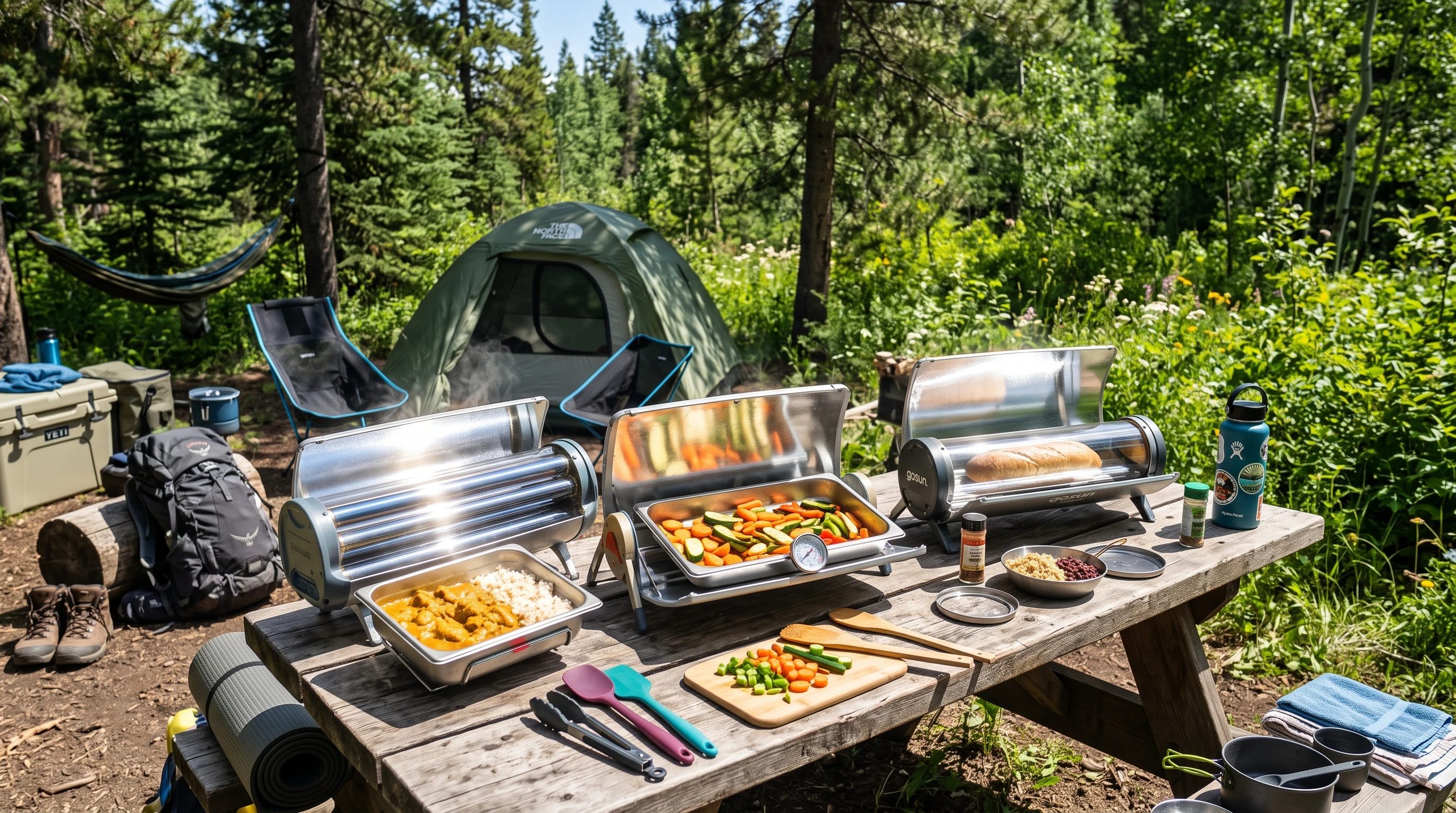
GoSun solar ovens are portable solar cookers that use reflective panels to concentrate sunlight around an insulated cooking chamber.
Food is placed in a cooking tray that slides into the oven. Once the cooker is positioned toward the sun, the reflectors concentrate solar energy around the food.
Unlike cooking over a campfire, you don’t need:
- Firewood
- Propane
- Charcoal
- Grid electricity
- An open flame
That’s a pretty appealing list when you’re living remotely.
Depending on the GoSun model, these solar cookers can be used for baking, roasting, steaming, reheating food, and preparing simple meals.
Which GoSun Solar Oven Is Best?
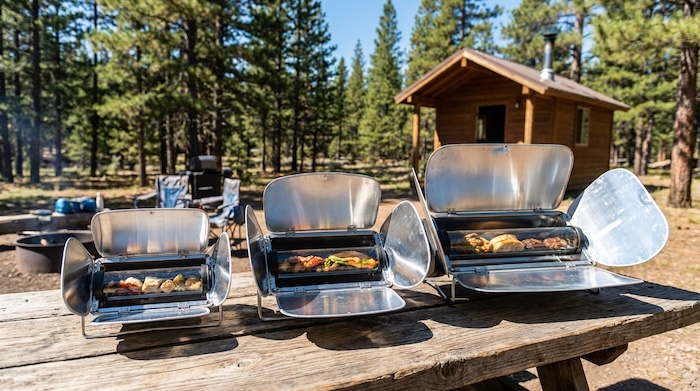
There are several GoSun products available, but three models are particularly relevant for camping, emergency preparedness, and off-grid living.
GoSun Go
The GoSun Go is the smallest and most portable option.
It’s primarily designed for individual meals and is small enough to take camping, hiking, fishing or travelling.
This probably isn’t the model I’d choose as the main solar cooker at an off-grid cabin, but it could make a handy emergency or camping cooker.
If portability is your main concern, you can check the GoSun Go solar oven on Amazon and compare it with the larger models.
GoSun Sport
For many off-grid cabin owners, the GoSun Sport is a model worth looking at first.
It’s still portable, but it offers more cooking capacity than the Go. That makes it better suited to a cabin, RV or regular camping setup.
It can be used to prepare vegetables, meat, bread, eggs, and other simple meals without burning propane or pulling electricity from your battery bank.
For a small off-grid cabin or a couple wanting an additional cooking method, this is probably the GoSun model I’d consider first.
You can check the current price of the GoSun Sport on Amazon.
GoSun Fusion
The GoSun Fusion is the larger option and is better suited to families or a more permanent off-grid setup.
One of the most interesting differences is its hybrid design. Depending on the current model configuration, electric backup gives you another option for cooking if solar conditions are not great.
Of course, the Fusion is larger, heavier, and more expensive than the smaller models.
I wouldn’t choose it simply for occasional camping, but for a family, homestead, or cabin where solar cooking is used regularly, the additional capacity may be worthwhile.
You can compare current GoSun Fusion prices on Amazon.
GoSun Go vs. Sport vs. Fusion
| Model | Best For | Portability | Capacity |
|---|---|---|---|
| GoSun Go | Solo use, camping and emergency kits | Excellent | Small |
| GoSun Sport | Cabins, couples, RVs and camping | Very Good | Medium |
| GoSun Fusion | Families and homesteads | Moderate | Large |
If I were choosing specifically for a small off-grid cabin, I’d compare the Sport and Fusion first.
The Go makes more sense when portability matters more than cooking capacity.
What Can You Cook in a Solar Oven?
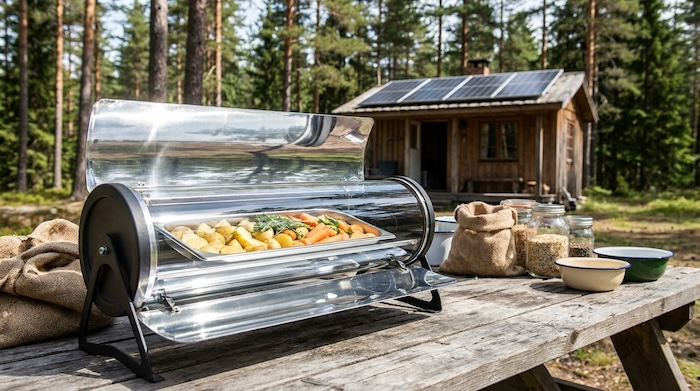
Solar ovens are more versatile than many people expect.
You aren’t limited to heating canned soup.
Depending on the cooker, weather, and available sunlight, foods that work well with solar cooking can include:
- Potatoes
- Carrots and other vegetables
- Sausages
- Eggs
- Bread
- Fish
- Chicken
- Soups and stews
- Rice
- Baked foods
- Reheated leftovers
It’s a different style of cooking than frying something in a cast-iron pan over the wood stove, but that’s not necessarily a bad thing.
Solar cooking generally works best when you plan your meals around available daylight rather than expecting instant heat whenever you want it.
A Solar Oven Can Reduce Your Off-Grid Power Use
This is where I think solar ovens become particularly relevant to off-grid living.
An off-grid electrical system has limits.
Your solar panels generate electricity, your batteries store it, and an inverter allows you to operate AC appliances. Every appliance you add increases the load placed on that system.
If you’re still planning or expanding your setup, Choosing the Right Solar Panels for Your Off-Grid Lifestyle goes into more detail about matching solar generation to your needs.
Electric cooking appliances can consume substantial power because producing heat requires a lot of energy.
A solar oven bypasses that entire process.
Sunlight → cooker → food.
You aren’t converting sunlight into electricity, storing that electricity in batteries, passing it through an inverter, and then converting the electricity back into heat.
On a sunny day, using the sun directly to cook your lunch makes a lot of sense.
Solar Ovens for Power Outages and Emergencies
Even if you don’t live completely off-grid, a solar oven can be useful as part of an emergency preparedness plan.
When the electricity goes out, you still need a way to prepare food.
Many people rely on:
- Propane camp stoves
- BBQs
- Wood stoves
- Generators
- Rocket stoves
- Solar ovens
I don’t think a solar oven should replace all of those.
I think it should complement them.
On this site, we talk quite a bit about back-up systems. The same principle applies to cooking.
You can see some of the other options in Backup Power Options for Off-Grid Living.
A propane stove works when there’s no sun.
A wood stove works during winter.
A solar oven works without consuming either fuel.
Together, they give you options.
For that reason, I’d still keep a two-burner propane camp stove available rather than relying completely on solar cooking.
Solar Cooking and Long-Term Food Storage
There’s another side to emergency food storage that’s sometimes overlooked.
Having food stored is only half of the equation.
You also need a reliable way to prepare it.
Rice, beans, pasta, soup mixes, freeze-dried foods, and many other pantry staples require hot water or cooking.
If you’re building an emergency pantry, my guide to Building a Long-Term Food Supply covers the food-storage side in more detail.
A solar cooker gives you another way to turn those stored ingredients into meals without relying on grid electricity.
This also works well with food you’ve grown and preserved yourself. If you’re working toward becoming more self-sufficient, see Preserving Your Harvest: Tips for Long-Term Food Storage.
For dry staples such as rice, beans, and grains, Mylar food-storage bags with oxygen absorbers are also useful for building a longer-term pantry.
No Open Flame Is a Big Advantage
This is another reason solar cooking caught my attention.
Living rurally means wildfire season is something we have to take seriously.
A solar oven doesn’t create an open flame the way a campfire, charcoal grill, or traditional camp stove does.
That can make solar cooking appealing when you don’t want to light a fire to prepare lunch.
However, never assume that a solar cooker is automatically permitted during a fire restriction or ban. Regulations can vary by location and by the severity of the restriction.
Always check the current rules for your area before using outdoor cooking equipment during wildfire season.
Can You Use a Solar Oven in Cold Weather?
Cold outside temperatures don’t necessarily make solar cooking impossible.
Available sunlight is more important.
The insulated cooking chamber helps retain the heat produced by concentrated sunlight, which means solar cooking can potentially work on a cold but bright day.
That’s interesting for off-grid living because winter doesn’t necessarily mean the end of usable solar energy.
But there is an important limitation.
Short winter days, a lower sun angle, snowstorms, and extended cloudy periods can greatly reduce your opportunities to cook with solar energy.
That’s exactly why I wouldn’t make a solar oven my only cooking method.
It’s the same reason we prepare backup systems for our cabins. Off-Grid Safety Tips During Winter Storms explains some other preparations worth making before winter weather arrives.
GoSun Solar Oven Pros
There are several reasons a GoSun could make sense for an off-grid property.
No Cooking Fuel
Once you own the cooker, sunshine doesn’t cost anything.
You’re not continually buying propane, charcoal, or another cooking fuel.
Doesn’t Drain Your Batteries
This may be the biggest advantage for an off-grid cabin.
Every meal you can cook directly with solar energy is one less load your electrical system has to support.
Portable
The smaller GoSun models can be packed away when not being used and easily taken camping, travelling, or to another part of the property.
No Smoke
There’s no smoke drifting around camp or blowing back toward your cabin.
Quiet
Solar cooking doesn’t require an engine, generator, or fan running in the background.
Another Backup Cooking Method
Even if you only use it occasionally, another independent way to cook adds resilience to an off-grid setup.
GoSun Solar Oven Cons
There are also some disadvantages to consider.
You Need Sunlight
This is the obvious limitation.
A solar-only cooker isn’t going to cook dinner after dark, and heavy cloud cover can reduce its usefulness.
Cooking Takes Planning
A propane burner gives you heat almost immediately.
Solar cooking requires taking advantage of daylight and available sunshine.
It’s better suited to preparing lunch or starting dinner earlier in the day than deciding late in the evening that you want to cook something.
The Cooking Chamber Needs Care
Because GoSun’s design incorporates glass, you’ll want to protect the cooker when storing or transporting it.
If you’re taking one back and forth to camp regularly, a GoSun solar oven carrying case may be worth adding.
Higher Initial Cost
You can buy a basic propane camp stove for considerably less than many solar cookers.
The trade-off is that a conventional camp stove continues to require fuel.
Whether the higher initial cost of a solar oven makes sense depends largely on how often you’ll use it.
Do You Need GoSun Accessories?
I wouldn’t buy a pile of accessories when you first purchase a solar oven.
Start with the cooker.
After you’ve used it for a while, you’ll have a much better idea of which accessories would actually make solar cooking easier for you.
Depending on how you use it, a spare cooking tray, protective case or compatible baking pans might eventually be useful.
For an off-grid property, I’d put durability and practical usefulness ahead of having every accessory available.
GoSun Solar Oven vs. Propane Stove
I don’t see this as an either/or decision.
A propane stove is faster and works regardless of sunlight.
A solar oven doesn’t require fuel, but it does depend on weather and daylight.
For a remote cabin, I’d rather have both.
Use the solar oven when conditions are good; and save your propane for cloudy weather, evenings, and times when you need to cook quickly.
That’s the kind of redundancy that makes off-grid living easier.
Is a GoSun Solar Oven Worth It?
For the right situation, I think it can be.
A GoSun solar oven makes the most sense if you:
- Live off-grid
- Spend a lot of time camping
- Have an RV
- Want to reduce propane consumption
- Want another emergency cooking option
- Receive plenty of usable sunshine
- Want to reduce the load on your off-grid electrical system
It makes less sense if your property is heavily shaded, your area regularly experiences long stretches without usable sunlight, or you need fast, on-demand cooking at any hour.
Which GoSun Would I Choose for an Off-Grid Cabin?
For a small off-grid cabin, I’d look hardest at the GoSun Sport.
It appears to offer a good compromise between portability and usable cooking capacity without moving into the size and price of the larger Fusion.
For a family or larger homestead where solar cooking would be used regularly, the Fusion may make more sense.
For hiking, travelling, or an emergency kit, the smaller Go is easier to carry.
If you consider buying one, compare the current GoSun solar oven models and prices on Amazon before deciding. Packages, accessories, availability, and pricing can change.
Other Ways to Make Better Use of Solar Energy
A solar oven is only one way to take advantage of the sun.
For an off-grid cabin, the bigger goal is creating a system where your equipment works together without wasting energy.
Solar cooking can reduce electricity consumption, but your primary power system still needs to be sized appropriately for everything else you need to operate.
If you’re planning or upgrading your system, Solar Panels for an Off-Grid Cabin is a good place to start.
And solar isn’t the only renewable energy option. If you have access to suitable running water, Micro-Hydro Power for Off-Grid Living is another option worth exploring.
The more energy you can produce — and the less energy you need to consume — the easier off-grid living becomes.
Final Thoughts
I wouldn’t consider a solar oven an essential piece of equipment for every off-grid property.
But I do think it’s one of those products that makes more sense off-grid than it does in a conventional home.
You are taking an energy source that’s already available and using it directly to cook food without draining batteries, running the generator, burning firewood, or using propane.
That’s useful.
The biggest limitation is obvious: the sun doesn’t always cooperate.
That’s why I’d consider a GoSun solar oven an additional cooking method rather than your only one.
Pair it with a wood stove, propane cooker, or another dependable backup, and suddenly you have got several ways to prepare meals regardless of what your power system — or the weather — is doing.
And that’s really what good off-grid planning is about: not depending on one system for everything.
Frequently Asked Questions
Do solar ovens work on cloudy days?
They can work with some cloud cover, but cooking will generally be slower and heavy cloud can greatly reduce their effectiveness.
Can you use a solar oven in winter?
Yes, solar cooking can work on cold days when there is enough direct sunlight. Shorter days, low sun angles and winter storms can make it less reliable.
Can a solar oven replace a propane stove?
For most off-grid setups, I wouldn’t rely on a solar oven as the only cooking method. A solar oven and propane or wood-burning cooker complement each other well.
Which GoSun solar oven is best for an off-grid cabin?
For a small off-grid cabin, the GoSun Sport offers a useful balance between portability and cooking capacity. Larger families may prefer the Fusion, while the Go is better suited to portable or individual use.
Disclosure: This post contains affiliate links. As an Amazon Associate, I earn from qualifying purchases at no additional cost to you.
© 2026, Teresa. All rights reserved.