

There’s something pretty satisfying about opening a jar of home-canned tomatoes or bringing potatoes and carrots up from the root cellar in the middle of winter.
When you grow your own food, a successful harvest can quickly turn into more produce than you can possibly eat fresh. Learning how to preserve that food means less waste, fewer trips to the grocery store, and more homegrown food on the table throughout the year.
For those of us living off-grid, food preservation is even more important. I don’t like depending on just one method. A combination of root cellaring, canning, freezing, dehydrating, and freeze drying gives us more options and makes our food supply much more dependable.
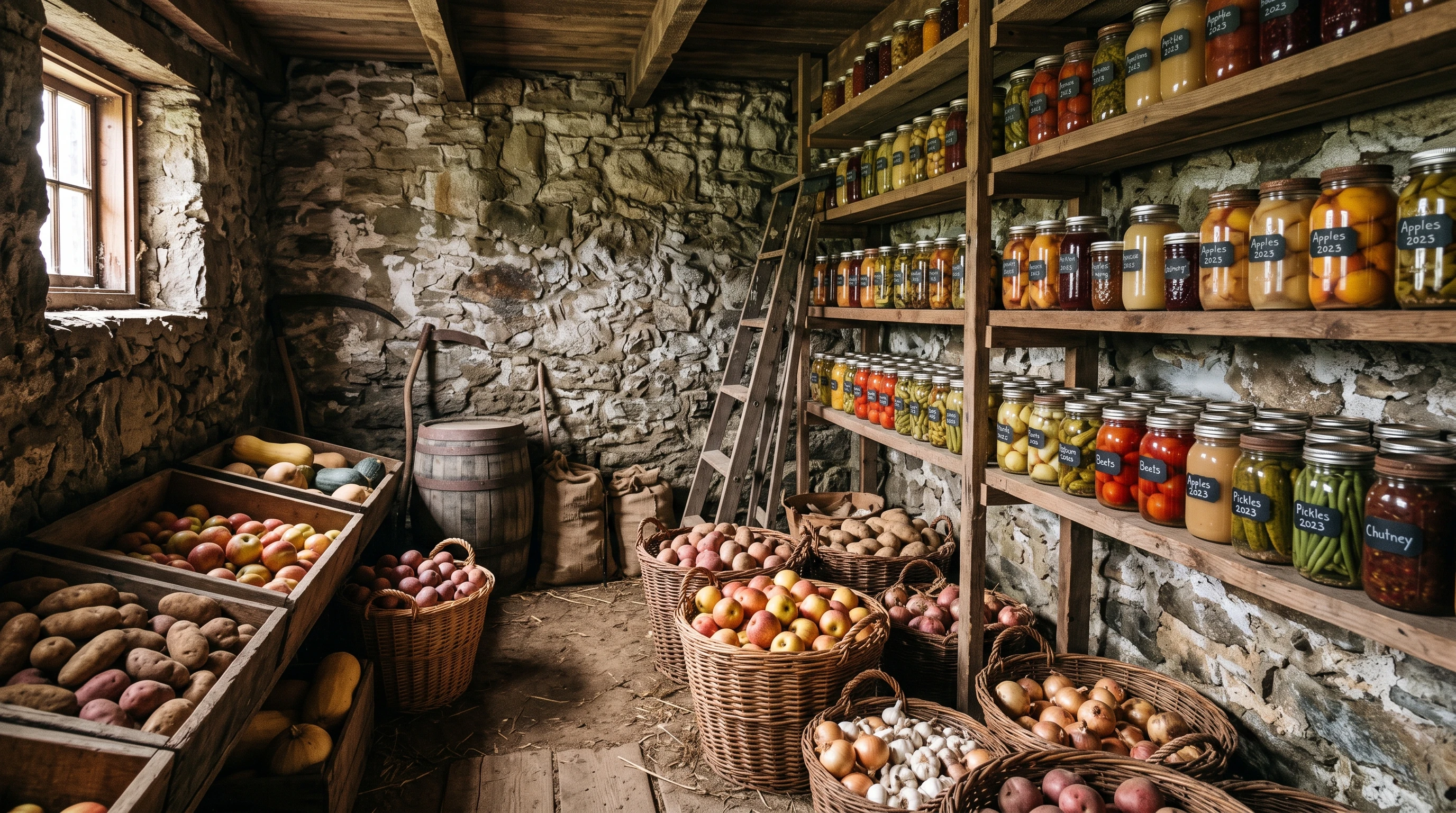
Start With Good-Quality Produce
Long-term food storage really begins in the garden.
Whenever possible, harvest vegetables when they’re mature but not overripe. Bruised, damaged, or diseased produce will spoil much faster and can cause problems when stored alongside healthy produce.
I sort through everything as it comes out of the garden. Anything bruised or slightly damaged gets used first or preserved right away, while the best produce is set aside for longer storage.
Variety matters too. Some potatoes, apples, squash, onions, and other storage crops naturally keep longer than others. If you’re planning your garden specifically for winter storage, look for varieties known as good keepers.
Store Root Vegetables in a Root Cellar
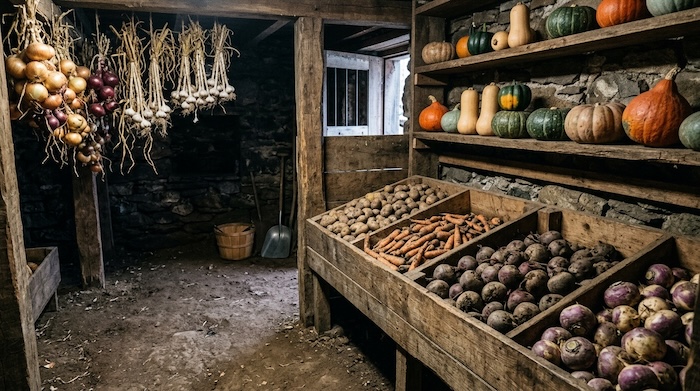
A root cellar is still one of my favorite ways to preserve food because once it’s set up, it requires very little energy.
Potatoes, carrots, beets, turnips, cabbage, apples, onions, garlic, and winter squash can all be stored this way, although they don’t necessarily require exactly the same conditions.
Most root crops prefer cold, humid conditions, while onions and garlic need a drier environment. Squash also prefers warmer and drier storage than crops such as carrots and beets.
Good ventilation is important, and I regularly check stored produce so I can remove anything beginning to soften or spoil. A simple digital thermometer and humidity gauge is inexpensive and makes it much easier to keep an eye on root cellar conditions without guessing.
If you’re considering building one, see my Building a Simple Root Cellar Step-by-Step Guide. I also have a complete guide to the Best Foods for Root Cellar Storage.
Preserve Your Harvest by Canning
Canning is another great way to turn a large harvest into shelf-stable food.
Water-bath canning is used for properly prepared high-acid or acidified foods such as many fruits, jams, jellies, pickles, and tested tomato recipes.
Low-acid foods—including vegetables such as green beans and carrots, meats, poultry, and many soups—must be processed using a pressure canner.
If you’re just getting started, a basic home canning kit with a jar lifter, canning funnel, lid lifter, and headspace tool makes the process much easier. If you want to preserve low-acid vegetables from the garden, you’ll also need a good pressure canner designed for home canning.
Canning is one area where I wouldn’t experiment with processing times. Always follow a current, tested recipe from a reliable canning authority.
Once you get comfortable with the process, there’s something very satisfying about seeing rows of jars filled with food you’ve grown yourself.
Freezing Garden Produce
Freezing is probably one of the easiest preservation methods.
Many vegetables benefit from blanching before freezing, while berries can be individually frozen before being transferred to freezer bags. Tomatoes can also be frozen for use later in soups, sauces, and other cooked dishes.
For foods that are going to stay in the freezer for a while, a vacuum sealer and reusable or replacement vacuum-sealer rolls can help reduce exposure to air and freezer burn. It also makes it much easier to portion food before putting it away.
The downside for anyone living off-grid is obvious: your entire frozen food supply depends on electricity.
That’s one reason I don’t like relying exclusively on a freezer for preserving a large harvest.
Dehydrating Fruits, Vegetables and Herbs
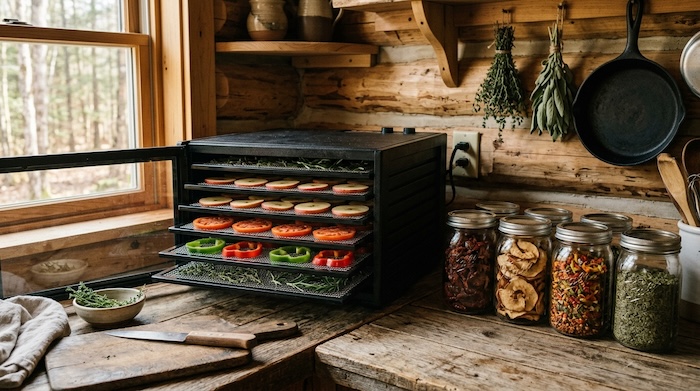
Dehydrating is another method that works especially well for foods such as:
- Apples
- Tomatoes
- Peppers
- Onions
- Garlic
- Mushrooms
- Herbs
Once properly dried, these foods take up very little room and don’t require electricity to remain stored.
You can dry some foods naturally, but if you’re processing a lot from the garden, a multi-tray food dehydrator with adjustable temperature controls makes the process easier and gives you much more consistent results.
Store dehydrated food in airtight containers in a cool, dark, dry location and check it occasionally for signs of moisture.
Freeze Drying for Long-Term Food Storage
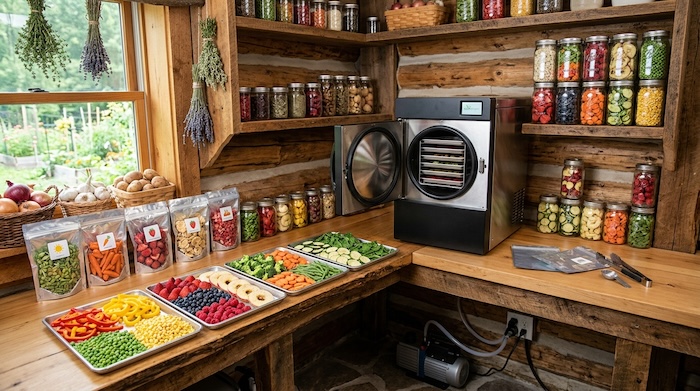
Freeze drying has become one of the most interesting options for people who want to preserve larger amounts of food for long-term storage.
You can freeze dry fruits, vegetables, meats, dairy products, and even complete meals. The finished food is lightweight and can often be rehydrated simply by adding water.
For long-term storage, properly freeze-dried food needs packaging that protects it from moisture and oxygen. I use Mylar food-storage bags with appropriately sized oxygen absorbers, and an impulse sealer makes sealing a large number of bags much quicker.
Home freeze dryers aren’t inexpensive, so I wouldn’t recommend buying one without doing some research first.
If you’re considering one, start with Is Freeze Drying Worth It? and Best Foods to Freeze Dry for Long-Term Storage. You can also see my Harvest Right Accessories Worth Buying before spending money on extras you may not need.
Which Food Preservation Method Is Best?
There really isn’t one method that’s best for everything.
Food Good Preservation Options:
Potatoes – Root cellar, freeze dry
Carrots – Root cellar, freeze, pressure can, freeze dry
Tomatoes – Can, freeze, dehydrate, freeze dry
Green Beans – Freeze, pressure can, freeze dry
Apples – Cool storage, can, freeze, dehydrate, freeze dry
Peppers – Freeze, dehydrate, pickle, freeze dry
Herbs – Dry, dehydrate, freeze
Winter Squash – Cool storage, freeze, pressure can using tested methods
What works best depends on what you’re growing, how much you have, your available equipment, and how you plan to use the food later.
Packaging Food for Long-Term Storage
Proper packaging is just as important as the preservation method itself.
Depending on the food, I use Mason jars, freezer bags, vacuum-sealed bags, Mylar bags, and food-grade storage containers.
For bulk dry goods, food-grade storage buckets with airtight gamma-seal lids are handy because you can open and close them without fighting with a standard bucket lid every time.
I also keep plenty of food-storage labels around during harvest season. Always label food with the contents and date. There’s nothing worse than digging through the freezer six months later trying to figure out what’s inside an unmarked bag.
For more ideas on organizing and rotating stored food, see my Pantry Storage Ideas for Long-Term Food Storage and Emergency Preparedness.
Why I Don’t Depend on Just One Preservation Method
This becomes especially important when you’re living off-grid.
If everything you’ve preserved is in a freezer and you lose power for an extended period, you could lose a significant portion of your food supply.
That’s why I prefer spreading the harvest between several methods:
- Root cellar
- Canned foods
- Frozen foods
- Dehydrated foods
- Freeze-dried foods
It also gives you more variety during the winter. One night you might grab canned tomatoes for a sauce, the next you’ll bring potatoes up from the cellar, and another night you might add freeze-dried vegetables to a soup.
A well-rounded food supply doesn’t depend on a single appliance or storage method.
Keep Track of What You Store
Food storage only saves money if you actually use what you’ve put away.
Label everything and rotate your supply so you’re using the oldest foods first. I also like keeping a simple inventory so I know what we have and what we’re getting low on.
Once or twice during the winter, go through your shelves, root cellar, and freezer and check what needs to be used.
Frequently Asked Questions
What is the easiest way to preserve a garden harvest?
Freezing is one of the easiest methods for beginners, but it requires freezer space and dependable electricity. Root cellaring can be even easier for suitable crops because very little processing is required.
Do I need a pressure canner?
You need a pressure canner if you plan to home-can low-acid foods such as plain vegetables, meats, poultry, and many soups. Always use a tested recipe and follow its specified processing method and time.
How do I keep vegetables from spoiling in a root cellar?
Maintain the appropriate temperature and humidity for the foods you’re storing, provide ventilation, and inspect produce regularly. Remove anything beginning to rot before it affects nearby food.
What’s the best preservation method for off-grid living?
I don’t think there is just one. A combination of root cellaring, canning, dehydrating, freeze drying, and some freezing gives you a food supply that isn’t entirely dependent on electricity.
Start Small and Build Your Food Storage Skills
You don’t have to preserve your entire harvest five different ways your first year.
Start with one or two methods that work for the foods you grow most often. As you become more comfortable, you can add other preservation methods.
Every jar you can, bag you freeze, vegetable you put into the root cellar, or batch you dehydrate is food that doesn’t have to come from the grocery store later.
That’s really what preserving your harvest is about—making the most of what you’ve grown, wasting less, and keeping some of that garden goodness on the table long after the growing season is over.
Disclosure: This article is for informational purposes only and reflects personal experience and research related to emergency preparedness. Product recommendations, if included, are intended to help readers make informed decisions. Some links may be affiliate links, which help support this site at no additional cost to you.
© 2026, Teresa. All rights reserved.