
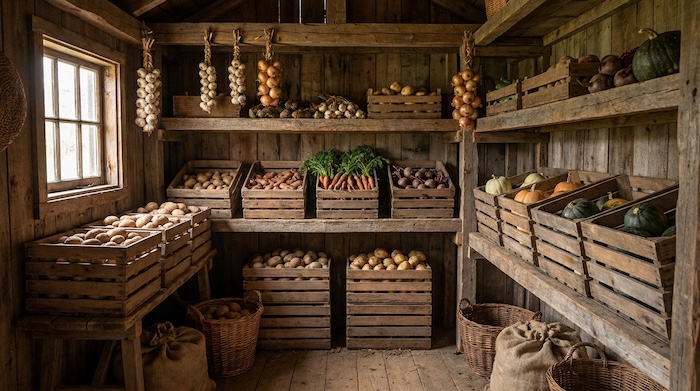
Storing vegetables is something I’ve learned isn’t just important for people with big gardens. Even if you pick up extra vegetables from a farmers market or buy in bulk when something is on sale, knowing how to keep them fresh for as long as possible is a useful skill.
And you don’t necessarily need a traditional root cellar to do it.
Over the years, I’ve tried different ways of storing potatoes, carrots, onions, squash and other vegetables without having a perfect cold-storage setup. I’ve found that what matters most is understanding what each vegetable needs and then finding a spot that comes reasonably close to those conditions.
A basement, insulated garage, mudroom, enclosed porch, crawlspace or other cool area can sometimes work surprisingly well.
If you’re wondering how to store vegetables without a root cellar, here’s what I’ve learned.
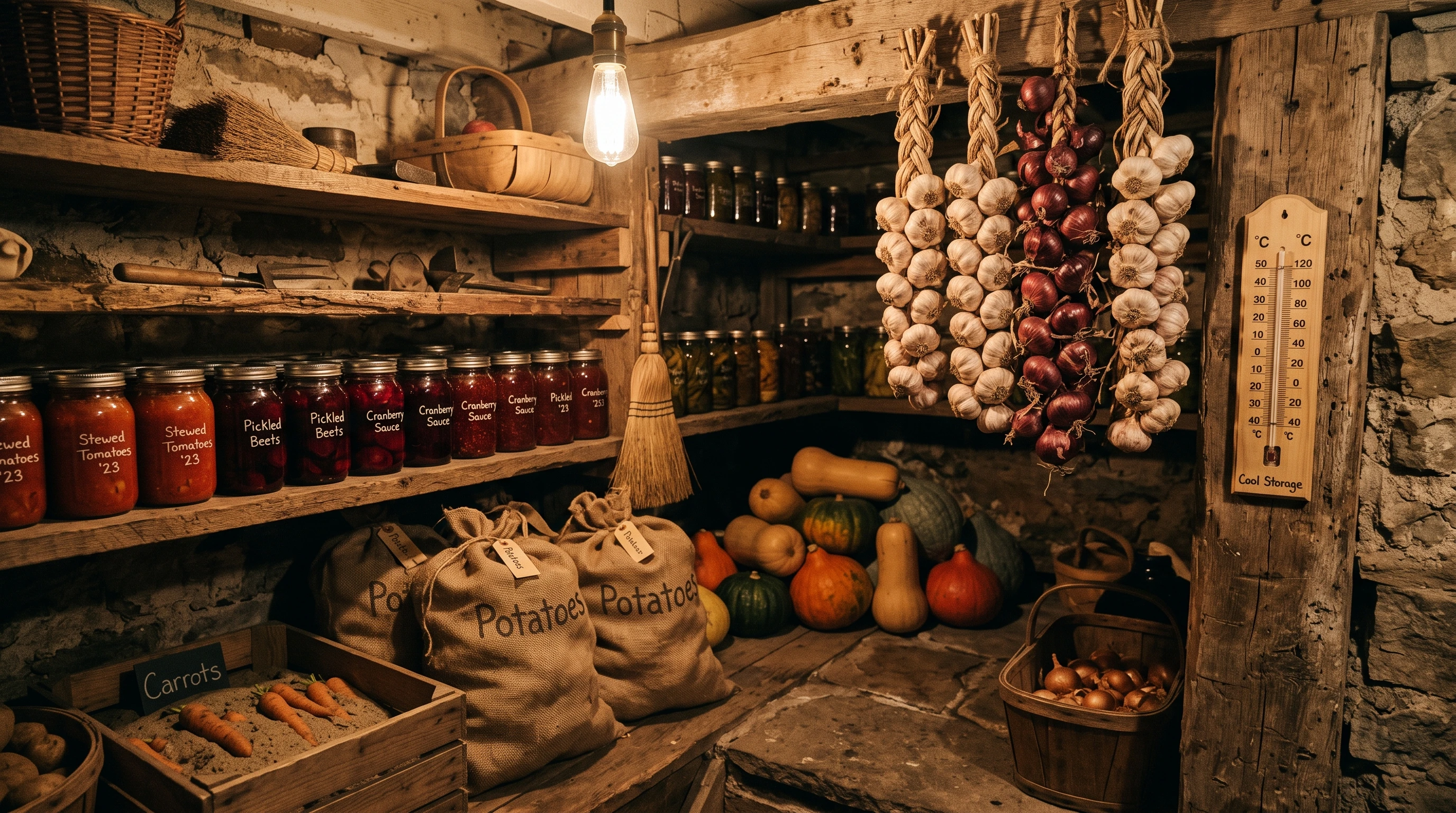
Table of Contents
- Why Vegetables Last Longer in Cold Storage
- Finding the Best Storage Area
- Temperature and Humidity Matter
- How to Store Potatoes Without a Root Cellar
- How to Store Carrots, Beets, and Turnips
- How to Store Onions and Garlic
- How to Store Winter Squash
- How to Store Cabbage
- Vegetables and Fruits You Shouldn’t Store Together
- How to Keep Stored Vegetables From Freezing
- Check Your Stored Vegetables Regularly
- Simple Supplies for Storing Vegetables
- What If Your House Is Too Warm?
- Use More Than One Food Preservation Method
- Final Thoughts
Why Vegetables Last Longer in Cold Storage
Vegetables don’t immediately stop changing when they’re harvested. They continue to lose moisture and gradually deteriorate.
Cold temperatures slow that process.
Humidity matters too. Vegetables such as carrots, beets, and turnips generally do better in cool conditions with relatively high humidity, while onions and garlic need much drier conditions.
That’s one of the reasons a traditional root cellar works so well. It provides a naturally cool environment where temperature and humidity remain relatively stable.
But you can recreate some of those conditions without actually having a root cellar.
If you have room to build one someday, my Building a Simple Root Cellar: Step-by-Step Guide explains how a traditional root cellar can be set up.
Finding the Best Storage Area
Before building anything, take a look around your home, cabin, and outbuildings.
You may already have a good vegetable-storage area.
Possibilities include:
- An unheated basement
- An insulated garage
- A mudroom
- An enclosed porch
- A crawlspace
- A cool pantry
- An insulated shed
- An unused room
- A protected storage cabinet
Living off-grid can actually give you some interesting options because sheds, workshops, and other outbuildings often stay much cooler than the main house. I have a small 10 x 10 log cabin and it stays very cool in the summer. I often use it for storage.
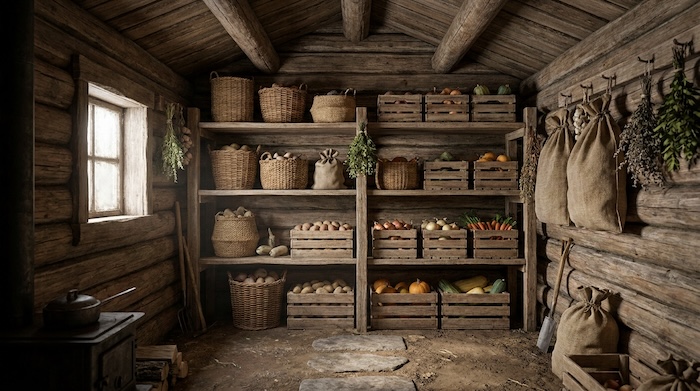
The problem in a cold climate is that a location that’s perfect in October may freeze solid in January.
That’s why I wouldn’t rely on how a room feels.
Put a digital thermometer/hygrometer in the area and watch the temperature and humidity for a while before storing a large amount of food there.
Temperature and Humidity Matter
Different vegetables need different storage conditions.
As a general rule, many root vegetables prefer temperatures just above freezing and relatively high humidity.
Onions and garlic prefer cool but much drier conditions. Winter squash also likes drier storage and doesn’t need temperatures as cold as carrots or beets.
A simple way to think about it is:
- Cool and humid: carrots, beets, turnips, parsnips, and rutabagas.
- Cool and dry: onions, garlic, and winter squash.
- Cold and humid: cabbage.
You don’t necessarily need separate rooms.
Sometimes one part of a basement or storage building will be colder or more humid than another.
This is especially helpful for the first winter because you’ll learn how your storage area changes as the outdoor temperature drops.
How to Store Potatoes Without a Root Cellar
Potatoes need a cool, dark, and reasonably humid location with some airflow.
Light is particularly important to avoid. Potatoes exposed to light can turn green, so green potatoes shouldn’t simply be treated as normal storage potatoes.
If you’ve harvested the potatoes yourself, let them cure before putting them into long-term storage.
Don’t wash them first.
Gently brush away loose dirt and store only potatoes that are firm and undamaged. Use damaged potatoes first rather than putting them into long-term storage.
Good containers include:
- Ventilated crates
- Cardboard boxes with air holes
- Paper sacks
- Burlap sacks
- Breathable produce bags
Don’t seal potatoes in airtight plastic containers.
I also wouldn’t put a large pile into one deep container. Smaller containers make it easier to check the potatoes and remove one if it begins to spoil.
Ventilated produce storage crates work well because they provide airflow while keeping everything organized.
Keep the potatoes in the dark and check them regularly for sprouts, soft spots or rot.
How to Store Carrots, Beets, and Turnips
Carrots, beets, and turnips are different because they need high humidity.
Remove the leafy tops before storage, but don’t cut into the vegetable itself.
Don’t wash the roots before storing them. Brush away loose soil and set aside anything damaged for immediate use or another preservation method.
One old-fashioned method that still works well is packing root vegetables in slightly damp sand or clean sawdust.
You can use a sturdy box, tote, or old cooler.
Add a layer of slightly damp packing material, arrange the vegetables so they aren’t tightly crowded together, and continue layering.
The material should be slightly damp—not wet.
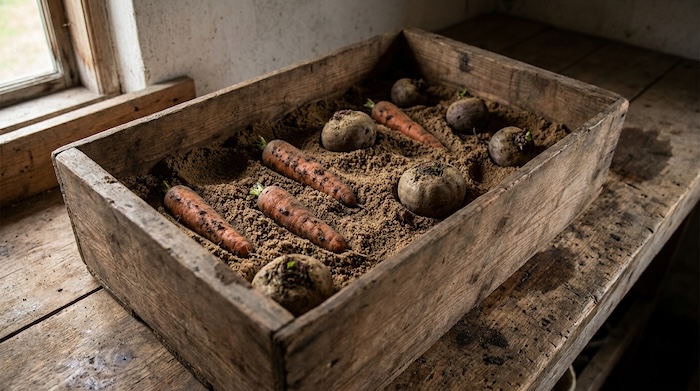
This method can be used for:
- Carrots
- Beets
- Turnips
- Parsnips
- Rutabagas
A cooler can be particularly useful for a smaller amount because the insulation helps buffer sudden temperature changes. Just don’t make the container completely airtight.
Check the vegetables periodically and remove anything that becomes soft or shows signs of rot.
If you grow several different storage crops, my Best Foods for Root Cellar Storage guide covers more vegetables and fruits that can be kept for winter without relying on electricity.
How to Store Onions and Garlic
Onions and garlic don’t want the humid conditions that carrots and beets prefer.
They need to be properly cured first and then stored somewhere cool, dry and well ventilated.
Good options include:
- Mesh bags
- Wire baskets
- Slatted crates
- Open baskets
- Hanging braids
I like storage methods where you can actually see what’s happening.
If onions are buried at the bottom of a deep container, it’s easy to miss one that’s beginning to soften. Reusable mesh produce bags provide good airflow and make checking them much easier.
Keep onions and garlic away from damp floors and areas where condensation forms.
How to Store Winter Squash
Winter squash is one of my favourite vegetables for long-term storage because some varieties can last for months without needing to be canned, frozen, or otherwise processed.
Pumpkins, butternut squash, and other winter squash generally prefer conditions that are a little warmer and drier than those used for root vegetables.
Cure freshly harvested squash before putting it into long-term storage.
Once cured, place the squash on shelves with some space between each one.
Don’t pile them into a big box.
Leaving space around them improves airflow and makes it much easier to notice a soft spot before rot spreads.
Check your squash regularly and use any that are beginning to soften first.
How to Store Cabbage
Cabbage likes cold, humid conditions.
Keep the heads as close to freezing as you reasonably can without actually allowing them to freeze.
Leave a few protective outer leaves on the cabbage and store the heads where they won’t be crushed.
Depending on your storage area, you can place them on shelves or in shallow bins.
Check cabbage regularly and remove damaged outer leaves.
If your storage area is warmer than ideal, don’t expect cabbage to keep as long. Use those heads first or preserve them another way.
Vegetables and Fruits You Shouldn’t Store Together
One thing that’s easy to overlook is what you’re storing beside your vegetables.
Some fruits, particularly apples and pears, produce ethylene as they ripen. Ethylene can speed up aging, sprouting, or deterioration in some stored vegetables.
It’s a good idea to keep fruit away from your main vegetable-storage area when possible.
I also prefer to store potatoes separately from onions.
Even though they both like cool, dark storage, they have different humidity requirements. Keeping them separate makes it easier to provide better conditions for both.
How to Keep Stored Vegetables From Freezing
This is probably one of the biggest challenges for anyone storing vegetables in a cold climate.
A shed, porch, or garage might provide perfect temperatures in the fall and then become much too cold when winter really sets in.
I’ve lost vegetables to sudden cold snaps before, so now I pay much more attention to temperature.
A simple thermometer works, but a wireless thermometer with a remote sensor is even more convenient if your vegetables are stored in an outbuilding. You can see when the temperature is getting dangerously low without constantly going outside to check.
You can also provide some insulation around your storage containers using:
- Insulated coolers
- Rigid foam insulation
- Cardboard
- Straw
- Old blankets around the outside of bins
- Insulated wooden cabinets
The goal isn’t to warm the vegetables. It’s to slow down sudden temperature changes and prevent freezing.
During an extreme cold snap, sometimes the safest solution is simply moving the vegetables temporarily to a slightly warmer location.
Check Your Stored Vegetables Regularly
This is probably one of the simplest things you can do to prevent waste.
Don’t put vegetables away in the fall and forget about them until February.
I like to check stored vegetables regularly.
Look for:
- Soft spots
- Mold
- Sprouting
- Shrivelling
- Excess moisture
- Unusual smells
- Signs of freezing
If something is starting to deteriorate, remove it.
You can often save the rest of the container simply by catching a problem early.
I also find it helpful to label containers with the vegetable and storage date. If you’re experimenting with several storage locations, make a note of where each batch was kept.
By spring, you’ll have a pretty good idea which areas of your home or property work best.
Simple Supplies for Storing Vegetables
You really don’t need much specialized equipment.
Most of what you need may already be around the house:
- Cardboard boxes
- Wooden or plastic ventilated crates
- Paper or burlap sacks
- Mesh produce bags
- Baskets
- Old coolers
- Clean sand or sawdust
- Shelving
- Thermometers
- Humidity gauges
If I were starting from scratch, the first thing I’d buy wouldn’t be an expensive storage system.
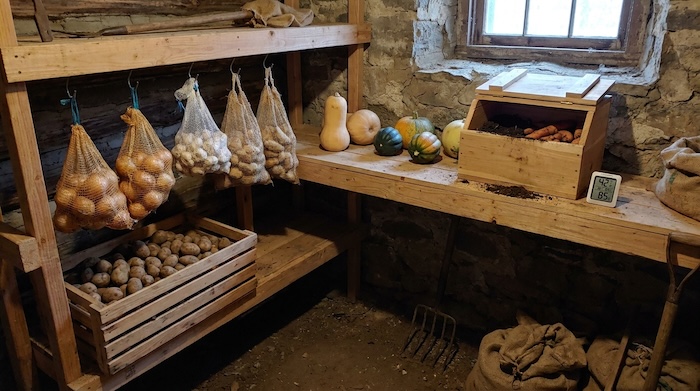
I’d get a good digital thermometer/hygrometer.
Until you know the temperature and humidity of the area, you’re really just guessing.
After that, a few ventilated storage crates and mesh produce bags will handle quite a few different vegetables.
What If Your House Is Too Warm?
This can be a real problem in a small off-grid cabin.
Once the wood stove is going all winter, there may not be many genuinely cool areas inside.
Look for spaces that are naturally separated from your main heat source.
An entryway, mudroom, enclosed porch, basement corner or insulated outbuilding may work better than the main living area.
Even within one room, temperatures can vary.
Lower shelves may stay cooler than upper shelves. An exterior wall may be cooler than an interior one.
Experiment, but monitor the temperature.
What works perfectly in October may need to change by December.
Use More Than One Food Preservation Method
I don’t think there’s one perfect way to preserve an entire garden harvest.
Cold storage works extremely well for some foods, but others are better canned, dehydrated, frozen, or freeze-dried.
That’s why I prefer using several preservation methods.
Potatoes, onions, garlic, and squash can go into storage. Other vegetables can be canned or frozen. Foods that I want to keep for a very long time may be better suited to freeze-drying.
My Preserving Your Harvest: Tips for Long-Term Food Storage guide covers several different ways to put food away after harvest.
And if you’re considering freeze drying as part of your food-storage setup, my Harvest Right Freeze Dryer: Home Freeze Drying Guide goes into that method in much more detail.
Final Thoughts
Learning how to store vegetables without a root cellar is really about learning to work with the spaces you already have.
You don’t need a perfect underground room with exactly controlled temperature and humidity.
Start with a few vegetables and a thermometer.
Try a basement corner, mudroom, insulated porch or other cool space. Keep an eye on the temperature, check the vegetables regularly and pay attention to what works.
Over time, you’ll figure out which parts of your property are best for potatoes, which are better for onions and where carrots can make it through the winter without shrivelling or freezing.
There is something pretty satisfying about pulling out a firm potato, onion or carrot months after the garden has been put to bed.
And every vegetable that makes it through the winter is one less thing you need to buy at the grocery store.
Content on this site is for informational purposes only and reflects personal experience and research. Off-grid living laws and conditions vary by location, so readers should always verify local regulations before making decisions. Some links may be affiliate links, which help support this site at no additional cost to you.
© 2026, Teresa. All rights reserved.