
🌿 What Is Oregon Grape?
Oregon grape is one of the most useful wild plants you’ll find along the west coast of North America. Around our off-grid property, it grows naturally and is something I’ve come to appreciate more every year.
Despite the name, it’s not actually a grape—but once you see the deep purple berry clusters, you’ll understand where the name comes from.
It’s an evergreen shrub with:
- Holly-like prickly leaves
- Bright yellow flowers in spring
- Deep purple berries in summer
In our area, the bushes tend to stay low, but they can grow much taller in other regions.
🍇 The Berries: Tart but Useful
- Juicy
- Very tart (almost sour)
- High in natural pectin
Because of that high pectin content, they are excellent for:
- Jelly
- Jam
- Wine
- Syrups
👉 If you’re storing your harvest long-term, you may also like: Off-Grid Food Preservation Methods
A simple way to use them:
- Mash berries
- Add water + a bit of sugar
- Strain
You’ll get a refreshing, tangy summer drink that’s surprisingly good after a hot day working outside.
🥬 Leaves and Edible Uses
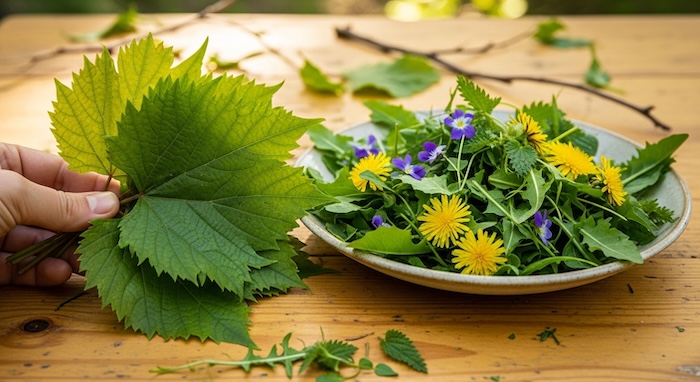
The leaves are tough and prickly when mature, but:
- Young leaves can be eaten raw
- They can also be cooked until tender
I’ve added young leaves to salads while out exploring—it’s one of those simple off-grid habits that just feels right.
🌿 Medicinal Uses of Oregon Grape
Oregon grape has a long history as a medicinal plant, especially among Indigenous communities across the west coast of North America.
The most powerful part of the plant is the root, which contains:
👉 Berberine
A natural compound known for:
- Antibacterial properties
- Antiviral support
- Anti-inflammatory effects
Plants high in berberine include:
- Oregon grape
- Barberry
- Goldenseal
- Coptis
Traditionally, Oregon grape root tea has been used for:
- Digestive issues
- Diarrhea
- Skin conditions
- Coughs
- General immune support
📚 A trusted reference I personally rely on is: Edible & Medicinal Plants of Canada by MacKinnon et al.—we keep one copy at home and one in the truck.
⚠️ Important Safety Note
Even though Oregon grape has medicinal uses:
- It is strong and potent
- Berberine can interact with medications
- Not recommended for pregnant women
👉 Always research and use caution before using wild plants medicinally.
🪓 Harvesting Oregon Grape
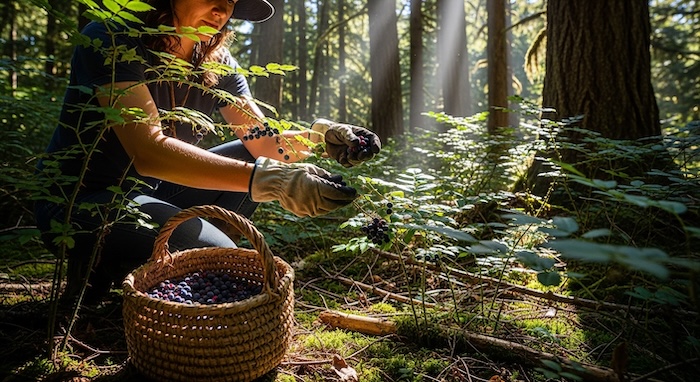
When to Harvest:
- Leaves & flowers: Early spring to mid-summer
- Berries: June to August (depends on location)
💡 Tip:
If you harvest too many flowers early, you won’t get berries later.
Always harvest responsibly:
- Take only what you need
- Leave plenty for wildlife
- Avoid damaging the root system
📜 History & Traditional Use
Oregon grape has been used for generations by Indigenous peoples across:
- The western United States
- Coastal and northern British Columbia
Uses included:
- Food (berries and leaves)
- Medicine (roots and bark)
- Natural dyes
It was especially valued for treating digestive and internal ailments.
✨ Folklore
There’s even a bit of folklore tied to Oregon grape.
It was once believed that placing three branches near your doorway could:
- Protect your home
- Keep enemies away
Whether or not that’s true… I still like the idea of plants offering a little extra protection.
🛠️ Helpful Tools for Foraging (Optional Gear)
If you’re getting more into foraging, a few simple tools make it easier:
- A good pair of gloves (those leaves are sharp)
- A foraging basket or bag
- A reliable plant identification guide
👉 A book like Edible & Medicinal Plants of Canada is worth having on hand—it’s one I personally rely on all the time.
or Edible Wild Plants Foraging for Beginners – a guide to Northeast, Midwest, Mountain West, Pacific Northwest, Southeast and Southwest US
🌿 Final Thoughts
Oregon grape is one of those plants that truly fits off-grid living:
- It grows wild
- It feeds you
- It supports your health
- And it connects you back to traditional knowledge
Once you start noticing it, you’ll see it everywhere—and you’ll never look at it the same way again.
⚠️ This content is for informational purposes only. Always properly identify wild plants and consult a healthcare professional before using any plant medicinally.
© 2019 – 2026, Teresa. All rights reserved.