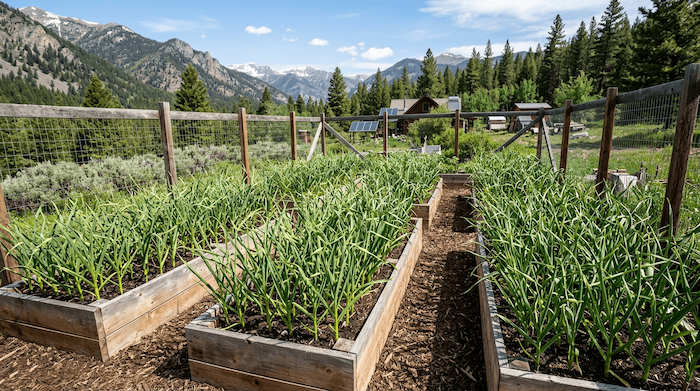
Last year I decided to try growing my garlic in raised beds, and it ended up producing the best garlic I’ve ever grown.
Now I can’t say for certain that the raised beds were the only reason, but they definitely helped. We had an unusually wet summer, and many gardeners in our area struggled with garlic that either rotted in the ground or didn’t grow properly.
At the same time, we were starting a new garden area where the moose and deer like to wander through and see what’s on the menu.
If you’re planning your own garden space, you may also want to read our complete guide to Gardening and Greenhouse Growing where I walk through how we set up our garden and greenhouse for a productive season.
You may also enjoy:
- Best Vegetables to Grow in an Off-Grid Garden
- Vegetable Garden Layout Plans
- Starting Seeds for an Off-Grid Garden
- Garlic Scapes: How to Harvest, Preserve and Use Them
So we fenced off a section for the garden and greenhouse, and the ducks roam around the yard while we’re home to keep an eye on them.
If you’ve ever had ducks, you’ll know they absolutely love anything fresh and green. If I planted directly in the ground, they would happily eat everything before it had a chance to grow.
That meant the garden beds had to be raised and protected with wire.
In the end, those raised beds likely helped the garlic survive the wet summer as well.
Table of Contents
- Why Grow Garlic in Raised Beds?
- Building Raised Beds for Garlic
- When to Plant Garlic
- Mulching Garlic Beds
- Spring Garlic Growth
- Garlic Scapes
- Harvesting Garlic
- Curing Garlic
- Storing Garlic
- Frequently Asked Questions
Why Grow Garlic in Raised Beds?
Garlic is one of the easiest and most rewarding crops you can grow, but it does have one major weakness—poor drainage.
Wet soil can cause garlic bulbs to rot before harvest, especially during rainy summers or in heavy clay soils.
Raised beds help solve this problem by providing:
- Better drainage
- Looser soil for root and bulb development
- Warmer soil in spring
- Less soil compaction
- Reduced chance of bulb rot
For gardeners dealing with wet conditions, raised beds can make a noticeable difference in garlic production.
Building Raised Beds for Garlic
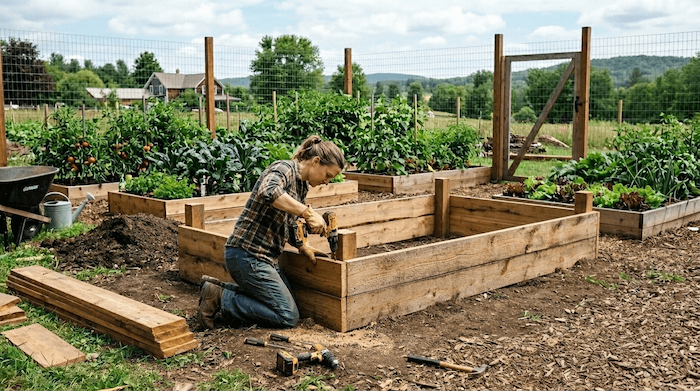
The raised beds were simple to build.
I used 1×6 cedar boards and built beds that were about eight feet long and twelve inches high.
Good drainage is one of the most important things garlic needs.
If you don’t want to build your own beds, a cedar raised garden bed kit can make setup much faster and easier.
I also recommend landscape fabric underneath raised beds if you’re dealing with persistent weeds.
The beds were surrounded by fencing to keep the ducks, deer, and moose out of the garden.
When to Plant Garlic
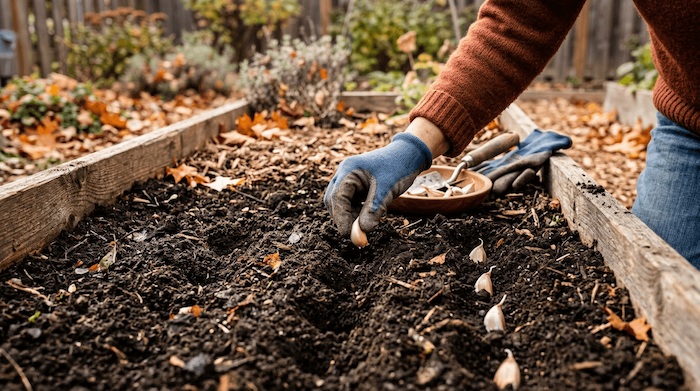
Garlic should be planted in the fall before the ground freezes.
I planted mine in early October, which gives the cloves time to develop roots before winter arrives.
Start by breaking apart the garlic bulb into individual cloves.
Each clove becomes a new garlic plant.
Plant the cloves:
- 4 inches deep
- 16 inches between rows
- 5–6 inches apart within each row
Plant the cloves with the pointed end facing up.
For larger gardens, a garden planting ruler can help maintain consistent spacing and maximize bulb size at harvest time.
Mulching Garlic Beds
Once the garlic is planted, the beds are left alone until the ground freezes.
After the soil freezes, cover the bed with a few inches of mulch.
You can use:
- Straw
- Wood chips
- Leaves
Mulch helps protect the garlic during winter and prevents the cloves from being pushed out of the soil during freeze-thaw cycles.
Spring Garlic Growth
In the spring the garlic begins growing underneath the mulch.
You’ll usually start to see green shoots appear in late April or early May.
When my garlic shoots were about two inches above the mulch, I gently removed some of the mulch to give them room to grow.
Garlic is actually one of the easiest crops to grow.
It requires very little care and usually doesn’t need watering unless you’re experiencing an unusually dry summer.
If you’re looking for other easy food crops, check out my guide to the Best Vegetables to Grow in an Off-Grid Garden, where I cover several high-yield vegetables that provide a lot of food with very little work.
Garlic Scapes
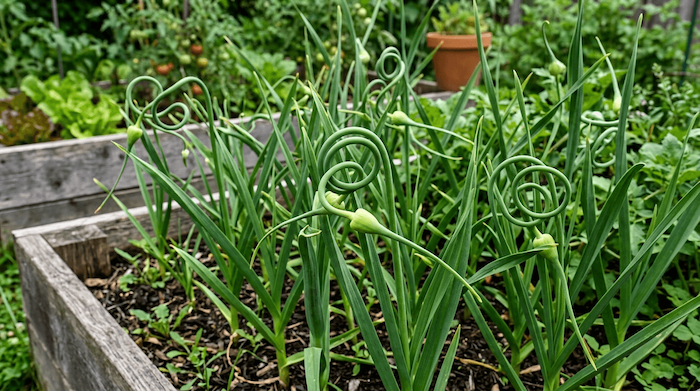
One of the best parts of growing garlic is when the garlic scapes appear.
Scapes are the curly green stems that grow from hardneck garlic plants.
These should be removed when they reach about six inches long.
Removing the scapes allows the plant to focus its energy on producing larger bulbs.
The bonus is that scapes are delicious. They taste like a mix of garlic and green onions.
If you’ve never grown hardneck garlic before, don’t miss my guide on preserving garlic scapes for later use. They’re one of the best bonus harvests from the garden.
I usually chop them up and freeze them so they can be added to soups, stir-fries, and other meals throughout the winter.
Harvesting Garlic

Garlic is usually ready to harvest in July.
You’ll know the bulbs are ready when most of the leaves have turned brown and only five or six green leaves remain.
To harvest the garlic, loosen the soil around the bulb first.
I use a small hand garden shovel to gently loosen the soil before pulling the plant out.
A sturdy stainless steel hand trowel makes harvesting much easier and helps prevent accidentally damaging the bulbs.
Trying to dig them out with a large shovel can easily slice the bulbs in half—I learned that lesson the hard way.
Garlic fits perfectly into a self-sufficient garden plan alongside many of the crops featured in my Vegetable Garden Layout Plans guide.
Curing Garlic
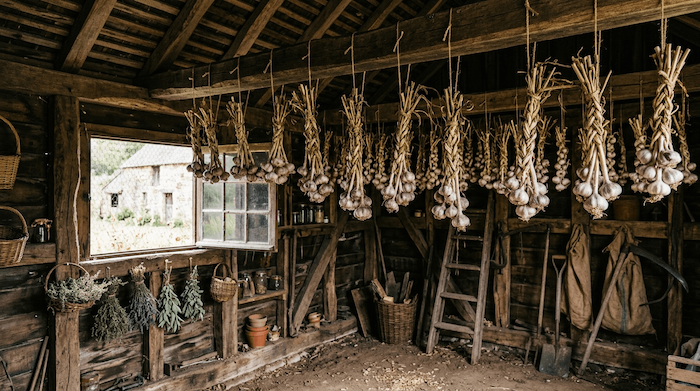
After harvesting, garlic needs time to dry and cure.
I tie 10–15 garlic plants together in bunches and hang them in a dry location with good airflow.
Garlic usually cures in about four weeks, although it can be ready in as little as two weeks if conditions are warm and dry.
If you grow a lot of garlic, garden harvest baskets and drying racks can make curing and storage much easier.
To test if garlic is cured, cut the stem.
If there is no moisture inside, the garlic is fully cured.
Storing Garlic
Once cured, garlic should be stored in a cool, dry location out of direct sunlight.
Properly stored garlic can last up to six months and sometimes longer depending on the variety.
Growing your own garlic is simple, rewarding, and once you start harvesting your own bulbs, it’s hard to go back to store-bought garlic again.
For more tips on building a productive garden, see our Gardening and Greenhouse Growing Guide, where we cover everything from soil preparation to extending your growing season.
If you’re planning a productive homestead garden, you may also want to read:
- Best Vegetables to Grow in an Off-Grid Garden
- Vegetable Garden Layout Plans
- Starting Seeds for an Off-Grid Garden
- Garlic Scapes: How to Harvest, Preserve and Use Them
Frequently Asked Questions
Does garlic grow better in raised beds?
In many climates, yes. Raised beds improve drainage, reduce soil compaction, and help prevent bulb rot during wet seasons.
How deep should garlic be planted?
Most garlic cloves should be planted about 4 inches deep with the pointed end facing upward.
What is the best mulch for garlic?
Straw is one of the most popular options because it insulates well, suppresses weeds, and breaks down naturally over time.
When should garlic scapes be removed?
Garlic scapes should be cut when they are about 6 inches long and begin curling. Removing them helps the plant put more energy into bulb production.
How long does garlic take to grow?
Garlic planted in the fall is typically harvested the following summer, usually 8 to 10 months later.
How long does homegrown garlic last?
When properly cured and stored, garlic can last 4 to 6 months or longer.
Content on this site is for informational purposes only and reflects personal experience and research. Gardening results can vary based on climate, soil, and growing conditions. Some links may be affiliate links, which help support this site at no additional cost to you.
Updated June 2026
© 2017 – 2026, Teresa. All rights reserved.
I love using garlic to cook and have always entertained the idea of growing them in my backyard. I find it interesting how the garlic bed is left to freeze and then chips are put on top to cover it throughout the winter. The fact that it doesn’t require much maintenance is really making me think more about a garlic bed and maybe growing other vegetables and herbs too.
I learned something new today.
I love garlic too, we use so much that I thought I’d better start growing my own. If really is fairly maintenance free.