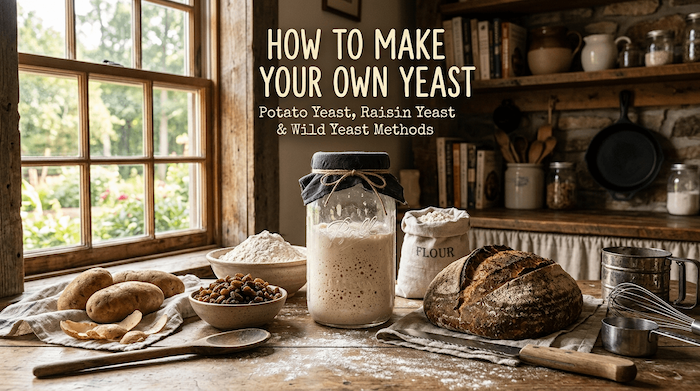
There may come a time when you can’t find yeast at the grocery store, or perhaps you’d simply like to learn a traditional skill that has been used for centuries. Long before packets of commercial yeast appeared on store shelves, people were making bread using potatoes, raisins, fruit, and naturally occurring wild yeasts found in the environment.
Making your own yeast is a useful skill for homesteaders, off-grid families, emergency preparedness, and anyone interested in becoming more self-sufficient.
If you’re building a pantry of traditional food skills, you may also enjoy reading How to Store Flour Long-Term, Food Preservation Methods for Beginners, and 50 Ways to Become More Self-Sufficient.
What Is Yeast?
Yeast is a living single-celled organism called Saccharomyces cerevisiae. It requires moisture, warmth, and food to thrive.
When yeast consumes sugars and starches, it produces carbon dioxide and alcohol through fermentation. The carbon dioxide becomes trapped inside dough, causing bread to rise and develop its light texture.
Wild yeast exists naturally on:
- Fruits
- Berries
- Grains
- Tree bark
- Plants
- In the air around us
This is why homemade yeast and sourdough starters have been used successfully for thousands of years.
A Brief History of Yeast
The word yeast comes from the Old English words gist and gyst, meaning to boil, foam, or bubble.
Before commercial yeast became widely available, families relied on naturally occurring wild yeasts for baking. Dough starters were often carefully maintained and passed down through generations.
Commercial yeast as we know it today wasn’t introduced until the late 1800s. One of the first successful commercial yeast products was demonstrated by Charles Fleischmann at the Centennial Exposition in Philadelphia, where visitors sampled bread made with cultured yeast.
While commercial yeast is convenient, many homesteaders still prefer traditional methods because of the rich flavor and self-sufficiency they provide.
Potato Yeast Recipe
This old-fashioned potato yeast recipe was commonly used when commercial yeast wasn’t available.
Ingredients
- 1 medium potato
- 1½ cups potato cooking water
- 1 tablespoon sugar
- 1 cup flour
- Clean sterilized glass jar
Directions
- Peel and boil the potato until tender.
- Drain and reserve 1½ cups of the cooking water.
- Stir the sugar and flour into the warm potato water.
- Mix thoroughly until smooth.
- Pour into a sterilized jar.
- Cover loosely and place in a warm location overnight.
By the following morning, the mixture should be bubbly and smell pleasantly yeasty.
Use approximately ½ cup of starter for each loaf of bread.
A wide-mouth mason jar works perfectly for making homemade yeast starters and is something every homestead kitchen should have on hand.
Raisin Yeast Recipe
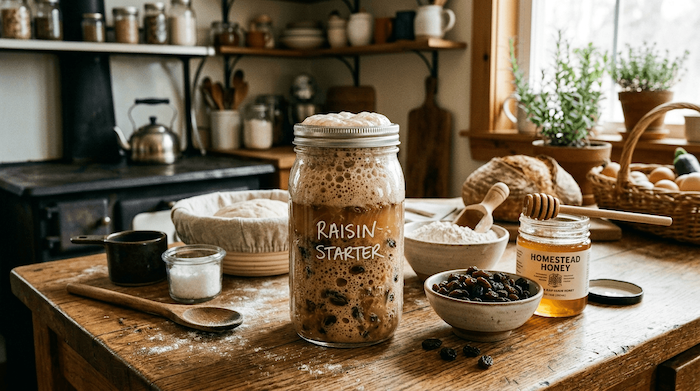
Raisins naturally contain wild yeast on their skins, making them an excellent source for creating a homemade starter culture.
Ingredients
- Sterilized 1-quart glass jar
- 2–3 tablespoons raisins
- Filtered water
- 2 tablespoons honey (optional)
Directions
- Add raisins to the jar.
- Add honey if desired.
- Fill the jar about three-quarters full with water.
- Cover loosely to allow gases to escape.
- Place in a warm location.
- Stir once or twice daily.
- Continue for 3–4 days.
Once bubbles begin forming and the raisins float to the surface, fermentation has started.
Strain out the raisins and keep the liquid starter in the refrigerator.
Using organic raisins often produces the best results because they haven’t been treated with preservatives that may inhibit fermentation.
If you enjoy experimenting with fermentation, a set of fermentation lids for mason jars can make the process easier while preventing contamination.
Capturing Wild Yeast From Nature
One of the most fascinating methods of creating yeast is capturing wild yeast directly from the environment.
Before commercial yeast existed, many households would mix flour and water together and leave the mixture lightly covered outdoors during warm weather.
Wild yeast naturally present in the air would settle into the mixture and begin fermentation.
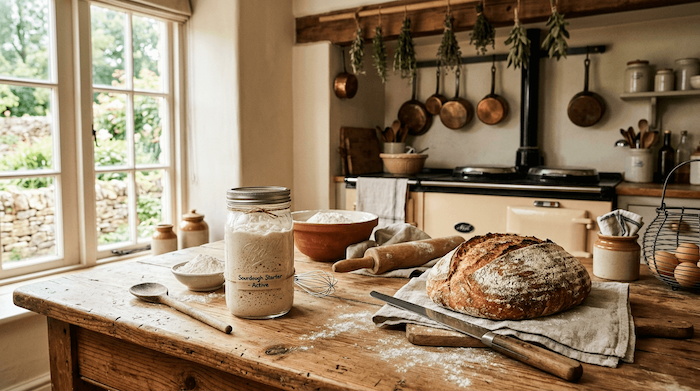
The process is very similar to creating a sourdough starter.
Different regions contain different strains of wild yeast, which is one reason traditional breads from different areas often develop unique flavors.
If you’d like to explore this method further, be sure to read How to Make a Sourdough Starter From Scratch, which walks through the process step by step.
Using Homemade Yeast for Baking
Homemade yeast generally works more slowly than commercial yeast.
Expect:
- Longer rise times
- More complex flavor
- Better texture development
- Improved keeping qualities
Many bakers feel bread made with wild yeast has a richer flavor than bread made with commercial yeast.
A digital kitchen thermometer can help maintain ideal fermentation temperatures, especially during cooler months when yeast activity tends to slow down.
When baking artisan bread, many home bakers also find a Dutch oven bread baker useful for creating a crisp crust and professional-looking loaf.
Troubleshooting Homemade Yeast
No Bubbles Appearing
Possible causes include:
- Chlorinated water
- Temperatures that are too cold
- Insufficient fermentation time
Using filtered water often improves success rates.
Unpleasant Odors
A slightly sour smell is normal.
Discard the starter if you notice:
- Mold growth
- Rotten odors
- Pink, orange, or unusual discoloration
Slow Fermentation
Move the starter to a warmer location and allow additional time.
Homemade yeast often works more slowly than packaged yeast.
Frequently Asked Questions
Can I Make Bread Without Commercial Yeast?
Yes. Potato yeast, raisin yeast, sourdough starters, and wild yeast cultures have been used for centuries.
How Long Does Homemade Yeast Last?
With regular feeding and proper storage, some starters can last indefinitely.
Is Homemade Yeast Safe?
Yes, provided the starter remains free from mold and contamination.
Why Does Homemade Yeast Rise More Slowly?
Wild yeast populations are generally smaller and less concentrated than commercial yeast products.
Can Homemade Yeast Be Frozen?
Yes. Many bakers freeze portions of active starter as a backup.
Final Thoughts
Learning how to make your own yeast is a valuable traditional skill that can help you become more self-reliant while producing delicious homemade bread.
Whether you’re interested in homesteading, off-grid living, emergency preparedness, or simply enjoy baking from scratch, homemade yeast provides an effective alternative to store-bought packets.
Combined with skills like long-term food storage, home food preservation, and sourdough bread making, creating your own yeast is another step toward a more self-sufficient lifestyle.
© 2020 – 2026, Teresa. All rights reserved.