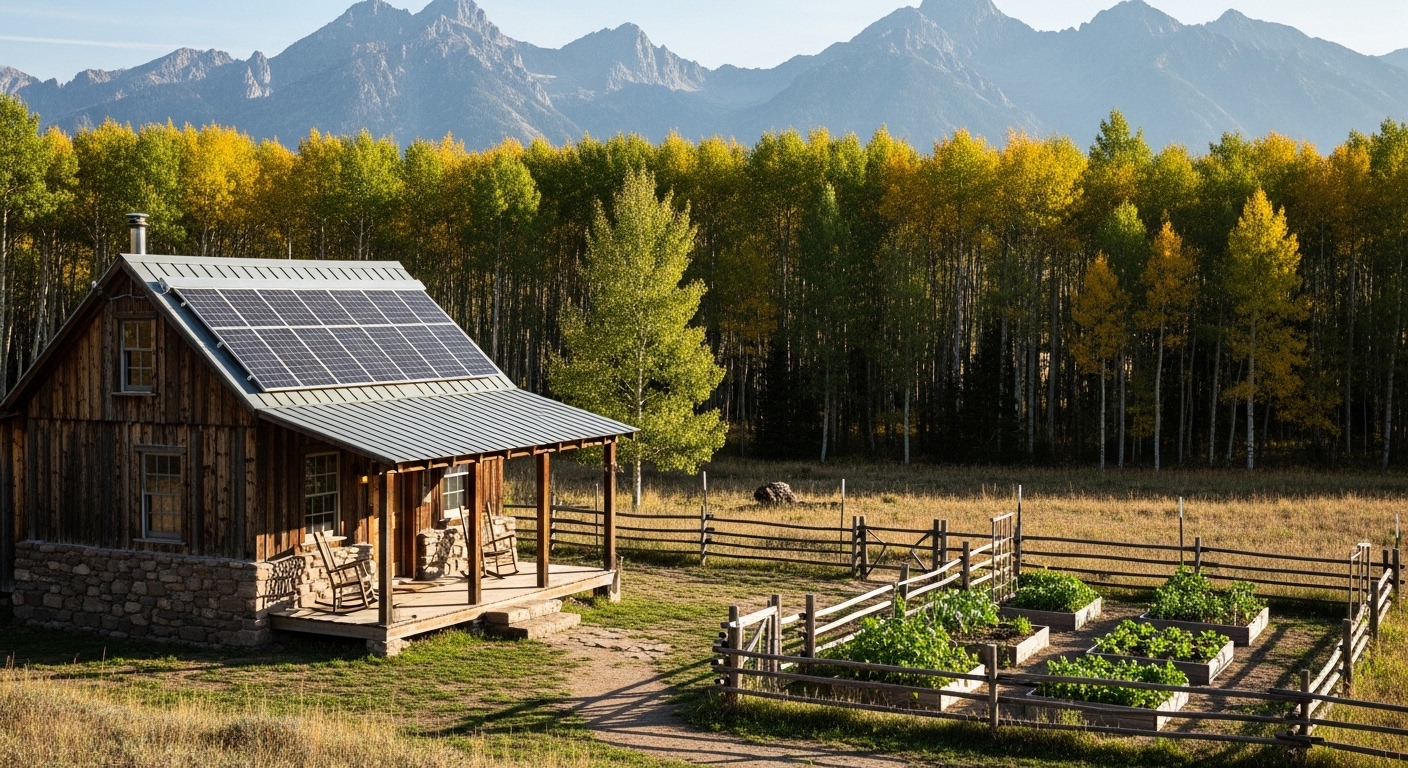
Are you thinking of living off grid?
Living off grid has become an increasingly popular choice — people wanting to get back to basics, stop paying for utilities, gain independence, and not worry about constant bills for water, sewer, power, and other services.
If you’re thinking of living off the grid in the United States, there are many factors to consider. One of the most important is which states make off-grid living more realistic and sustainable.
Going off grid isn’t something that happens overnight. Choosing the right location can make the difference between thriving and constantly struggling.
These books aren’t required reading, but they can be helpful if you want to learn from real people who’ve already made the transition to off-grid living.
This book offers a broad overview of food storage, power, shelter, and security — helpful for understanding the full scope of off-grid living before choosing a location.

Choosing an off-grid life might seem like a bold move to some people, and realistically it does take time to establish your new home and systems.
Homesteading and off-grid energy require careful cost evaluation. You’ll need to consider natural resources such as water availability, sunlight for solar power, climate, land affordability, and local regulations.
Not every state makes off-grid living easy—or even practical—but some are far more accommodating than others.
Keeping all of this in mind, here are some states worth considering when going off grid.
Off-Grid Living State Comparison
Every off-grid-friendly state has strengths and limitations, so comparing climate, water access, and regulations side by side can help narrow your choices.
| State | Climate & Growing Season | Water Availability | Regulations & Freedom | Best For |
|---|---|---|---|---|
| Alaska | Cold winters, short growing season (extended with greenhouses) | Abundant natural water in many areas | Very low tax burden, relaxed homeschooling laws | Remote living, extreme independence, solitude |
| Tennessee | Mild winters, long growing season (~260 days) | Reliable rainfall, rainwater collection allowed | Favorable livestock and raw milk laws | Homesteading, food production, family off-grid life |
| Washington | Mild, wet climate; moderate growing season | Rainwater collection allowed | Strict building codes, livestock restrictions | Minimalist off-grid living, small cabins |
| Montana | Cold winters, short growing season | Varies by county; water rights matter | Generally rural-friendly, county rules vary | Space, privacy, traditional homesteads |
| Wyoming | Cold winters, very short growing season (~125 days) | Limited rainfall (~13 inches/year); rainwater collection restricted | Relaxed homeschooling, minimal population | Total isolation, solar-based living |
Alaska
For anyone considering Alaska, this personal account shows what daily life really looks like when you leave conventional living behind.

Alaska is home to some of the most well-known off-grid communities in the United States. It offers vast open spaces, stunning natural beauty, and an incredibly low population density.
While Alaska is known for cold winters, many southern and coastal areas have more moderate conditions than people expect. Off-grid living here often relies on wood heat, solar during long summer days, and serious preparation for winter.
With the right setup, you can keep livestock and grow food using greenhouses and season-extension techniques.
Alaska is also very homeschooling-friendly. There are no standardized testing requirements, and families often have more freedom than in many other states.
Another major advantage is taxation — Alaska consistently ranks among the states with the lowest overall tax burden, which can make long-term off-grid living more affordable.
Tennessee
Tennessee has some of the best rural areas for off-grid living. Property costs are relatively low, and the growing season averages around 260 days per year, making food production much easier.
Water is rarely a concern in Tennessee. The state allows rainwater collection, and many areas receive ample rainfall throughout the year.
Tennessee also has fair regulations for raising animals, and sharing raw cow’s milk is allowed, which can be important if farming is part of your off-grid income plan.
The main challenge here is humidity. Summers can be hot and damp, so off-grid homes need good ventilation, shade, and cooling strategies built into the design.
Washington


Winter’s Comin’: A Lifelong Dream Fulfilled

Washington State offers temperate climates and abundant natural resources that can attract off-grid homesteaders. Building codes and regulations can be strict, and the cost of living is higher in many areas, but rural regions can be far more affordable.
One notable off-grid destination is the Cascade River Community Club, which has over 400 off-grid properties. Some lots can still be found at very low prices, with residents relying on solar power and generators for electricity.
If you choose to build in this community, permits are required, and homes must be at least 200 square feet.
Rainwater collection is allowed, but livestock is highly restricted — only horses are permitted. This makes it better suited for people focused on simple living rather than full homesteading.
Because of these limitations, Washington is better suited for people seeking a low-impact, minimalist off-grid lifestyle rather than full-scale homesteading.
Montana
This book is a good example of what it takes to build an off-grid homestead from the ground up in a harsh climate.
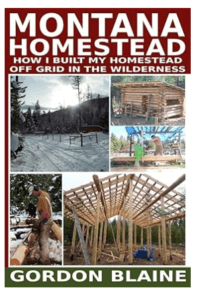
Montana Homestead: How I Built My Homestead Off Grid In The Wilderness

Montana’s wide-open spaces make it very appealing for off-grid living. Land prices are often affordable, and population density is extremely low.
Weather can be unpredictable, and the growing season is shorter than in many other states. However, a well-built greenhouse can significantly extend food production.
Montana has abundant natural resources, but water rights and county regulations vary, so careful research is essential before purchasing land.
For those willing to plan carefully, Montana offers the space and solitude many off-grid families are looking for.
Wyoming
While fictional, this story reflects the isolation and self-reliance common in Wyoming’s most remote regions.

Off the Grid (A Joe Pickett Novel Book 16)

Wyoming is ideal if complete isolation is your goal. It has one of the lowest population densities in the country and wide-open landscapes.
Many areas receive plenty of sunlight, making solar power a strong option. Homeschooling laws are relaxed, with no requirements to submit test scores or evaluations.
The challenges include long, cold winters and limited water access. Rainwater collection is generally not permitted, and the state averages only about 13 inches of rainfall per year. The growing season is short — roughly 125 days.
For those who value solitude and independence above convenience, Wyoming remains an attractive option.
The Bottom Line
Going off grid should always involve a realistic cost-benefit analysis and a clear understanding of what your chosen state allows and restricts.
What works beautifully for one family can be frustrating or unworkable for another.
There is no perfect place to live off grid. Each state comes with trade-offs, and success depends on matching the location to your lifestyle, skills, and expectations.

States with lower costs of living, relaxed homeschooling laws, and fewer regulatory barriers tend to be better suited for long-term off-grid living — but mindset and preparation matter just as much as location.
Off-grid success comes down to preparation, adaptability, and choosing a location that supports your goals—not just your dreams.
Disclosure:
Content on this site is for informational purposes only and reflects personal experience and research. Off-grid living laws and conditions vary by location, so readers should always verify local regulations before making decisions. Some links may be affiliate links, which help support this site at no additional cost to you.
Updated Feb 2026
© 2020 – 2026, Teresa. All rights reserved.
It is very interesting to read through this article, it is very true that people wants to stay off grid and have the cool and great climate to themselves, I personally feel like it’s gonna be nice because you’ll be of less burdens and you’ll care less of the exotics of the world, going off grid for a normal person will bring peace and also help you save, lol.
Thank you for sharing this here. Honestly, I value all you have stated here. It cab really make the whole difference on the overall if we stay in an offgrid environment as that can really help to live off the excess of budget. Surely this is a very great one to see here. In all, I value it all as it can be very great. I heard of Alaska before and maybe contemplate it at a later date
Hello there, I have a house already in town and my wife has always been a fan of living off the grid because she has always been living in such houses her entire life. I really want to get one of such houses and I really have little knowledge of it. I still will have to show this article and see what she has to day because I’m doing it for her.
So nice you want to learn how to go off grid for you wife. All the best to you
It was truly interesting to read through this article. These places you have recommended are really secluded and the ideal locations for anyone who wants to live a tranquil, peaceful life off the grid, distanced from general populace. It will be beneficial to them if they are able to read your article and I’ll be happy to share it if possible
Thanks for sharing.
This has been a very interesting read on living off grid in the States. Living off grid and using the natural resources of the environment in the best way, is a dream for me, but I would prefer to be part of a community to have “neighbors”, rather than being in a very remote area.
You mention several points that I would not have thought about, with homeschooling being very important if you have young children. And of course taxation will not go away when you live off grid! A great post
Thanks. There are off grid communities out there, you just have to find the one that’s right for you. Dreams can come true 🙂
Being off the grid is an adventure about how much we can depend on other individuals and how much we can depend on one another. People going off the grid are in tune with the nature of our creator, with more peace and joy than alternatives and are responding positively, spiritually, to feelings about the billions being starved by economics and poisoned by chemical fluid/solids. I haven’t done it (gone off the grid) but I feel it’d be like volunteering to be on a paradise island and needing at least a loving community
Thanks for your comment. I like how your describe the thought of going off grid. Volunteering to be on a paradise island.