
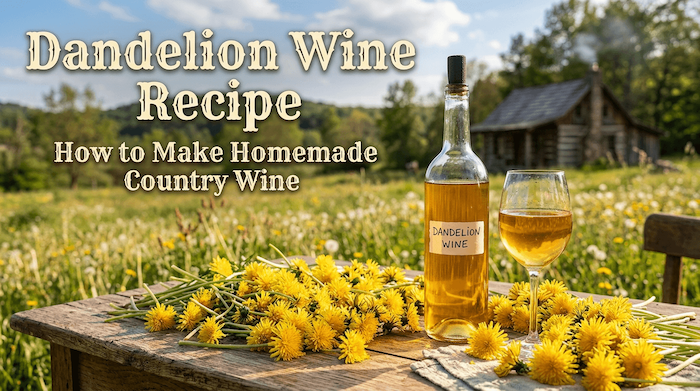
Every spring, one of the first signs that winter is finally over is the appearance of bright yellow dandelions covering fields, meadows, and roadsides.
Many people see them as weeds, but around our off-grid cabin, dandelions are one of the most useful wild plants we harvest each year.
We often add the young dandelion greens to salads, use the roots for tea, and every spring we make a batch of homemade dandelion wine using a recipe passed down from my grandmother.
The first time we made dandelion wine, we weren’t quite sure what to expect. The smell during fermentation wasn’t especially appealing, but after aging for several months, the finished wine was surprisingly smooth with a light floral flavor that made it well worth the wait.
If you enjoy harvesting food and useful plants from nature, you may also enjoy reading How to Grow a Survival Garden, 50 Ways to Be More Self-Sufficient, and How to Grow Food When Supply Chains Fail, where I share practical ways to become less dependent on stores and supply chains.
Table of Contents
- What Is Dandelion Wine?
- Health Benefits of Dandelions
- Harvesting Dandelions Safely
- What You’ll Need
- Dandelion Wine Recipe
- Bottling and Aging
- How Does Dandelion Wine Taste?
- Frequently Asked Questions
What Is Dandelion Wine?
Dandelion wine is a traditional country wine made from dandelion blossoms, citrus fruit, sugar, water, and yeast.
For generations, homesteaders and rural families made dandelion wine as a way to preserve one of spring’s most abundant wild harvests. The finished wine develops a delicate floral flavor that many people compare to honey, chamomile, or a light white wine.
Making dandelion wine is also a great way to make use of a plant that most people spend time trying to eliminate from their lawns.
For anyone interested in foraging and self-sufficiency, learning to use wild plants can be just as valuable as growing your own food. That’s one reason I encourage people to create a productive garden space and learn skills like those covered in How to Grow a Survival Garden.
Health Benefits of Dandelions
Dandelions have been used for centuries in traditional herbal medicine and are packed with nutrients.
Dandelions contain:
- Vitamin A
- Vitamin B Complex
- Vitamin C
- Vitamin K
- Calcium
- Potassium
- Magnesium
- Zinc
- Iron
- Folate
They are also rich in antioxidants that help protect cells from oxidative stress.
The entire plant can be used:
- Flowers for wine, jelly, and fritters
- Young leaves for salads
- Roots for teas and coffee substitutes
Historically, dandelions were used by Indigenous peoples and early settlers to support digestion, kidney function, and overall wellness.
When I was a child, I developed several warts on my hands. My grandmother would snap a dandelion stem and apply the milky sap directly to the wart. Within days it disappeared. Years later, I used the same method on my son with similar results.
While scientific evidence is limited, it remains one of those old-fashioned remedies many people still swear by today.
Harvesting Dandelions Safely
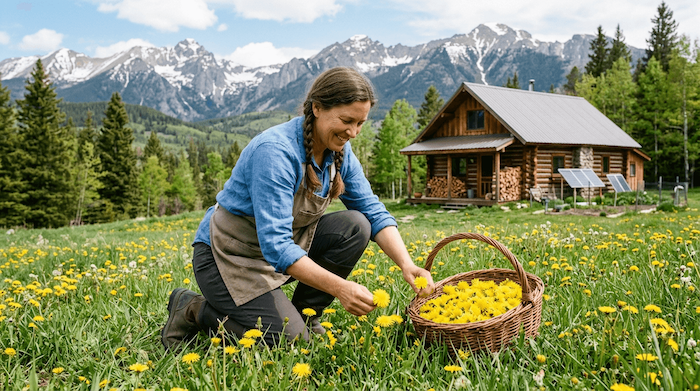
Although dandelions bloom from spring through fall, the best flowers for wine are harvested in spring when they are young and fresh.
Older flowers often produce a more bitter flavor.
When harvesting dandelions:
- Pick far away from roads and highways
- Avoid sprayed lawns and fields
- Never harvest where herbicides have been used
- Avoid areas treated with fertilizers
- Harvest from clean fields or meadows
We are fortunate to have plenty of dandelions growing around our off-grid property where they are free from traffic pollution and chemical treatments.
For wine making, harvest only the flower heads. Save the greens for salads, soups, or sautéed dishes.
If you’re looking for more ways to produce food and useful products from your land, you’ll find additional ideas in 50 Ways to Be More Self-Sufficient.
What You’ll Need
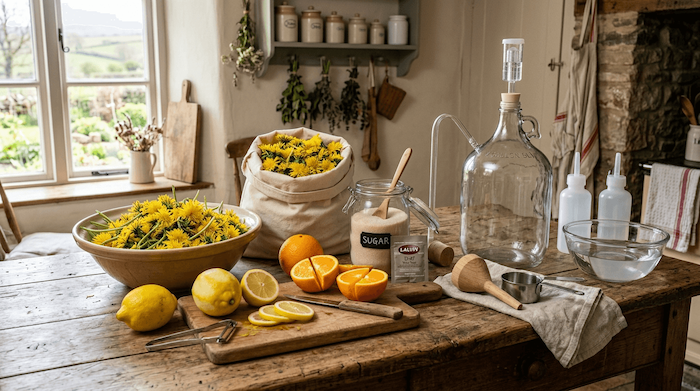
Ingredients
- 5 litres dandelion blossoms
- 5 litres water
- 3 pounds sugar
- 1 organic orange
- 1 organic lemon
- 1 package wine yeast
Equipment
Having the right equipment makes the process much easier and improves the quality of the finished wine.
I recommend having:
- Large Stainless Steel Stock Pot
- Cheesecloth for Straining
- Glass Carboy Fermentation Vessel (with airlock)
- Airlock and Bung Set
- Hydrometer for Wine Making
- Bottle Corker
- Wine Bottles and Corks
- Fine Mesh Straining Bags
Many of these tools can be reused for making elderberry wine, fruit wines, cider, mead, and other homemade beverages.
Dandelion Wine Recipe
Step 1: Prepare the Blossoms
Place approximately 5 litres of freshly picked dandelion blossoms into a large stock pot.
Bring 5 litres of water to a boil and carefully pour it over the flowers.
Cover with cheesecloth and allow the mixture to steep for 3 days.
A Large Stainless Steel Stock Pot makes this step much easier, especially when working with larger batches.
Step 2: Strain the Liquid
On the fourth day, strain the liquid through cheesecloth to remove the blossoms.
Many wine makers prefer using Fine Mesh Straining Bags because they remove more particles and make cleanup easier.
Discard the flowers.
Step 3: Add Fruit and Sugar
Peel the orange and lemon.
Cut into small pieces and add them to the strained liquid.
Add the sugar and stir well.
Bring the mixture to a gentle boil and simmer for approximately 60 minutes.
Allow the liquid to cool to about 98°F (37°C).
Step 4: Add the Yeast
Toast a slice of whole wheat bread.
Soften the yeast according to package directions and spread it onto the toast.
Place the toast on top of the liquid and allow it to float for 2 days.
Cover the container with cheesecloth.
If you plan to make homemade wines regularly, investing in a Wine Making Starter Kit can simplify the entire process and provide many of the tools needed for fermentation and bottling.
Step 5: Strain Again
After two days:
- Remove the toast
- Strain the mixture again
- Allow it to sit for another day
To remove fine particles, strain through cheesecloth several times and then through a coffee filter.
Step 6: Ferment and Bottle
Transfer the liquid into a Glass Carboy Fermentation Vessel fitted with an Airlock and Bung Set.
Allow fermentation to complete before bottling.
Using a Hydrometer for Wine Making helps determine when fermentation is finished and can prevent bottling problems.
Once fermentation is complete, transfer the wine into sterilized bottles.
A Bottle Corker and quality Wine Bottles and Corks make bottling much easier and help ensure a proper seal.
Store the bottles in a cool, dark location.
Allow the wine to age for at least 6 months before drinking.
Many homemade wine makers find that a full year of aging produces an even smoother flavor.
Bottling and Aging
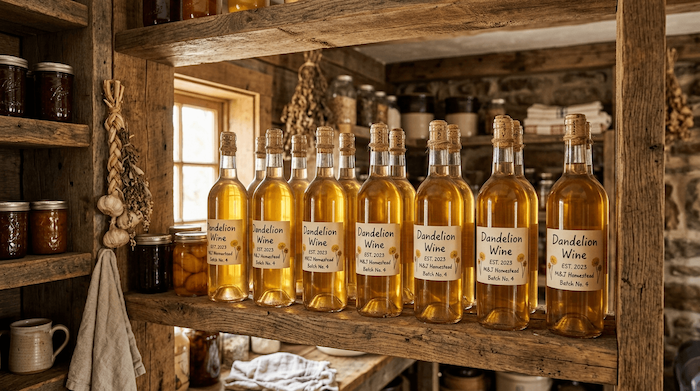
Patience is the secret ingredient in good homemade wine.
While the wine may technically be drinkable after six months, we waited almost a full year before opening our first bottle.
The flavor improved dramatically during aging, becoming smoother and more balanced with time.
Store bottles:
- In a cool location
- Away from sunlight
- At a consistent temperature
- On their side if using natural corks
Many of the same food storage principles are discussed in Root Cellar Storage: A Step-by-Step Guide, where proper storage conditions help preserve food and homemade products for long periods.
How Does Dandelion Wine Taste?
Many people expect dandelion wine to taste grassy or herbal.
In reality, properly aged dandelion wine develops a surprisingly pleasant flavor with:
- Light floral notes
- Mild citrus undertones
- Slight honey characteristics
- A smooth finish
The finished wine is often compared to a light white wine or mead.
For us, the flavor was much better after a year of aging than it was at six months.
Frequently Asked Questions
Can you make dandelion wine without yeast?
Yes, wild fermentation is possible, but using a quality Wine Yeast for Homemade Wine Making produces more reliable results and better flavor consistency.
Do you use the green parts of the flower?
No. Most wine makers use only the yellow petals because the green parts can add bitterness.
How long does dandelion wine last?
Properly bottled dandelion wine can last several years when stored in a cool, dark place.
When is the best time to pick dandelions?
Early spring is ideal when flowers are fresh and less bitter.
Is dandelion wine alcoholic?
Yes. Fermentation converts the sugar into alcohol, creating a traditional homemade country wine.
Final Thoughts
Dandelion wine is one of those old-fashioned recipes that connects us to earlier generations who made use of the resources growing right outside their doors.
Whether you’re interested in wildcrafting, homesteading, self-sufficiency, or simply trying something new, dandelion wine is a rewarding project that turns a common “weed” into something special.
The next time your yard turns yellow with dandelions, consider harvesting a basketful instead of mowing them down. You might be surprised by what those little flowers can become.
And if you’re working toward a more self-reliant lifestyle, don’t miss 50 Ways to Be More Self-Sufficient, How to Grow Food When Supply Chains Fail, and How to Grow a Survival Garden for more practical ideas.
Disclosure
This post may contain affiliate links, including Amazon affiliate links. If you purchase through these links, I may earn a small commission at no extra cost to you. The information shared on this website is based on personal experience and research and is intended for general informational purposes only. Always use proper safety precautions and follow manufacturer guidelines when using tools, equipment, or outdoor gear.
© 2019 – 2026, Teresa. All rights reserved.