
If you’re building an off-grid solar system, your battery bank may be the most important investment you’ll make. Solar panels generate power during the day, but batteries keep your lights on after sunset, power your refrigerator overnight, and provide electricity during cloudy weather.
Over the years, I’ve learned that battery storage can make or break an off-grid power system. A properly sized battery bank provides reliable power year-round, while an undersized system quickly becomes frustrating.
Whether you’re powering a weekend cabin or a full-time off-grid homestead, understanding battery storage is essential.
If you’re still planning your overall power system, you may also want to read my guide on Choosing the Right Solar Panels for Your Off-Grid Lifestyle.
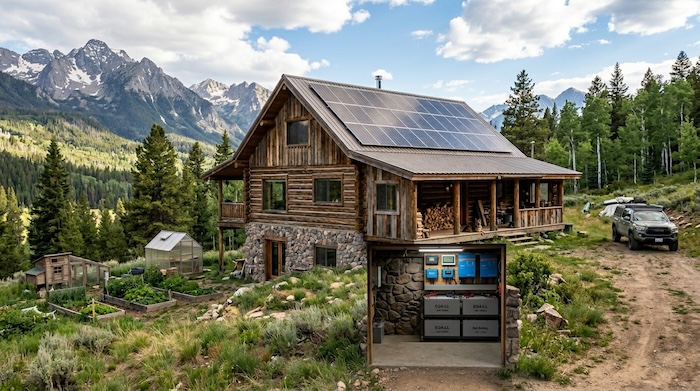
Why Battery Storage Matters in an Off-Grid Solar System
Solar panels only generate electricity when the sun shines. Most of us use power early in the morning and again in the evening when solar production is low or nonexistent.
Battery storage solves this problem by storing excess energy produced during the day and making it available when needed.
Think of your battery bank as your energy savings account. The larger and healthier your battery bank, the more comfortable your off-grid lifestyle becomes.
Without adequate storage you may experience:
- Dead batteries before morning
- Power shortages during cloudy weather
- Reduced battery lifespan
- Frequent generator use
For backup power planning, you may also find my guide on Backup Power Options for Off-Grid Living helpful.
Common Types of Batteries for Off-Grid Solar
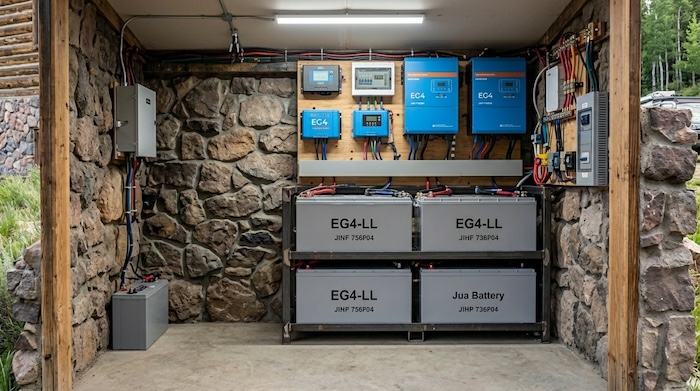
Lithium Iron Phosphate (LiFePO4) Batteries
Lithium batteries have become the gold standard for many off-grid homeowners.
Advantages:
- Extremely long lifespan
- Deep discharge capability
- Lightweight
- Fast charging
- Virtually maintenance-free
Disadvantages:
- Higher upfront cost
- Reduced performance in extreme cold unless heated
For full-time off-grid living, lithium batteries are often the best long-term value despite the higher purchase price.
Renogy LiFEP04 Lithium Battery
AGM Batteries
AGM (Absorbent Glass Mat) batteries remain popular for cabins and seasonal properties.
Advantages:
- Maintenance-free
- Sealed design
- Reliable performance
- Moderate cost
Disadvantages:
- Shorter lifespan than lithium
- Cannot tolerate deep discharge as well
AGM batteries work well for weekend cabins where the system isn’t heavily cycled every day.
Gel Batteries
Gel batteries are another sealed lead-acid option.
Advantages:
- Low maintenance
- Good deep-cycle performance
- Handle temperature fluctuations well
Disadvantages:
- More expensive than AGM
- Sensitive to charging voltage
They are less common today but can still be useful in certain installations.
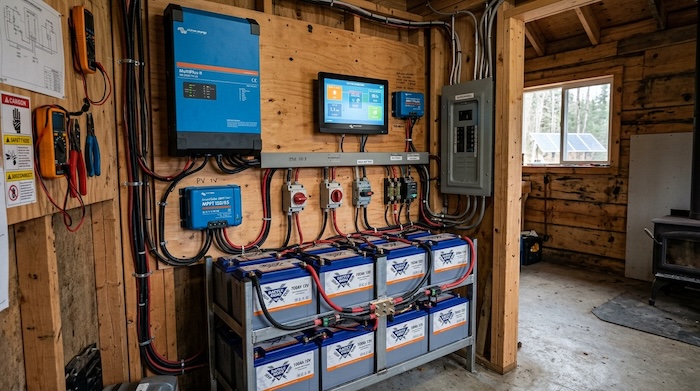
Flooded Lead-Acid Batteries
For decades, flooded batteries were the backbone of off-grid living.
Advantages:
- Lowest purchase cost
- Easy to recycle
- Widely available
Disadvantages:
- Require maintenance
- Produce hydrogen gas
- Shorter lifespan
- Larger footprint
I know many homesteaders who still use flooded batteries successfully, but they require regular attention.
© 2026, Teresa. All rights reserved.