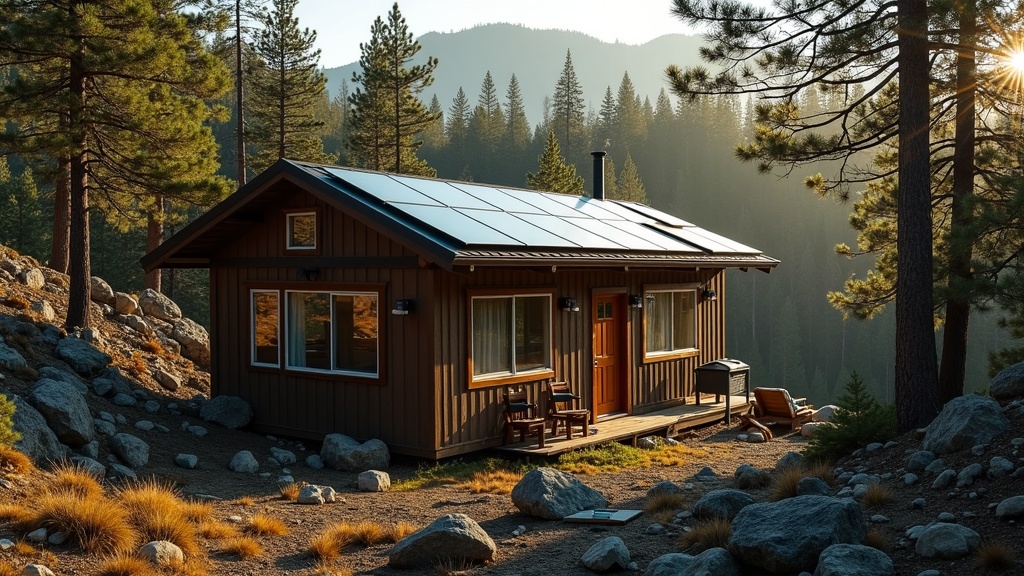
Reliable power is the backbone of off-grid living. From solar panels to micro-hydro systems, choosing the right energy setup determines comfort, safety, and long-term success.
This section covers real-world off-grid power solutions, equipment choices, and lessons learned from powering a remote cabin.
Solar Power Systems
Solar is the most common off-grid energy source.
Topics include:
- Choosing the right solar panels for cabins
- Off- Grid Solar power kits
- Off-grid solar lighting and grow lights
Alternative & Backup Power
- Micro-hydro turbines for off-grid homes
- Tesla off-grid generators
- Hybrid power systems
Heating Without Electricity
Staying warm off-grid requires smart design:
- Wood stoves and small cabin heating
- Rocket mass heaters
- Heat-powered wood stove fans
Wood heat remains one of the most reliable off-grid heating methods, but safety and maintenance are essential. Start with our complete wood stove safety guide to prevent chimney fires and carbon monoxide risks.
Related Power & Energy Guides
Explore practical off-grid power solutions, energy systems, and heating methods designed for reliable cabin living:
- Choosing the Right Solar Panels for Off-Grid Living
- Solar Panels for a Cabin: What to Consider
- Off Grid Power Options for Cabins and Homesteads
- Micro-Hydro Turbines for Off-Grid Homes
- Tesla Off Grid Generator: What You Should Know
- Heating Without Electricity in an Off-Grid Cabin
- Rocket Stove Mass Heater Basics
- Heat Powered Wood Stove Fans (EcoFan)
⚡ POWER & ENERGY — FAQ SCHEMA
Q: What is the best power source for an off-grid cabin?
A: Solar power is the most common choice for off-grid cabins due to reliability, scalability, and declining equipment costs.
Q: How many solar panels does an off-grid cabin need?
A: The number depends on energy usage, location, and system design. Small cabins may need only a few panels, while larger systems require more.
Q: Can you heat a cabin without electricity?
A: Yes. Wood stoves, propane heaters, and passive solar design are common ways to heat off-grid cabins without electricity.
Q: Are backup power systems necessary off-grid?
A: Many off-grid homes use backup generators or alternative systems to ensure power during extended cloudy weather or high usage periods.
Disclosure: This site may contain affiliate links. Content is for informational purposes only and reflects personal experience. Always do your own research before making decisions.