Learn How to Extend Your Growing Season
Learning how to extend your vegetable growing season can make the difference between a successful harvest and crops that never fully mature—especially in cooler or northern climates.
Where I live, extending the growing season isn’t optional. Without some form of protection, many crops simply wouldn’t make it to harvest.
There are several ways to extend your growing season, from temporary solutions like row covers and cold frames to more permanent options such as greenhouses, trees, and windbreaks.
Snow Fencing is another effective option for creating a temporary windbreak and works especially well in open garden areas exposed to cold winds.
Ways to Extend Your Growing Season
Some of the most effective ways to extend the vegetable growing season include:
- Row covers
- Cold frames
- Greenhouses
- Wind protection using trees or fencing
- Plastic mulch and agricultural cloth
The right solution depends on your climate, garden location, and the crops you want to grow.
What Type of Protection Does Your Garden Need?
If your garden is in an open area with no wind protection, the soil will dry out quickly and the plants will be exposed to cold temperatures.
Even simple wind protection can make a noticeable difference.
A hedge of spruce trees planted about four feet away from the garden can increase the air temperature by a couple of degrees Celsius. Two rows of snow fencing placed about 60 feet apart can achieve a similar effect.
These types of permanent windbreaks help protect plants from cold winds and reduce moisture loss from the soil.
Using Plastic Mulch and Row Covers

If wind protection isn’t your main concern and you simply want to warm the soil and extend the season, plastic mulch and row covers work very well.
Plastic mulch can be laid directly on the soil between rows or placed down before planting, with holes cut for seedlings. It helps:
- Warm the soil
- Retain moisture
- Reduce weed growth
Clear plastic warms the soil more effectively than black plastic, while black plastic does a better job of suppressing weeds. Biodegradable plastic mulches are also available.
Row Covers and Agricultural Cloth
Low row covers use hoops placed over plants, with plastic or fabric stretched over the top and secured with soil. These covers are usually open at both ends to allow airflow.
Plastic covers with slits are helpful in areas where temperatures fluctuate. The slits allow excess heat to escape on warmer days, reducing the risk of overheating.
Agricultural cloth, also known as floating row cover, is another effective option. These lightweight fabrics are placed directly over plants and secured with soil, rocks, or garden staples. They allow light, air, and water through while offering protection from cold and some pests.
In recent years, I’ve chosen agricultural cloth to extend my growing season. I cover young seedlings to protect them from harsh conditions and help harden them off outdoors. This method gives me about two extra weeks on either side of the growing season and has saved my crops more than once from a mid-summer frost.
Lightweight agricultural row cover fabric has become my preferred method for protecting young seedlings while still allowing light, air, and water through.
Greenhouses and Cold Frames
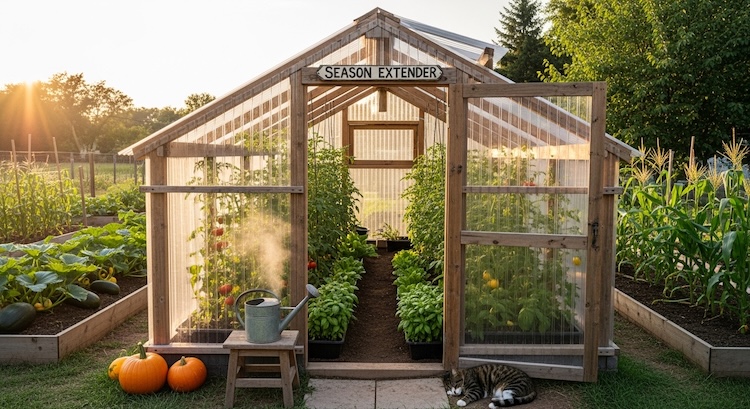
Greenhouses and cold frames are another way to extend the growing season. Unlike row covers, which can be removed and replaced as needed, crops grown in cold frames or greenhouses usually stay there for the entire season, except when starting seedlings.
In northern climates, some vegetables simply perform better in a greenhouse. Tomatoes, cucumbers, melons, and peppers often thrive in greenhouse conditions compared to growing outdoors.
Cold frames are a good option for gardeners who want season protection without committing to a full greenhouse.
For more practical tips on planning, planting, and growing food in cooler climates, visit our complete Vegetable Gardening resource page.
Final Thoughts on Extending the Growing Season
Extending your vegetable growing season can be done in many ways, from temporary row covers to permanent structures like greenhouses and windbreaks.
Vegetable gardens exposed to strong winds lose moisture quickly and are more vulnerable to cold temperatures. Using snow fencing, hedges, or trees can help protect plants and stabilize growing conditions.
Plastic mulch and agricultural cloth are simple, effective ways to warm soil, retain moisture, and reduce weeds—especially in cooler climates where every extra week of growing time matters.
Disclosure:
Content on this site is for informational purposes only and reflects personal experience and research. Gardening results can vary based on climate, soil, and growing conditions. Some links may be affiliate links, which help support this site at no additional cost to you.
Updated Feb 2026
© 2020 – 2026, Teresa. All rights reserved.
Hiya, you know I love gardening however I am not very good at it because my veggies always seem to die before they even get started but I’m thinking it’s because the weather where I live is always so unpredictable. I don’t have space for a greenhouse, although, I’ve not looked into them properly, but these covers are a great idea which I never thought of being a novice to trying to grow veggies from home. Which one would you recommend for a novice gardener who has a small space to grow vegetables?
Hi, the cloth cover is great because you can cut it to fit any area, or the hoops which are nice because they sit above the plants. They come in 4′ lengths so depending on your space I would chose either of those. Happy Gardening!
Hi Jill,
Looks like you have a pretty simple and inexpensive solution for extending a growing season.
Reading through this article got me thinking. Where we live, we don’t have to worry about the cold because it rarely goes below 18degC.
But, we live in a climate where it rains for about six months of the year. During the other six months, hardly a drop.
From your experience, would these protective row covers work to help maintain humidity during an extended dry spell (where watering on a regular basis is hard to do)?
I would give it a try along with mulching your soil, that will hopefully keep the moisture in the ground. Let me know how it goes.
Great post dear. I am bad at gardening but with your post i ask myself why can’t i give it a try? Anyway green house here is very expensive i could not afford the price. But why not trying with that woven cloth ( agriculture cloth) and make my vegetable garden at my home? How is the price for a small woven cloth which can cover a meter square?
Thank you for the idea, i feel concerned with making vegetable garden even in dry season can be fruitful.
You may be able to buy a square meter of cloth at your local hardware store, but I’m not sure. The smallest amount I have bought would be about 6′ by 10. Here is a link to one I found on Amazon. Small row cover
Enjoy your garden and be sure to stop back and let us know how it went.
You have given us very helpful tips about gardening. I have a garden in the open place and I must say that it is not easy at all because of such unstable climate. When winter is ahead I put floating row covers but my plants still freeze. I don’t know is there some row covers that will prevent freezing?
The row covers help me to extend my season about 2 weeks on either side, but if they are not working for you; you might want to try the cloches – they are placed over the plants and made plastic although you can get glass ones as well. here is a link to Haxnicks King Size Victorian Bell Cloche It may be a better option for you.
These row covers are a must if you are going to garden off grid. As you note they can extend the growing season both in the spring and fall. I also see them, in my usage, to be helpful in limiting pests. Especially moths that lay eggs and they help keep off aphids. Truly amazing. I also use covers in summer to protect lettuce from direct sunlight to avoid them bolting and helping them retain moisture. Great tip on extending the growing period.
Thanks Tim for adding your experience with row covers as well. I totally forgot about the pests, it’s saved me with cabbage moths before, also kept the rabbits from munching down on things. I haven’t used them for my lettuce, but that’s an excellent idea as it really doesn’t like a lot of sun. Thanks for your comments.
Hi Jill,
This is very useful information, I’ve actually started growing my own produce in an effort to increase my organic food intake.
I’m also trying to reduce my use of plastics so I’d look at the agriculture cloth personally, I’m in the UK and this is my first winter so think it will be a necessity, what sort of price point does the cloth start at?
Hi Nate, these cloths do really help and here in North America the prices vary from about $12 up depending on the size. All the best with your gardening venture.
Hey thanks for some great information about extending the growing season. The wife and I have been talking about making a vegetable garden in the back yard. I never knew there were so many types of covers available for the garden. I will definitely book mark this site as I know I will need some info.
Hi Donnie, thanks for the book mark. Let us know how your vegetable garden growing goes. It’s always great to hear from fellow gardeners. Best of luck to you