
A guide to identifying, harvesting, preparing, and brewing Chaga from the forest
If you’ve ever walked through a stand of birch trees in a cold northern climate, you may have noticed a dark, cracked growth that looks almost burnt into the bark. That unusual growth is wild Chaga mushroom (Inonotus obliquus), one of the most prized medicinal fungi in traditional herbal medicine and is commonly included in our Health & Herbs resources.
On our off-grid property, Chaga grows naturally on mature birch trees, and we harvest it responsibly for long-term use—primarily as a nourishing tea. While Chaga itself is hard and woody, brewing it slowly in hot water is the traditional way to unlock its beneficial compounds.
What Is Wild Chaga Mushroom?
Chaga is a slow-growing parasitic fungus that thrives almost exclusively on living birch trees in cold regions such as Canada, northern Europe, Russia, and parts of the northern United States.
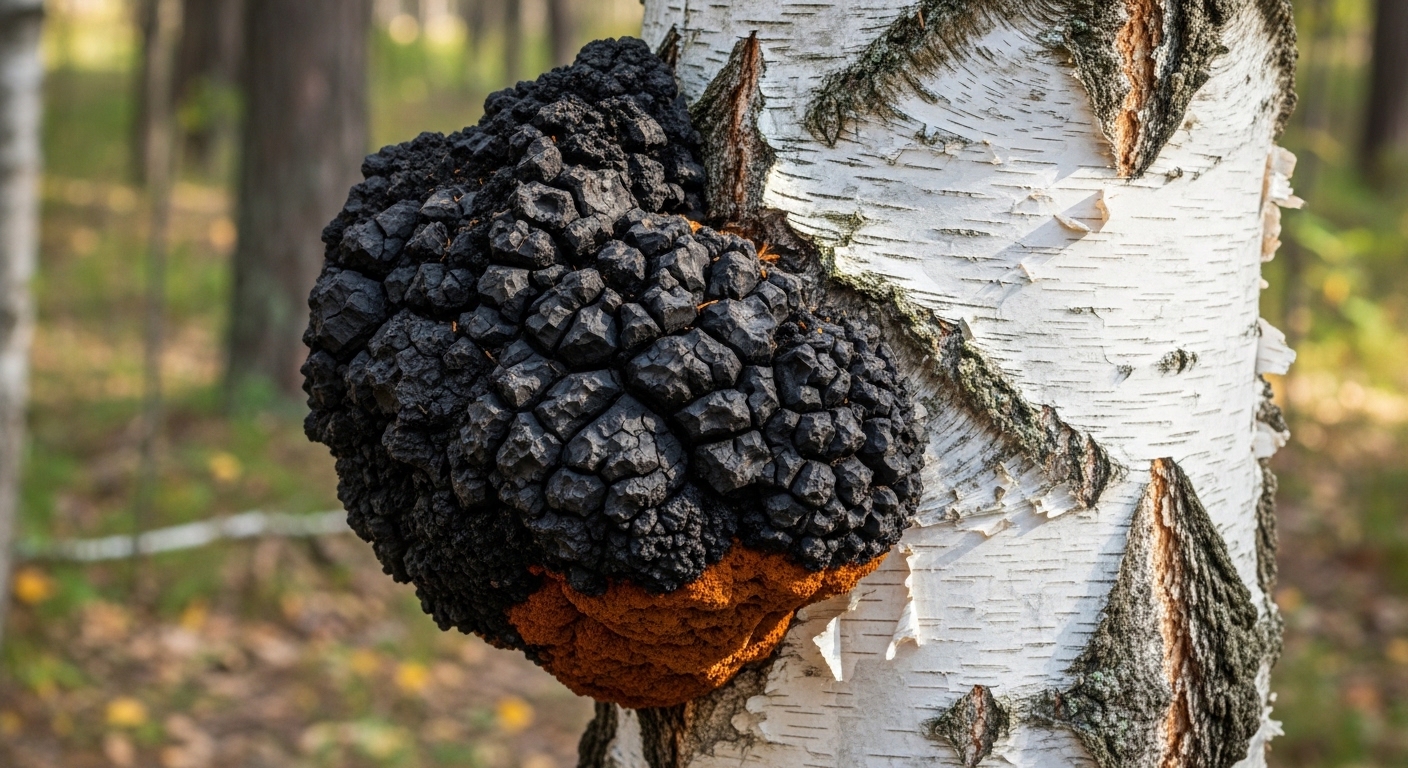
Unlike typical mushrooms, Chaga doesn’t have a cap or gills. Instead, it forms a dense, charcoal-like mass on the outside of the tree.
Key characteristics:
- Exterior: Black, rough, cracked, and brittle—often mistaken for burnt wood
- Interior: Rusty orange to yellow-brown with a cork-like texture
- Size: Commonly 10–15 inches across
- Growth rate: 3–10 years to reach harvestable size
- Best trees: Mature birch trees (often 30–40+ years old
How to Identify Chaga in the Wild
Correct identification is essential before harvesting.
Look for:
- A hard, cone- or horn-shaped growth protruding from birch bark
- Black exterior resembling charcoal
- Bright orange interior when broken open
- Growth directly from the trunk (not fallen logs)
Chaga does not grow on dead trees, fallen wood, or stumps. If the tree is dead, the growth is not Chaga.
Responsible Wild Chaga Harvesting
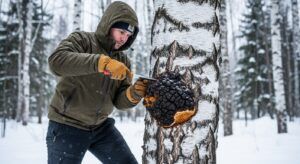
Chaga is a renewable resource only when harvested correctly. Improper harvesting can permanently damage the tree and prevent regrowth.
Responsible harvesting guidelines:
- Harvest only from living birch trees
- Never cut into the tree itself—remove only the Chaga
- Leave at least 15–20% of the Chaga behind so it can regenerate
- Avoid harvesting very small growths
- Best harvest time: late fall through winter, when sap isn’t running
A clean hatchet or sturdy knife works well. Harvest thoughtfully—Chaga takes years to grow.
Preparing Wild Chaga for Storage
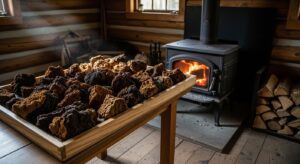
Once harvested, Chaga should be prepared properly to prevent spoilage and preserve potency.
Steps:
- Break Chaga into small chunks while still fresh (it hardens as it dries)
- Dry using a dehydrator at low heat (around 50°C / 120°F)
or air-dry near a woodstove (never directly on heat) - Store fully dried pieces in airtight glass jars
- Keep in a cool, dark, dry place
You can leave Chaga in chunks for long simmering or grind it into powder for quicker brewing.
Why Chaga Is Traditionally Brewed as Tea
Chaga is not eaten like culinary mushrooms. Its dense, woody structure contains chitin, which is difficult to digest. Brewing Chaga as tea allows heat and time to break down the cell walls and release beneficial compounds into the water.
This is why Chaga tea has been used for centuries in Russian and northern folk medicine as a daily tonic.
How to Brew Wild Chaga Tea

Brewing with Ground or Powdered Chaga
- ½ teaspoon ground Chaga
- 1 cup water
Simmer gently for 15–20 minutes, strain, and drink.
Alternatively, pour boiling water over ground Chaga and steep for 15 minutes.
If you are using chucks of Chaga then it must be brought to a boil and simmered for around 4 hours. Of course the longer the better. I do up a gallon of tea and put it in the fridge, add lemon and have iced tea, or warm it up and add honey for hot tea.
Brewing with Chaga Chunks (Traditional Method)
-
Place Chaga chunks in a pot
-
Cover with water and bring to a gentle boil
-
Reduce heat and simmer for 1–4 hours (longer = stronger tea)
The tea will turn a deep brown color. Chaga chunks can be reused multiple times until they lose color.
For convenience, many people brew a large batch, refrigerate it, and enjoy it hot or iced with lemon or honey.
Benefits of Consuming Wild Chaga (Most Often as Tea)
Chaga has a long history of traditional use, and modern research continues to explore its properties. When consumed regularly as tea, Chaga is commonly associated with:
- Immune system support and balance
- Powerful antioxidant activity
- Anti-inflammatory support
- Digestive and stomach health support
- Nervous system calming effects
- Antiviral and antibacterial properties
The outer black layer is rich in betulin and betulinic acid, while the inner orange portion contains beta-glucans that support immune regulation.
Final Thoughts
Wild Chaga mushroom is one of nature’s most remarkable forest medicines. With careful identification, respectful harvesting, and traditional preparation, it can be enjoyed for years as a grounding, nourishing tea.
Each time I walk our birch trees, I’m reminded that some of the most powerful natural remedies grow quietly and slowly—waiting for those who know how to look.
If you were searching specifically for Chaga tea brewing, you’ll find the full traditional methods included above using responsibly harvested wild Chaga.
Frequently Asked Questions About Wild Chaga Mushroom
What trees does Chaga grow on?
Chaga grows primarily on living birch trees in cold northern climates. It does not grow on dead trees or fallen logs, and growths found on non-birch trees are not true Chaga.
How can you tell real Chaga from look-alikes?
True Chaga has a black, charcoal-like exterior and a bright rusty-orange interior. If the inside is pale, white, or woody throughout, it is not Chaga.
Is wild Chaga better than store-bought Chaga?
Wild-harvested Chaga is often preferred because it grows slowly in natural conditions and absorbs compounds from birch trees. Quality depends on responsible harvesting, proper drying, and correct preparation.
Can Chaga be eaten raw?
No. Chaga is extremely hard and woody. It is traditionally consumed as a tea or decoction, which allows heat to break down the cell walls and release beneficial compounds.
How long can dried Chaga be stored?
Properly dried and stored Chaga can last several years when kept in airtight containers away from moisture, heat, and direct sunlight.
Can Chaga chunks be reused?
Yes. Chaga chunks can be reused multiple times until they stop releasing color into the water. Each simmer will produce a lighter tea.
What does Chaga tea taste like?
Chaga tea has a mild, earthy, slightly vanilla-like flavor. It is not bitter and is often enjoyed plain or with honey or lemon.
Is it safe to drink Chaga tea every day?
Many people consume Chaga tea daily in moderate amounts. As with any medicinal mushroom, it’s best to start slowly and avoid excessive use. Those on blood thinners or with medical conditions should consult a professional.
Important Note:
This information is shared for educational purposes only and reflects traditional use. It is not intended as medical advice. Always listen to your body and consult a qualified healthcare professional if you have concerns, are pregnant or nursing, or are taking medications.
This post may contain affiliate links. If you make a purchase through these links, I may earn a small commission at no extra cost to you.
Updated Feb 2026
© 2017 – 2026, Teresa. All rights reserved.
Hey Jill,
Wow Chaga looks amazing which countries do they grow? I love mushrooms and in my dishes, there should be either brown mushrooms, button mushrooms, or portebello.
Can we actually eat chaga instead of making it tea? Not sure if people do cook it though but it would be wild flavour I assume.
Yes you can eat chaga. I have added it to my smoothie or salad and also drink the tea. Enjoy, you should be able to find chaga at any health food store.
Wow! This is awesome stuff. VERY informative. Can’t say I’ll be in the woods anytime soon, but this is good to know for when I am.
Being as some mushrooms can be harmful for consumption, if the chaga is not harvested properly, is it toxic to consume?
Also, I NEED every last benefit that the chaga can provide. Is it possible to find the tea in a retail store? Maybe an herbal supplement store?
Chaga is non-toxic so you are safe to have a cut of tea, most health food stores will carry chaga. It is a nice tea, I’m sipping a glass right now.