
Off-Grid Power Options for Cabins and Homesteads
Living off-grid in a cabin or on a homestead is about more than independence — it’s about building systems that work year-round, through winter, storms, and long stretches away from town. One of the most important decisions you’ll make is choosing the right off-grid power options to support daily life without relying on public utilities.
Whether you’re powering a small hunting cabin, a full-time homestead, or a seasonal retreat, your power system must match your location, climate, and energy needs. In this guide, I’ll walk through the three main off-grid power options used by cabin and homestead owners — solar power, wind power, and generators — and explain how combining them creates a reliable, resilient setup.
If you’re still in the planning stage, understanding what off-grid living really means can help you choose power systems that fit your goals and expectations from the start.
Solar Power for Off-Grid Cabins and Homesteads
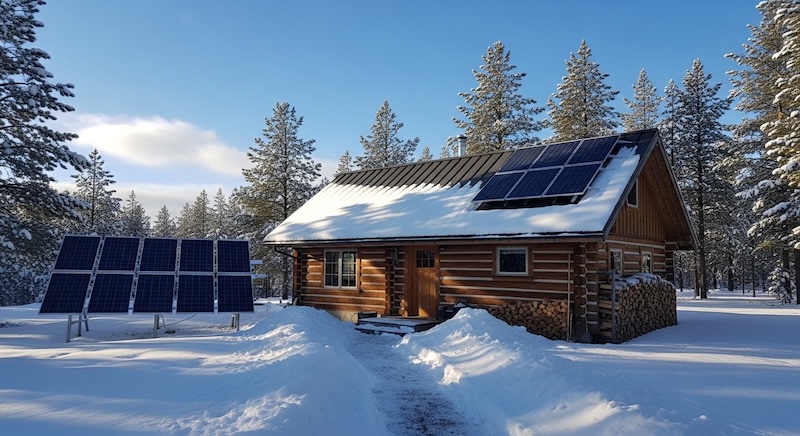
Solar power is the most common starting point for off-grid cabins and homesteads. Solar panels convert sunlight into electricity using photovoltaic cells, providing clean, quiet power with minimal maintenance. Panels can be mounted on cabin roofs, ground racks, or nearby open areas with good sun exposure.
Many cabin owners start with a complete off-grid solar panel kits for cabins then expand with battery storage as their power needs grow.
Advantages of Solar Power
Solar energy is renewable, silent, and well-suited for remote locations. Once installed, operating costs are low, and systems can be expanded over time as energy needs grow. For cabins and homesteads, solar works especially well for lighting, refrigeration, water pumps, tools, and communication equipment.
Solar panels also perform well in cold climates — clear winter days often produce excellent output, even with snow on the ground.
Challenges of Solar Power
Solar production depends on daylight and weather. Short winter days, heavy tree cover, or extended cloudy periods can reduce output. Upfront costs can also be significant, particularly when batteries are added.
For most off-grid cabins, solar works best when paired with battery storage and a backup power source.
Solar is often just the beginning, and exploring other off-grid power solutions can help you build a more dependable system over time.
Wind Power for Remote Homesteads and Cabins
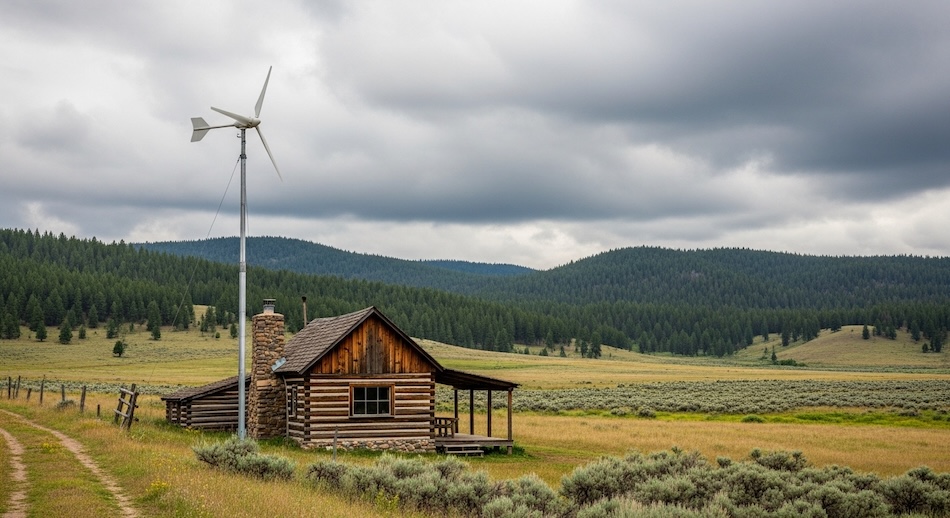
Wind power can be a valuable addition to off-grid power systems, especially in open or elevated locations with consistent wind patterns. Small wind turbines generate electricity by converting moving air into usable power and can complement solar nicely.
In open or elevated areas, a small wind turbine generator for off-grid cabins can provide supplemental power when solar output is low.
Advantages of Wind Power
Wind turbines can produce power day and night, including during winter months when solar output is reduced. In windy areas, wind energy can significantly reduce generator run time and fuel use.
For cabins located on ridges, open plains, or coastal areas, wind power can be an excellent supplemental energy source.
Challenges of Wind Power
Wind is highly location-dependent. Sheltered valleys or forested areas may not receive enough consistent wind to justify a turbine. Turbines also require sturdy mounting, adequate space, and consideration of noise and wildlife impact.
Wind power is rarely used alone — it works best as part of a hybrid off-grid power system.
Generator Power for Off-Grid Backup and Reliability
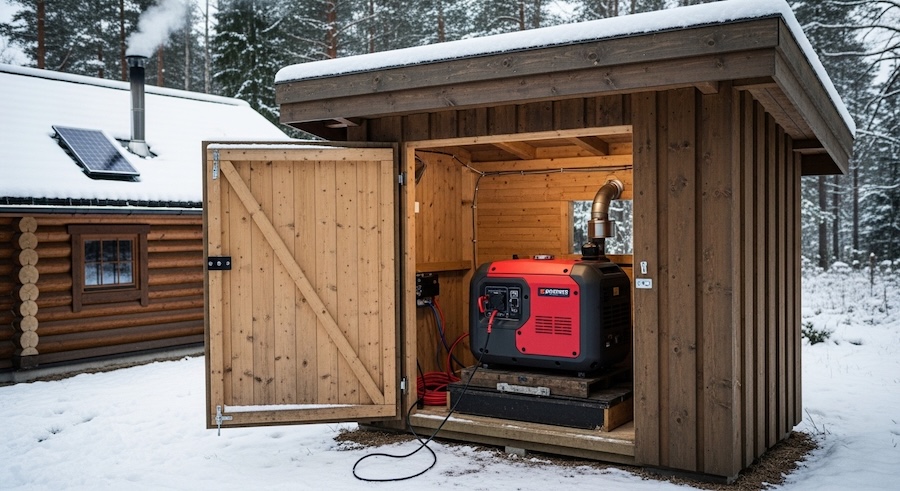
Generators remain a critical component of many off-grid cabin and homestead power systems. While renewable energy sources handle most daily needs, generators provide reliable backup power during extended cloudy weather, heavy snow cover, or high-demand periods.
A dual fuel propane and gas generator for homesteads offers flexibility when fuel availability changes throughout the year.
This is the type of generator we use as backup power for our own off-grid home.
Advantages of Generator Power
Generators deliver high, consistent power on demand. They’re ideal for running heavy tools, charging battery banks quickly, or handling peak loads. Fuel availability — propane, gasoline, or diesel — makes generators dependable even in extreme conditions.
For many off-grid homesteads, a generator provides peace of mind when renewable sources can’t keep up.
Solar Generator 3000 Pro The Ultimate Power Master!
Challenges of Generator Power
Fuel costs add up, and prices fluctuate. Generators also produce noise and emissions, and they require regular maintenance. Proper ventilation is essential to prevent carbon monoxide buildup — a critical safety concern in cabin environments.
Despite these drawbacks, generators remain one of the most dependable backup options for off-grid living.
Battery Storage: The Heart of Off-Grid Power Systems
No matter which power sources you choose, battery storage is what makes off-grid living practical. Batteries store excess energy produced by solar panels or wind turbines, allowing you to use power at night or during poor weather.
Lithium batteries offer longer life and deeper discharge capability, while AGM batteries are more affordable and proven. The right choice depends on budget, climate, and power demands.
Hybrid Off-Grid Power Systems: The Best Setup for Cabins and Homesteads
For most cabins and homesteads, the most reliable solution is a hybrid off-grid power system that combines solar, wind, batteries, and generator backup.
Solar provides daily renewable power, wind supplements energy during low-sun periods, batteries store excess electricity, and a generator fills the gaps when nature doesn’t cooperate. This layered approach minimizes fuel use while ensuring power is always available.
For simplicity, some people choose an all-in-one off-grid solar power system that integrates inverter, charge controller, and monitoring into one unit.
Choosing the Right Off-Grid Power Option for Your Cabin
When designing your off-grid power system, consider:
- Daily and seasonal energy usage
- Local climate and sun exposure
- Wind consistency
- Winter access and maintenance
- Long-term fuel availability
- Environmental priorities
- The best system isn’t always the biggest — it’s the one that fits your land, lifestyle, and comfort level.
Living off-grid is about resilience and self-reliance. With the right combination of power options, your cabin or homestead can stay powered through every season while reducing dependence on outside systems.
If you’re new to designing off-grid systems, our guide to getting started with off-grid living walks through planning, costs, and realistic expectations before making major investments.
Power Your Essential, Easy Backup . All-new Jackery Solar Generator Homepower 3000, Reserve Now!
Disclosure: This content is for informational purposes only and reflects personal experience. Always evaluate safety and security solutions for your specific location. Some links may be affiliate links.
© 2024 – 2026, Teresa. All rights reserved.