
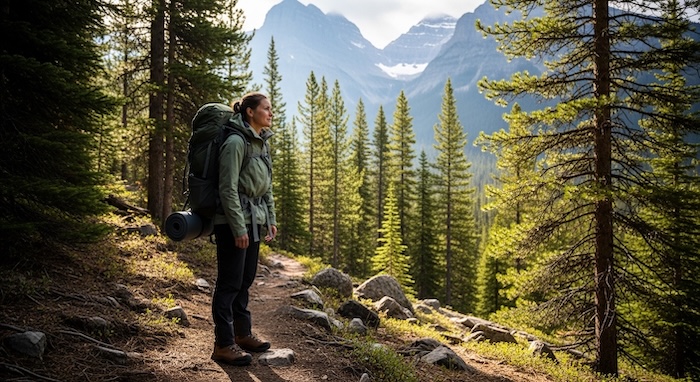
Hiking is one of my favorite ways to spend time outdoors, especially here where wild spaces are still truly wild. But many of the trails we love also happen to be bear country, which means preparation matters.
Like many people, I used to feel nervous hiking in the bush because of the possibility of encountering a bear. Over time—and with more experience—I’ve learned that while bear encounters are possible, most can be avoided or safely managed when you understand bear behaviour and take proper precautions.
My grandmother used to say, “Bears are just as afraid of us as we are of them.” While that’s often true, it’s also important to recognize that in some areas bears are becoming more accustomed to people. That makes awareness and preparation more important than ever, especially on trails known for bear activity.
Tips for Hiking Safely in Bear Country

The most important rule is simple: be prepared before you leave the trailhead.
Here are essential bear-safety practices every hiker should follow:
- Always carry bear spray and keep it easily accessible (not buried in your pack)

- Avoid hiking alone whenever possible—two or more people make more noise and are easier for bears to detect
- Make noise while hiking by talking, singing, or calling out occasionally so bears hear you before you surprise them
- Use bear bells cautiously—they can help, but they’re often not loud enough on their own
- Watch for signs of a food source, such as circling birds, strong odors, or animal remains—these areas should be avoided
- Avoid scented products like perfume, scented deodorant, or heavily fragranced lotions
- Research your hiking area and avoid locations with recent bear activity reports
- Pack food securely in sealed containers and carry all garbage out with you
- Stay on marked trails—wandering off increases the chance of a surprise encounter
- Be extra alert near running water, waterfalls, windy areas, or blind corners, where bears may not hear you approaching

Bears are generally most active in spring and summer, especially during early morning and late afternoon—but they can be encountered at any time.
What to Do If You Encounter a Bear
If you encounter a bear on the trail:
- Stay as calm as possible
- Do not run
- Give the bear space and an escape route
- Speak calmly and back away slowly
Your response depends heavily on what type of bear you’re facing, so knowing the difference matters.
Black Bear vs Grizzly Bear: Know the Difference

Where we hike most often, black bears are common, though grizzly sightings do occur in some regions. Identifying the bear correctly helps determine how to react.
Key differences:
- Grizzly bears have a noticeable shoulder hump; black bears do not
- Grizzly bears have small, rounded ears; black bears have taller, pointed ears
- Grizzly bears have a dished facial profile; black bears have a straighter profile
- Grizzly bears have long, light-colored claws; black bears have shorter, darker claws
Black Bear Safety Tips

If you encounter a black bear:
- Never approach or feed the bear
- Stay calm and stand your ground
- Speak firmly and make yourself known
- Slowly back away—never run
- Make yourself look larger if needed
- Use loud noises (yelling, clapping, air horn) if the bear approaches
- If attacked, fight back using anything available
Black bears are often more easily scared away when they recognize you as a human.
Grizzly Bear Safety Tips

Grizzly bears behave differently and require a different response.
- Never approach or feed a grizzly bear
- Stay calm and avoid sudden movements
- Do not run
- Speak calmly and back away if possible
- If a grizzly attacks, play dead
- Lie flat on your stomach
- Spread your legs to prevent being rolled
- Protect your neck and face
- Keep your pack on
- Remain still and quiet until the bear leaves the area
Trusted Bear Safety Resources
For region-specific and expert guidance, these resources are excellent:
Helpful Bear Safety Gear for Hiking

These items can add an extra layer of safety when hiking in bear country:
- Bear spray (carry on belt or chest holster)
- Bear horn or air horn
- Loud emergency whistle
- Bear bells (supplemental only)
- Bear-resistant food canisters
Final Thoughts
Seeing a bear in the wild can be intimidating—but it’s also a reminder that we’re visitors in their home. Most bear encounters end safely when hikers are informed, alert, and prepared.
If you hike or live in bear country, take the time to learn proper safety practices. Preparation doesn’t just protect you—it helps protect wildlife too.
Disclosure: This content is for informational purposes only and reflects personal experience. Always evaluate safety and security solutions for your specific location. Some links may be affiliate links.
Updated Feb 2026
© 2020 – 2026, Teresa. All rights reserved.
Personally, this is one of the reasons why I am always really scared to go hiking because I have heard some stories about the bears. Sometimes when they are hungry, they can come down to our streets which is already scary on its own. I will take your precaution though whenever I find some that can convince me out of my fears.