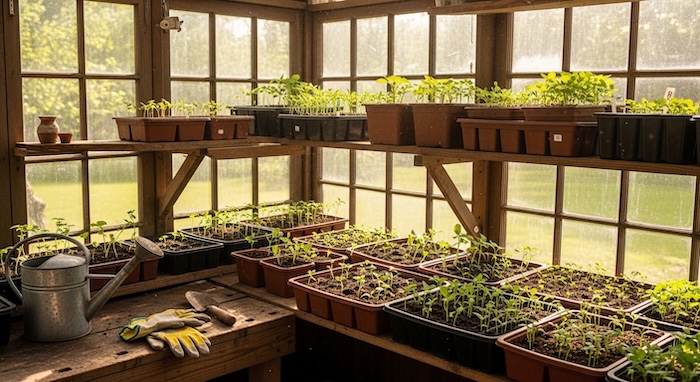
Starting seeds off-grid is one of the most satisfying ways to get your garden off to a strong start. It lets you grow the exact vegetables, herbs, and flowers you want—even if your garden is miles away from the nearest garden center.
Living off-grid has taught me that a little planning goes a long way. When supplies aren’t always close by, you learn to rely on your own resourcefulness. That’s actually part of the fun. Starting your own seeds means stronger plants, earlier harvests, and a garden that truly begins from scratch.
If you’re building a self-sufficient garden, you might also enjoy my guide to off-grid gardening and greenhouse growing which walks through how we set up our own off-grid growing spaces.
Essential Tools for Off-Grid Seed Starting
You don’t need fancy equipment to start seeds off-grid, but having a few basic tools makes the process much easier.
The basics include:
- Quality seeds
- Seed starting mix
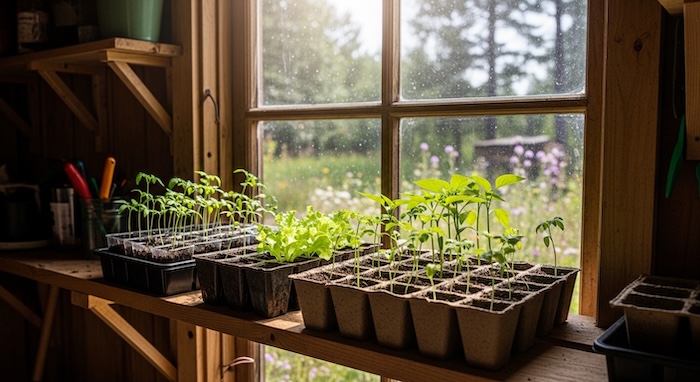
- Seed trays
- Good lighting
- Plant labels
Depending on your climate, you might also want heat mats or grow lights powered by a small solar setup.
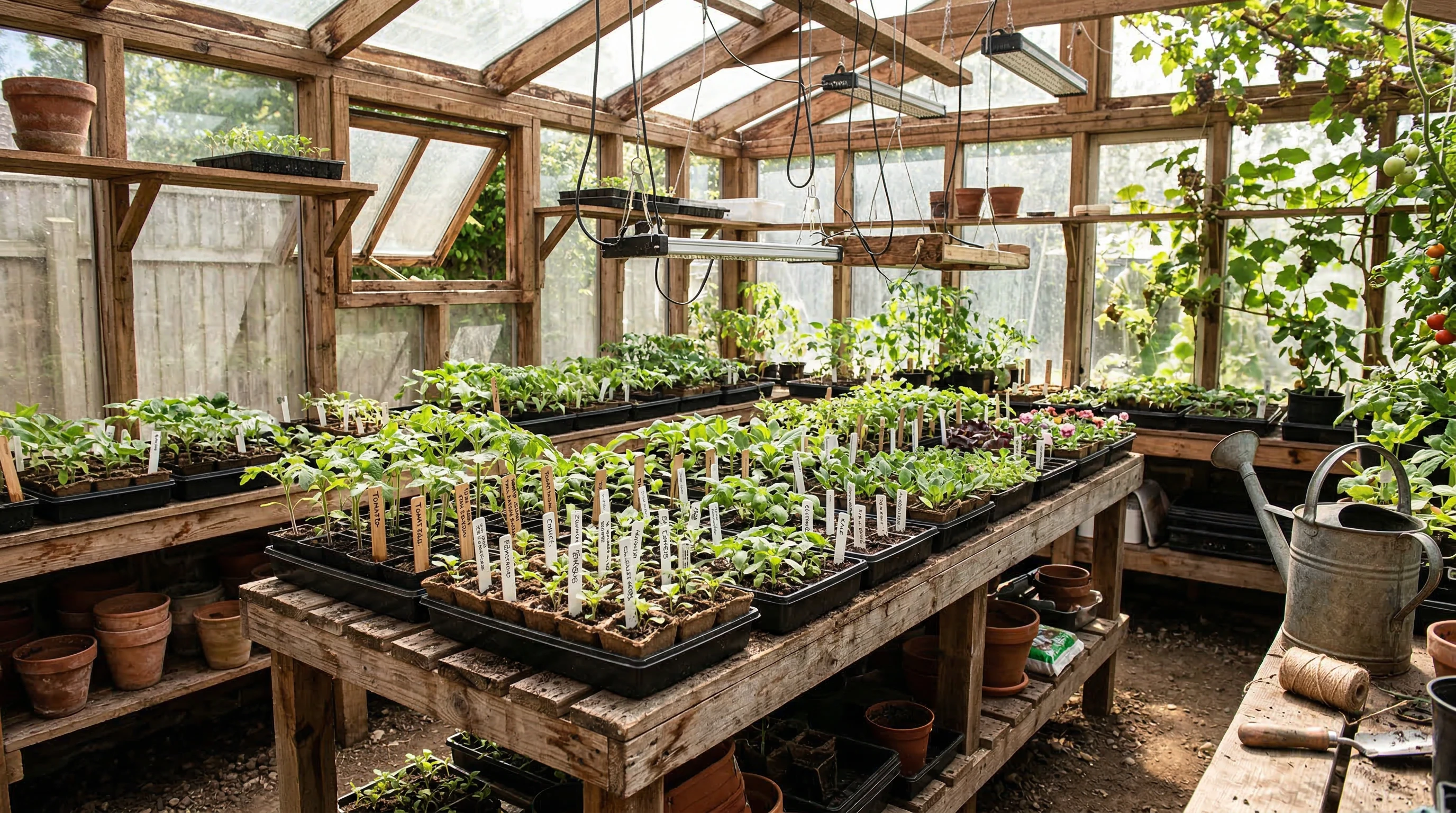
Seed trays keep everything organized and help control moisture levels. If you don’t have trays, you can easily use upcycled containers—yogurt cups, egg cartons, or food containers work surprisingly well as long as you add drainage holes.
I prefer using durable seed starting trays with drainage cells because they make transplanting much easier and keep roots from tangling.
Heat mats can make a big difference in cooler climates or early spring when soil temperatures are still low.
A seedling heat mat helps warm the soil and dramatically improves germination for crops like tomatoes and peppers.
Grow lights are useful when natural sunlight is limited. Many off-grid gardeners run small LED lights from solar panels or battery banks.
Low-watt LED grow lights for seedlings provide excellent light without putting much strain on your solar system.
If you’re setting up a homestead garden, it also helps to have reliable tools. I covered my favorites in 10 garden tools every homesteader should own
How Seed Starting Works Off-Grid
Starting seeds off-grid simply means giving seeds the warmth, moisture, and light they need without relying heavily on store-bought systems.
Even in remote cabins or homesteads, seeds grow surprisingly well with a simple setup.
If your cabin or shed doesn’t receive much sunlight, a small solar panel system can easily run LED grow lights. Even a basic setup provides enough power for low-watt lighting or a heating pad for crops that need extra warmth.
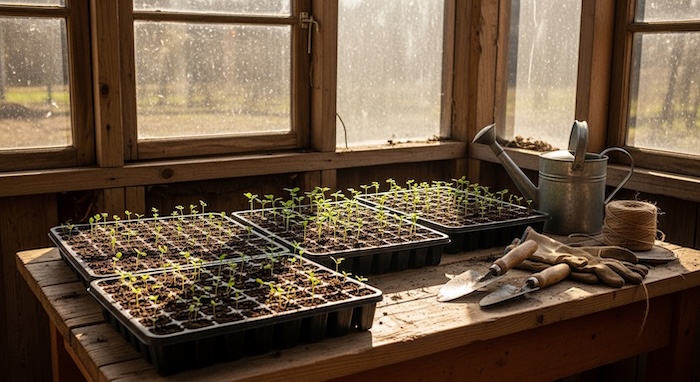
I often place my seed trays on a bench near south-facing windows. A bright window ledge can work just as well as a fancy greenhouse shelf. As long as seedlings receive consistent light and warmth, they’ll grow strong.
Key factors to watch include:
Seed Trays
Seed trays keep seedlings organized, simplify watering, and help you grow more plants in a small space.
Heat Mats
Heat mats raise soil temperatures for warm-weather crops and increase germination success.
Grow Lights
Grow lights become especially helpful in early spring when daylight hours are shorter.
Plant Labels
Labeling trays saves a lot of frustration later. Many seedlings look identical when they first sprout.
Step-by-Step Off-Grid Seed Starting Guide
I try to keep my seed starting routine simple so it works even on busy off-grid days.
1. Fill Seed Trays
Use a light seed starting mix. If making your own, a blend of compost, coconut coir, and sand works well.
2. Sow Seeds
Plant seeds in shallow holes. Tiny seeds only need a light dusting of soil.
Add labels immediately so you remember what’s planted where.
3. Water Gently
Mist the soil lightly or water trays from the bottom. Seeds need moisture but not soggy soil.
4. Provide Warmth
Heat-loving plants benefit from heat mats or warm locations near windows.
5. Provide Light
Once seedlings sprout, move trays to your brightest window or under grow lights.
Keep lights about two inches above seedlings for strong growth.
6. Thin Seedlings
Once true leaves appear, thin crowded seedlings so the strongest plants have room to grow.
If you’re short on garden space, you might also enjoy my guide to [vegetables you can grow in 5-gallon buckets](INTERNAL LINK – bucket gardening post).
Container gardening is surprisingly productive and works extremely well for off-grid cabins.
Common Off-Grid Seed Starting Challenges
Seed starting off-grid can present a few unique challenges.
Here are some of the most common ones and how to handle them.
Water Supply
Hauling water gets tiring quickly. Rain barrels or stored runoff water make watering much easier.
Bottom watering trays also helps reduce waste.
Temperature Fluctuations
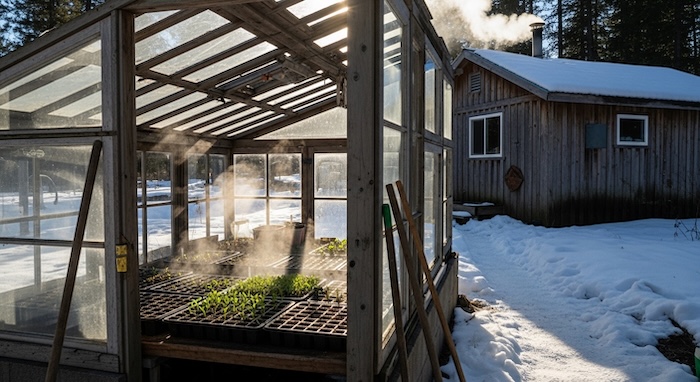
Cabins and greenhouses can cool quickly at night.
Placing insulation under trays or using heat mats helps keep temperatures steady.
Low Light
Cloudy weather or shaded areas can slow growth. Solar grow lights are an easy solution.
Keeping Plants Organized
Seedlings often look identical early on. Homemade labels made from popsicle sticks, plastic strips, or even small stones help keep things straight.
Off-Grid Gardening Ideas
Off-grid gardeners are some of the most creative people I’ve met.
I’ve seen folks use old windows as cold frames, build mini hoop houses from scrap plastic, and stack seed trays near the brightest windows in their cabins.
These simple tricks make a big difference.
Veggie Gardens
Short growing seasons make indoor seed starting incredibly valuable.
Herb Gardens
Starting herbs indoors means fresh flavor for meals all summer.
Native Flowers
Wildflowers started from seed help support pollinators and local wildlife.
Frequently Asked Questions
Can I start seeds off-grid without buying new gear?
Absolutely. Recycled containers, sunny windows, and simple homemade cold frames work well.
Hot water bottles can even replace heat mats if needed.
My seedlings look tall and weak. What should I do?
This usually means they need more light.
Move them closer to windows or use grow lights.
Gently brushing the tops of seedlings with your hand each day can also strengthen their stems.
Are plant labels really necessary?
Yes. Many seedlings look identical early on. Labels prevent mix-ups and make seed saving easier later in the season.
Getting the Most From Off-Grid Seed Starting
Starting seeds off-grid combines creativity with planning. With a few basic tools—seed trays, proper lighting, warmth, and clear plant labels—you can grow strong seedlings even in remote locations.
Every season brings new challenges and lessons, but once you establish a routine the process becomes second nature.
Growing from seed not only stretches your gardening budget, it also strengthens your self-reliance.
And when harvest time comes, you may find yourself with more produce than expected. If that happens, these food preservation ideas for homesteaders
Content on this site is for informational purposes only and reflects personal experience and research. Gardening results can vary based on climate, soil, and growing conditions. Some links may be affiliate links, which help support this site at no additional cost to you.
© 2026, Teresa. All rights reserved.
This article gives a simple, practical look at starting seeds off‑grid, and I like how it focuses on working with natural heat, hardy seed varieties, and low‑water methods instead of relying on electricity or expensive gear. The guidance feels realistic for beginners and makes off‑grid gardening feel approachable rather than intimidating.
The reminder to observe your environment and adapt to what nature gives you is especially grounding. Which part of their approach feels most useful for the way you like to garden?
If I had to pick the most useful natural approach to seed starting I would have to say natural heat. Placing seedlings in south facing windows, cold frames and greenhouses