

A Complete Guide to Safe Rainwater Collection, Storage & Filtration
Living off-grid has taught me one very important lesson — water security matters more than most people realize.
But collecting rainwater isn’t just about putting a barrel under your downspout and hoping for the best. A properly built rainwater collection system can provide backup water for gardening, household use, and emergency preparedness.
When you rely on your own systems instead of municipal water, every rainfall feels like a small blessing.
If you want to use that water safely — whether for your garden, laundry, flushing toilets, emergency backup, or even drinking water — you need the right setup.
This guide walks through a simple, safe rain barrel starter kit that works for everyday off-grid living and emergency preparedness.
Table of Contents
- The History and Benefits of Rainwater Harvesting
- Why Safe Rainwater Collection Matters
- What You Need for a Basic Rain Barrel Setup
- Rainwater Filtration & Purification Options
- Step-by-Step Rain Barrel Setup
- Rainwater Use & Treatment Guide
- Common Rain Barrel Mistakes to Avoid
- Recommended Rain Barrel Parts
- Is Rainwater Legal to Collect?
- Frequently Asked Questions
The History and Benefits of Rainwater Harvesting
Rainwater harvesting may sound modern, but it’s one of the oldest water systems in human history.
Ancient civilizations in Rome, India, and the Middle East built stone reservoirs and underground cisterns to capture seasonal rainfall. Long before municipal plumbing existed, communities survived by storing rainwater carefully and using it wisely.
In many ways, off-grid living simply returns to those foundational principles — collect what nature provides, store it safely, and use it responsibly.
Today, rainwater harvesting systems range from simple 55-gallon barrels to large rooftop collection systems feeding underground cisterns. Technology has improved filtration and purification methods, but the core idea hasn’t changed: capture rainfall before it runs off and disappears.
The benefits go far beyond convenience.
Environmental Benefits
Every gallon of rainwater collected:
- Reduces demand on wells and municipal systems
- Decreases stormwater runoff
- Helps prevent soil erosion
- Supports local watershed balance
Instead of water rushing off your roof into drains, you’re putting it to practical use.
Financial Benefits
Rainwater harvesting can reduce water bills, especially for:
- Garden irrigation
- Outdoor cleaning
- Livestock watering
- Non-potable household use
During heavy rainfall, an average roof can collect hundreds of gallons in a single storm. Over a year, that can add up to thousands of gallons saved.
Resilience & Self-Reliance
For off-grid homes, the biggest benefit is resilience.
If:
- A well pump fails
- Power goes out
- Drought conditions strain supply
- Municipal systems are interrupted
Stored rainwater becomes a critical backup.
Water security isn’t about paranoia — it’s about preparation.
Rainwater harvesting adds another layer of protection to your overall water system, making your home more independent and adaptable.
Why Safe Rainwater Collection Matters
Rainwater harvesting sounds simple — and it can be — but roof runoff can contain:
- Dust and pollen
- Bird droppings
- Asphalt particles (from shingles)
- Insects and debris
If water sits too long without circulation or filtration, bacteria and algae can grow.
That doesn’t mean rainwater is unsafe. It just means proper storage and filtration matter.
I think of rainwater harvesting as a two-layer shield:
- Storage keeps water clean.
- Filtration and purification make it usable.
When both layers are in place, a basic rain barrel becomes a reliable off-grid water source.
What You Need for a Basic Rain Barrel Setup
1️⃣ The Barrel
Your rainwater collection system starts with the right container.
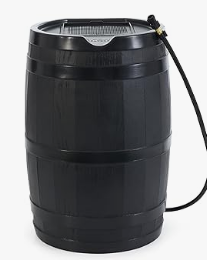
- Food-grade container (55-gallon plastic barrel works well).
- Opaque or painted dark to block sunlight (prevents algae).
- Tight-fitting lid
- Fine mesh screen where water enters (keeps out leaves, bugs, and mosquitoes).
Clear barrels may look nice, but sunlight encourages algae. Dark is better.
2️⃣ The Collection Setup
Your gutter system does most of the work.
Downspout Diverter Kit
This connects your gutter to the barrel and automatically stops directing water once the barrel is full.
If you don’t want to piece one together yourself, this is the downspout diverter kit I recommend — it’s simple to install and automatically redirects water when the barrel is full.
First-Flush Diverter (Highly Recommended)
This simple device allows the first few gallons of roof runoff — which usually contains dust and debris — to bypass your barrel.
If you’re serious about keeping roof debris out of your stored water, adding a first-flush diverter like this one makes a noticeable difference in overall water quality.
It’s one of the smartest upgrades you can make for long-term rainwater storage.
3️⃣ Storage & Maintenance Basics
Even the best rain barrel system needs maintenance.
- Raise the barrel on blocks or a stand (gravity flow is your friend)
- Install an overflow outlet (direct water away from foundation)
- Use water frequently so it doesn’t stagnate
- Clean monthly with a vinegar rinse or mild bleach solution
(1 tablespoon bleach per gallon of rinse water — then flush thoroughly)
Fresh water is safer water.
Rainwater Filtration & Purification Options
Here’s where many people get confused.
There’s a difference between filtration and purification.
Inline Sediment Filter
Connects to the hose outlet. Removes dirt and grit. Great for:
- Gardening
- Outdoor cleaning
- Toilet flushing
For basic household use, I like using an inline sediment filter like this one — it connects right to your hose and helps keep grit and particles from clogging everything downstream.
Carbon or Gravity Filter
Improves taste and removes some chemicals and odors.
Common options include gravity-fed systems like:
- Berkey
- Sawyer
These are helpful for household use but still not full purification.
If you plan to use rainwater beyond the garden, a quality carbon or gravity filter like this can improve taste and and reduce odors, giving you more confidence in your system.
Advanced Purification (Required for Drinking)
For potable rainwater you need:
- Boiling
- UV purifier
- High-quality ceramic filter system
Never assume filtered rainwater is automatically safe to drink.
If rainwater will be used for cooking or drinking, purification is non-negotiable.
Step-by-Step Rain Barrel Setup
Here’s the simple method I recommend:
- Wash and prep your barrel thoroughly.
- Install a spigot near the bottom.
- Attach the downspout diverter.
- Add a first-flush diverter if possible.
- Ensure all entry points are screened.
- Raise the barrel on sturdy blocks.
- Install an overflow outlet.
- Rotate water regularly.
- Filter before household use.
It’s not complicated — just intentional.
Rainwater Use & Treatment Guide
Here’s a simple breakdown of what level of treatment you need:
| Water Use | Storage Only | Basic Filtration | Advanced Purification |
|---|---|---|---|
| Gardening / Plants | ✅ Safe | Optional | Not necessary |
| Outdoor Cleaning | ✅ Safe | Better clarity | Not necessary |
| Flushing Toilets | ✅ Safe | Recommended | Not necessary |
| Laundry | ⚠️ Risk of staining | ✅ Recommended | Not necessary |
| Showering | ❌ Not recommended | ⚠️ Still risky | ✅ Required |
| Cooking / Drinking | ❌ Not safe | ❌ Not safe | ✅ Required |
Key Takeaway
- Plants & outdoor use → storage alone is fine.
- Laundry & household non-drinking use → add filtration.
- Drinking & cooking → always purify.
Common Rain Barrel Mistakes to Avoid
Even simple systems can fail if small details are ignored.
Avoid these common mistakes:
- Using a clear barrel in direct sunlight
- Skipping the first-flush diverter
- Forgetting overflow control
- Letting water sit unused for months
- Assuming filtration equals purification
Most rain barrel problems come from neglect, not complexity.
Recommended Rain Barrel Parts
When building a rainwater collection system, quality matters. The right components prevent overflow issues, reduce contamination, and make the entire setup easier to maintain long-term.
If you’d rather not experiment with random parts, these are the core pieces I suggest starting with:
✔ Downspout Diverter Kit
A properly designed diverter automatically redirects water once your barrel is full, preventing foundation damage and messy overflow. It’s one of the most important parts of a clean rainwater harvesting system.
👉 See the downspout diverter kit I recommend here.
✔ First-Flush Diverter
This small upgrade dramatically improves water quality by keeping the dirtiest roof runoff out of your storage barrel. If you’re only going to upgrade one thing, this is it.
👉 View the first-flush diverter option here.
✔ Inline Sediment Filter
Sediment filters help protect hoses, pumps, and household systems from grit and debris. They’re inexpensive, easy to install, and prevent bigger issues later.
👉 See the inline sediment filter here.
✔ Gravity or Carbon Water Filter
For indoor use or backup household water, a gravity or carbon filter improves clarity, reduces odors, and adds an extra layer of confidence to your rainwater system.
👉 See recommended gravity filter options here.
✔ UV Water Purifier (For Drinking Use)
If rainwater may ever be used for cooking or drinking, adding a UV purifier or equivalent purification method provides critical protection against harmful microorganisms.
👉 View UV purifier options here.
Starting with solid components makes your rain barrel system more reliable from day one — and easier to expand if you later decide to scale up your off-grid water setup.
Is Rainwater Legal to Collect?
Is Rainwater Legal to Collect in Canada?
In most provinces, rainwater harvesting is allowed for personal use. However, drinking rainwater may fall under local health regulations if used as a primary water source.
Always check provincial guidelines if you plan to use it as potable water.
© 2025 – 2026, Teresa. All rights reserved.