
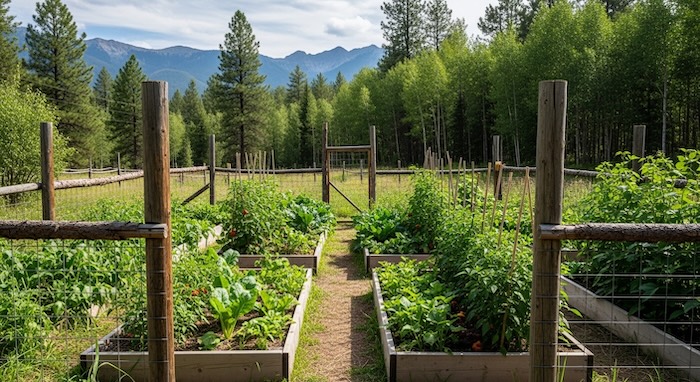
Gardening is one of the great joys of homestead life. There’s something deeply satisfying about stepping outside and picking fresh vegetables or seeing flowers bloom that you planted yourself.
But if you live in rural areas like we do, you already know that deer, moose, rabbits, and other wildlife see your garden as a free buffet.
It only takes one hungry visitor to wipe out weeks of work overnight. Tender vegetables disappear, fruit trees get stripped, and young plants can be trampled in minutes.
Learning how to protect your garden from deer, moose, and wildlife is one of the most important skills for anyone gardening off-grid or near wooded areas.
The good news is that with the right combination of fencing, deterrents, and smart garden planning, you can dramatically reduce wildlife damage and keep your harvest safe.
If you’re planning a productive food garden, you might also enjoy our guide to planning an off-grid garden and greenhouse
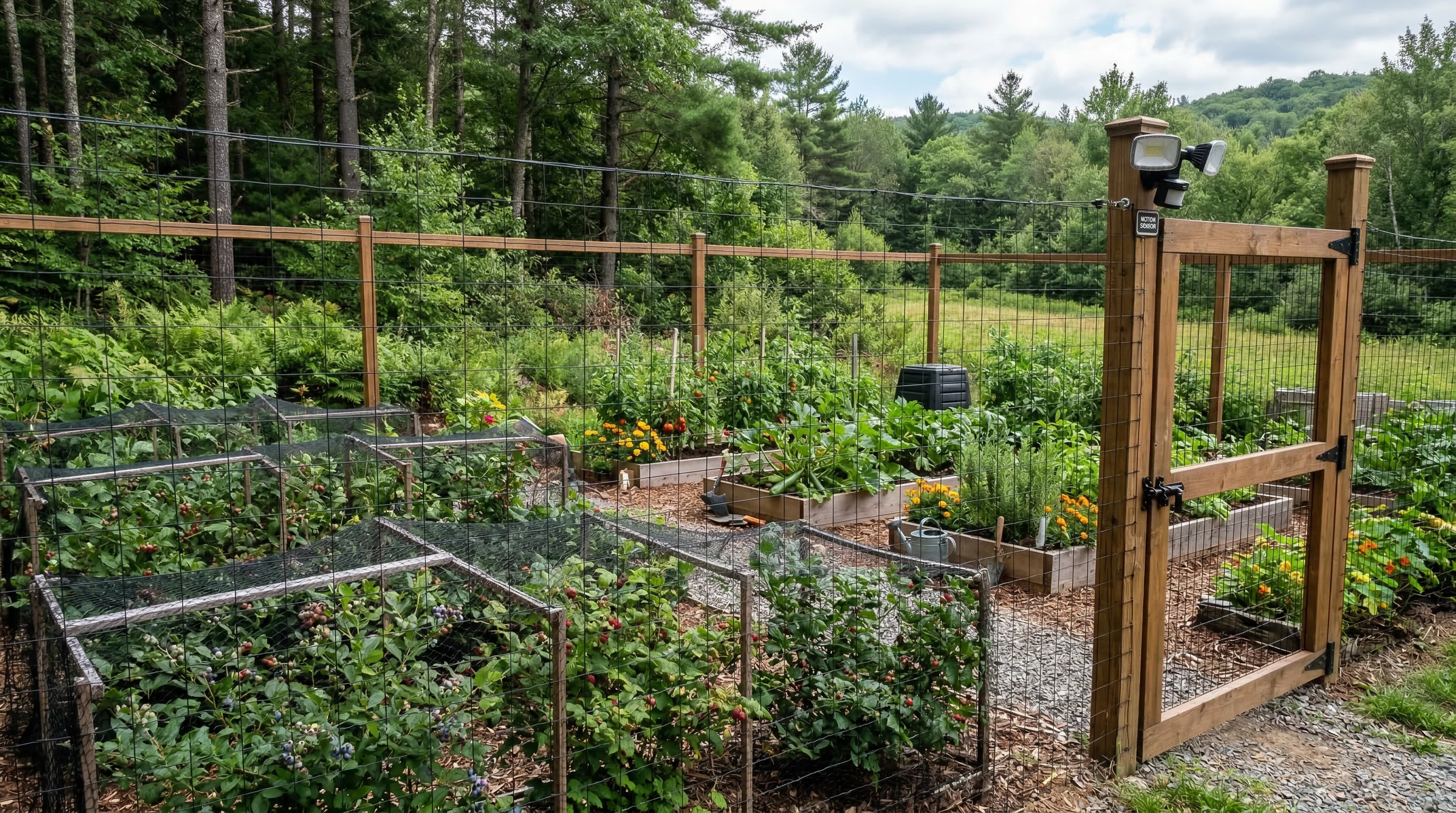
Every garden is like an open buffet for wildlife, especially in spring and summer when fresh shoots, flowers, and vegetables start appearing.
Deer are especially attracted to:
- tender vegetable sprouts
- hostas
- fruit trees
- berries
- leafy greens
Moose are even more challenging because they are taller and stronger. They can reach higher branches and will often eat plants deer avoid.
Gardens located near forests, fields, or water sources tend to attract wildlife the most because animals already travel those routes looking for food.
Other things that can attract animals include:
- compost piles
- bird feeders
- fallen fruit
- water sources
Once wildlife discovers an easy food source, they often return repeatedly.

Getting Started with Wildlife Protection
Before deciding how to protect your garden, it helps to identify which animals are visiting.
Deer usually leave:
- small hoof prints
- ragged bites on plants
- stripped leaves
Moose leave:
- very large tracks
- broken branches
- damaged shrubs or trees
Knowing what animals are visiting helps you choose the most effective protection methods.
It’s also a good idea to talk with neighbors. Wildlife often travel through areas in patterns, so nearby gardens may be experiencing the same issues.
The Most Effective Ways to Keep Deer and Moose Out of Your Garden
Stopping wildlife usually requires layering several different protection methods. Relying on just one technique often isn’t enough.
Here are some of the most effective solutions.
1. Install Tall Deer Fencing
A solid fence is one of the most reliable ways to protect a garden from large animals.
Deer can jump surprisingly high, so fencing should usually be around 8 feet tall. In areas where moose are common, fences may need to be even taller.
Heavy-duty metal fencing works much better than lightweight plastic mesh.
A sturdy welded wire garden fence provides strong protection while still allowing sunlight and airflow into your garden.
You’ll also want to secure the fence with strong [steel fence posts](AMAZON LINK) to keep animals from pushing underneath.
Green-coated fencing blends nicely with gardens and can even support climbing plants.
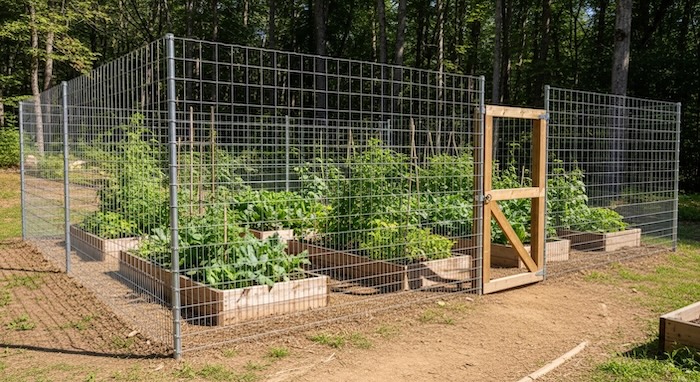
2. Use Garden Netting for Smaller Areas
Garden netting works well for protecting smaller areas like:
- berry bushes
- lettuce beds
- young fruit trees
- seedling beds
Lightweight garden netting can be draped over plants or attached to simple frames to keep animals from reaching the food.
Make sure the netting is secured tightly at the base so animals cannot slip underneath.
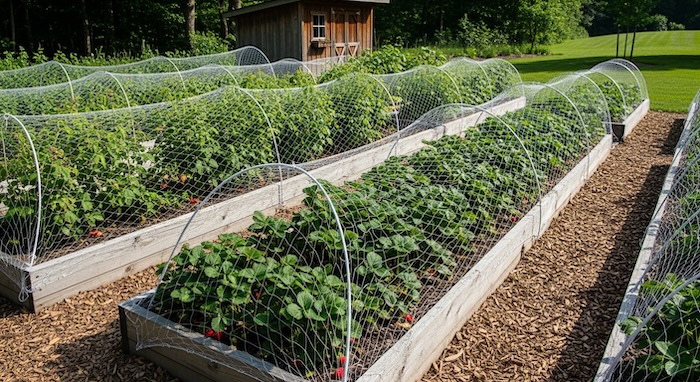
3. Motion-Activated Lights
Wildlife generally prefer quiet, dark environments. Sudden light can startle them enough to make them move on.
Solar motion sensor security lights placed around the garden perimeter can help discourage nighttime visitors.
These lights are especially helpful for off-grid gardens because many models are solar powered and require very little maintenance.
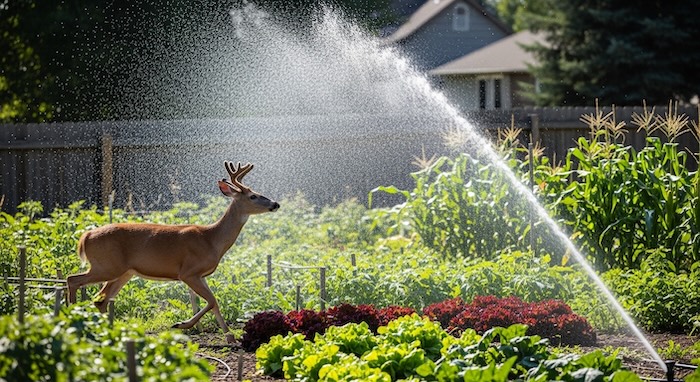
4. Motion-Activated Sprinklers
One of the most effective wildlife deterrents is a motion-activated sprinkler.
Devices like the Orbit Yard Enforcer motion sprinkler spray a sudden burst of water when animals enter the garden area.
The unexpected noise and water quickly train deer and other wildlife to stay away.
Many gardeners find these surprisingly effective.
5. Use Animal Repellents
Commercial repellents can also help reduce wildlife damage.
Many products contain natural ingredients such as garlic or egg solids that animals strongly dislike.
Applying a [deer repellent spray](AMAZON LINK) around vulnerable plants can help discourage browsing.
Repellents need to be reapplied periodically, especially after heavy rain.
Some gardeners also experiment with homemade deterrents like:
- garlic sprays
- hot pepper mixtures
- bars of soap hung in trees
Results vary, so it’s often worth testing a few methods.
Plants Deer and Moose Usually Avoid
Another useful strategy is planting strong-scented plants around the edges of your garden.
Animals often avoid plants such as:
- Lavender
- Sage
- Chives
- Mint
- Rosemary
- Marigolds
- Yarrow
These plants add beauty and fragrance to your garden while also helping discourage browsing animals.
Step-by-Step Guide: Building Reliable Garden Barriers
If you decide to install fencing, here are a few helpful tips.
Measure Your Garden
Measure the perimeter carefully before purchasing fencing materials. This helps avoid gaps that animals could exploit.
Install Strong Posts
Fence posts should be set securely into the ground, especially at corners.
Strong metal fence posts provide long-lasting support and keep fencing tight.
Make the Fence Tall Enough
Aim for:
- 8 feet for deer
- up to 10 feet for moose
Burying the bottom edge slightly or bending it outward can also help stop rabbits from squeezing underneath.
Protect Fruit Trees
Young fruit trees can be wrapped with garden netting or small wire cages until they become established.
Tips for Long-Term Wildlife Management
Wildlife are clever and can adapt over time, so rotating deterrents helps keep them guessing.
Helpful strategies include:
- changing repellent scents periodically
- moving motion lights occasionally
- repairing fencing quickly if damaged
- cleaning up fallen fruit or vegetables
Keeping the garden tidy also reduces extra food sources that attract animals.
If you’re trying to grow a lot of food in a small area, container gardening can also help reduce wildlife pressure.
You might enjoy our guide on [vegetables you can grow in 5-gallon buckets](INSERT INTERNAL LINK).
Common Questions About Deer and Moose in the Garden
How high should a deer fence be?
Most deer fences should be around 8 feet tall. Moose may require fencing closer to 10 feet.
Do motion lights really work?
Yes. Sudden light often startles animals enough to make them move away, especially if used along common entry paths.
Are repellents effective?
Repellents can help, but they work best when combined with fencing or other deterrents.
Is garden netting enough?
Netting works well for smaller plants and trees but usually isn’t strong enough to stop larger animals like deer or moose.
Final Thoughts
Protecting a garden from deer, moose, and other wildlife takes some planning, but it’s absolutely possible.
The most effective approach is combining several deterrents such as:
- tall fencing
- garden netting
- motion lights
- sprinklers
- repellents
Over time, animals learn that your garden isn’t an easy meal anymore.
With a little persistence, your garden can stay productive, healthy, and full of vegetables instead of becoming a wildlife buffet.
Content on this site is for informational purposes only and reflects personal experience and research. Gardening results can vary based on climate, soil, and growing conditions. Some links may be affiliate links, which help support this site at no additional cost to you.
© 2026, Teresa. All rights reserved.