Discovering Wild Medicinal Plants and Edible Herbs
Living off-grid has a way of reconnecting you with the land in a way that’s hard to describe until you experience it. One of the most rewarding parts of this lifestyle is discovering the variety of medicinal plants and edible wild herbs growing naturally around your property.
Over time, I’ve realized that nature provides far more than we think—if you know what to look for.
If you’re new to this, you might also find this helpful:
How to Start an Off-Grid Garden (Beginner’s Guide)
And if you’re interested in preserving what you harvest:
Food Preservation Methods for Off-Grid Living
🌱 Wild Edible Plants We Harvest Regularly
🥬 Wild Spinach (Strawberry Spinach)
Also known as Strawberry Blight or Beetberry, this plant has become a staple in our summer meals.
- Mild flavor similar to spinach
- Grows from June through late summer
- Great for fresh salads
If you’re learning to identify edible plants, I highly recommend keeping a reference guide handy:
A foraging guide book with clear plant photos and identification tips is one of the safest ways to learn (insert Amazon link here – foraging book)
🧅 Wild Onions
Wild onions are one of the first plants to appear in spring.
- Strong onion smell is key
- Excellent in salads and cooking
⚠️ Be careful—some toxic plants look similar.
A simple rule: If it looks like an onion AND smells like an onion, it’s likely safe.
For extra safety when foraging, I always carry a small kit:
👉 A compact field knife and foraging bag set makes harvesting easier and cleaner (insert Amazon link here)
🌼 Dandelion Greens
Dandelions are one of the most overlooked edible plants.
- Best harvested young in spring
- Slightly bitter but highly nutritious
- Can be eaten raw or cooked
If you enjoy using natural plants like this, you might also like: Natural Bug-Repellent Plants and Herbs
🌿 Plantain (Plantago)
Plantain grows almost everywhere—and it’s incredibly useful.
- Edible raw or cooked
- Leaves become tougher as they mature
- Seeds can be ground into flour
If you plan to dry herbs or leaves for later use: A mesh herb drying rack works really well for preserving wild plants without mold (insert Amazon link here)
🌸 Herbs I Grow in My Off-Grid Garden
Some of my regulars include:
- Sage
- Thyme
- Oregano
- Mint
- Catnip
- Echinacea
- Savory
- Rosemary
- Lavender
These herbs:
- Add flavor to meals
- Support natural wellness
- Help repel pests in the garden
If you’re starting your own herb garden, this is a simple way to begin:
A starter herb seed collection with common culinary and medicinal herbs makes it easy to grow your own
And for indoor or early-season growing:
👉 A simple grow light setup can help extend your growing season off-grid (insert Amazon link here)
🌿 Wild Medicinal Plants Around Our Property
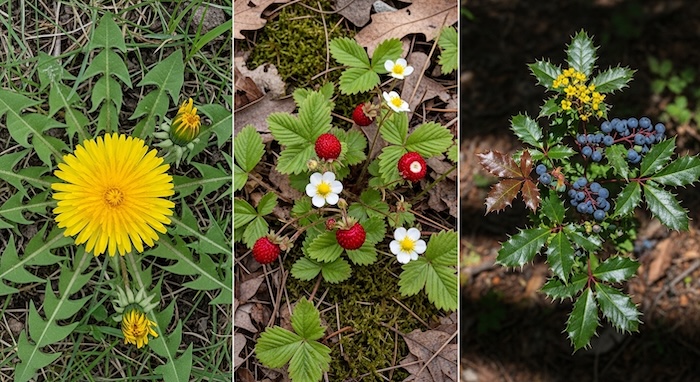
As I spend more time observing the land, I continue to find more plants with traditional uses.
Some we’ve identified include:
- Oregon Grape – traditionally used for its root
- Wild Strawberry – small but flavorful
- Wild Rose – rose hips are rich in vitamin C
- Raspberry – both fruit and leaves are useful
- Indian Paintbrush – beautiful, but not typically eaten
If you’re serious about learning medicinal uses, a good reference is essential: A medicinal herb encyclopedia with preparation methods and safety info is worth having on hand (insert Amazon link here)
🌲 Why Wildcrafting Matters for Off-Grid Living
Foraging and growing your own herbs supports:
- Self-sufficiency
- Lower grocery costs
- A deeper connection to your land
- Real, practical knowledge
It also pairs perfectly with other off-grid skills like: Rainwater Collection and Safe Storage Systems and Off-Grid Water Filtration Methods
⚠️ Important Safety Note About Foraging
Never eat a wild plant unless you are 100% certain of its identification.
Always:
- Use a trusted guide
- Start with easy-to-identify plants
- Learn from reliable sources
🌿 Final Thoughts
Exploring medicinal plants and wild edibles has become one of my favorite parts of off-grid life. The more I learn, the more I realize how much nature provides—often right outside your door.
This is just the beginning, and I’ll be sharing more about the herbs we grow and use as the season continues.
⚠️ Affiliate Disclosure
Some of the links in this post are affiliate links, which means I may earn a small commission if you purchase through them—at no extra cost to you. I only recommend tools, books, and supplies that I personally use or believe are genuinely helpful for off-grid living and natural gardening.
updated March 2026
© 2018 – 2026, Teresa. All rights reserved.
I have all the respect in the world for people that take the time to learn all of the different things available to eat, right outside. Personally, I’ve had a hard time remembering the different species, and tend to err on the side of caution, so as not to poison myself. lol
This is particularly true when it comes to mushrooms. Sites like yours are a great help for those of us that want to get deeper into the freedom of strolling outside, spotting something tasty, and harvesting it. Whereas everyone else would be either killing it as a weed, mowing over it, or just simply passing by, not knowing what’s around them.
Awesome info and thank you for it!
I agree with you Brian, I am still a little sceptical when it comes to mushrooms. I know what a shaggy main is but I’m not to confident with picking any other ones. It takes time to learn about our natural growing herbs and plants, it’s so sad that all that had been lost over the years, but good to see more and more people getting back to the things that mother nature provides for us.