
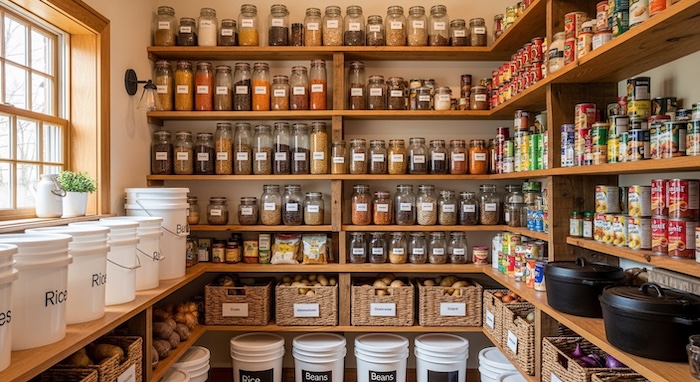
If you’ve been wondering how to build a long-term food supply without spending a fortune, this beginner-friendly guide will walk you through exactly what to store, how to store it, and how to start small.
Building a long-term food supply is all about planning, some organization, and knowing which foods and methods offer the biggest payoff for your effort. Whether you’re preparing for natural disasters, job loss, or just want fewer trips to town (something I know well living off-grid), building a reliable pantry is one of the smartest steps you can take toward self-sufficiency.
If you’re brand new to this, don’t worry—you don’t need a bunker or thousands of dollars. You just need a simple plan and consistency.
If you’re just getting started with preparedness, you might also want to read my guide on “Beginner Prepping on a Budget” to build your first supplies without overspending.
Why Build a Long-Term Food Supply?
A solid food stash brings real peace of mind during unexpected events—power outages, snowstorms, supply shortages, or even rising grocery prices.
For me, it started as emergency prep… but quickly became part of everyday life. Buying in bulk, storing properly, and rotating food just makes sense—especially when you live further from stores.
When done right, your food supply becomes another layer of household security and independence.
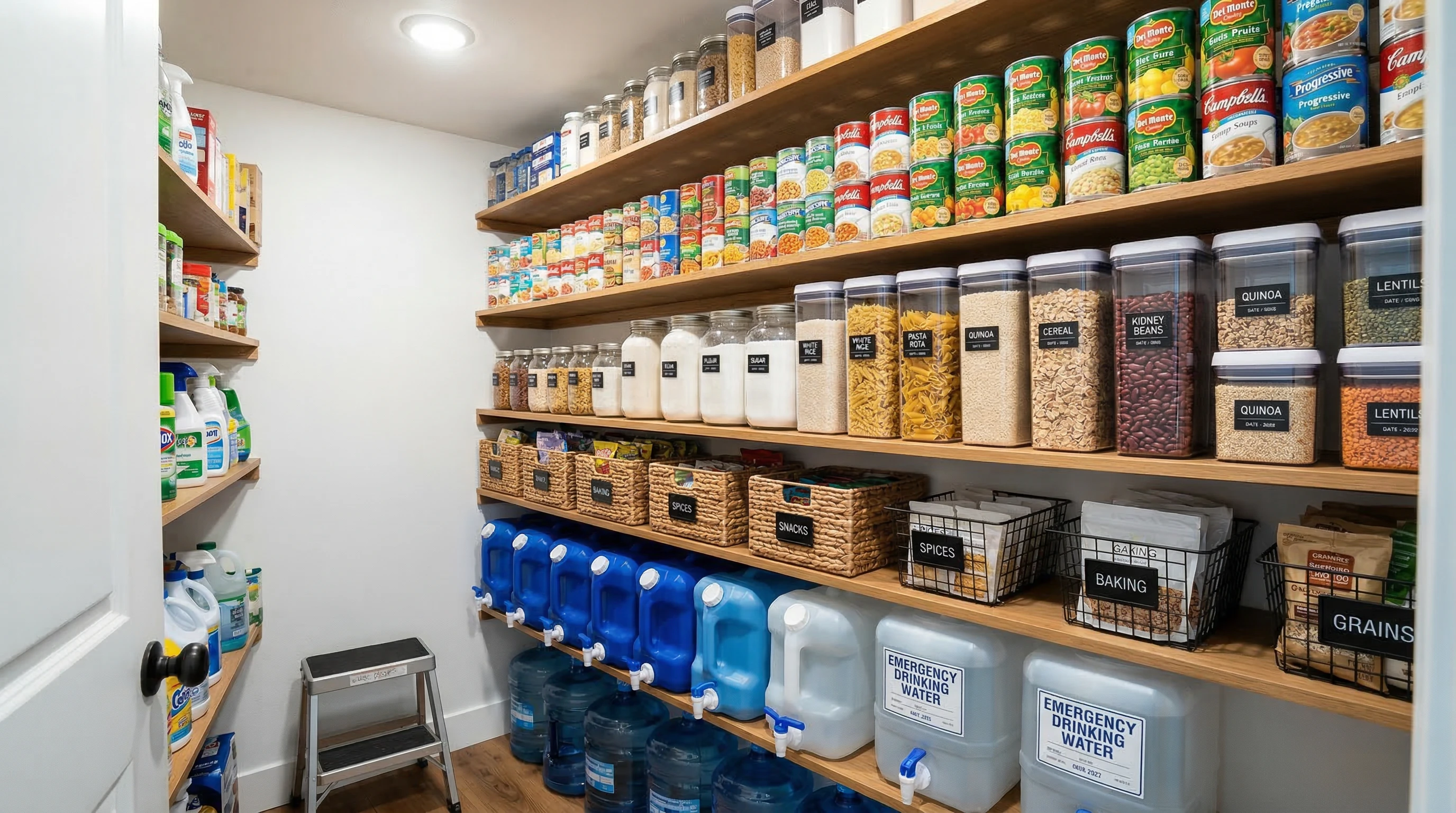
What Foods Last the Longest?
Some foods are absolute workhorses when it comes to long-term storage. These are the staples I always recommend:
- White Rice – 20–30 years when stored properly
- Dried Beans (black beans, lentils) – up to 10 years
- Pasta – several years in sealed packaging
- Canned Goods (meat, vegetables, fruit) – 2–5 years
- Powdered Milk – 2–10 years depending on storage
- Honey – lasts indefinitely
- Salt & Sugar – no expiration if kept dry
- Rolled Oats – 1.5 to 3 years
- Freeze-Dried Meals – often 20+ years
👉 “If you want a quick start, there are also ready-made long-term food kits available that include many of these staples and are designed for 20+ year storage.
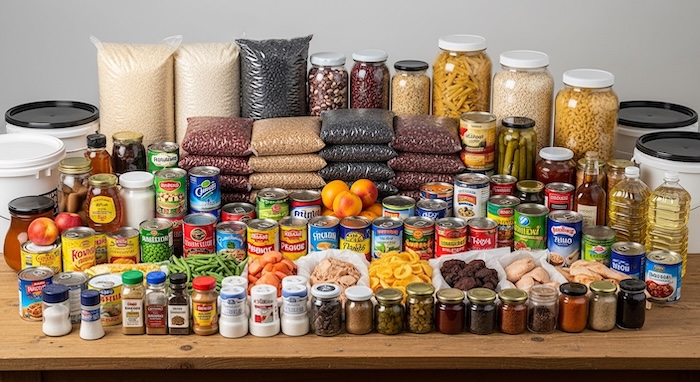
If you plan to preserve your own food, check out my post on food preservation methods for off-grid living where I break down dehydrating, canning, and freeze-drying.
Beginner Storage Methods
How you store your food matters just as much as what you store.
I learned this the hard way—humidity wiped out a batch of rice early on. Since then, I’ve stuck to these proven methods:
Cool, Dark, and Dry
Heat, light, and moisture are your biggest enemies. Basements, closets, or shaded storage areas work best.
Airtight Containers
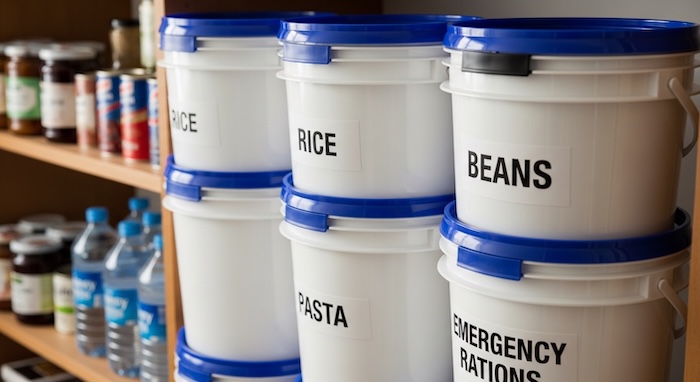
I rely heavily on food-grade buckets with gamma seal lids and Mylar bags with oxygen absorbers to extend shelf life as much as possible.
Canned Goods Storage
Keep cans off the floor and away from temperature swings. I use sturdy shelving.
Pest Protection
If bugs are a concern:
-
Airtight storage bins
Plus, a simple trick:
-
Add bay leaves to grains (natural deterrent)
Setting Up a Rotation System (FIFO)
A food supply only works if you actually use it.
Here’s what keeps mine fresh:
- Label Everything – Write purchase date clearly
- First In, First Out (FIFO) – Oldest items get used first
- Track Inventory – Notebook or printable tracker
- Regular Checks – Every couple months
👉 “I also use a simple pantry tracking sheet to keep everything organized—you can grab my printable version here if you want something easy to follow.”
How to Start Building Your Food Supply (Beginner Plan)
Start small. This is where most people get overwhelmed—but it doesn’t need to be.
Step 1: Assess Your Needs
Aim for 2–4 weeks of food per person to start.
Step 2: Buy Simple Staples
Rice, beans, pasta, oats, canned goods.
Step 3: Shop Sales & Buy in Bulk
Add extras gradually each trip.
Step 4: Add Variety
Canned fruit, sauces, baking supplies, comfort foods.
Step 5: Don’t Forget Water & Cooking
Make sure you have a reliable backup like a camp stove and stored water so you can actually use your food if the power goes out.
- Water storage containers
- Manual can opener
- Camp stove / propane stove
📸 Image Prompt:
“off grid cooking setup camp stove boiling pot simple emergency cooking outdoors rustic setting”
Frequently Asked Questions
How much food should I store?
Many prepping guides suggest three months, but starting with just two to four weeks is way less intimidating. You can always add more layers over time as you get more confident.
Is it expensive to build a longterm food supply?
It doesn’t have to be! Buy an extra can or two every week of what you already like to eat. Over the months, your food stash will add up with hardly any hit to your wallet.
What about special diets?
Store exactly what your household eats. If anyone has allergies or dietary needs, always check labels and look for shelfstable options that fit those requirements. That way nothing goes to waste.
How do I avoid waste?
Only buy foods you enjoy eating, then work them into your routine through the rotation system. Use the oldest food first and review your pantry regularly—the system makes waste easy to spot and helps you avoid it.
Extra Tips for Success
- Store spices, oils, and comfort foods
- Practice cooking from your stash
- Review pantry every 6 months
If you’re growing your own food, pairing this with a productive garden makes a huge difference—check out my guide on high-yield vegetables for off-grid gardens.
Final Thoughts
A long-term food supply isn’t about fear—it’s about confidence and preparedness.
Even with limited space or budget, small consistent steps build a strong foundation over time. And once you get into the rhythm, it becomes second nature.
This article is for informational purposes only and reflects personal experience and research related to emergency preparedness. Product recommendations, if included, are intended to help readers make informed decisions.
© 2026, Teresa. All rights reserved.
I like how you’ve framed this more as everyday preparedness rather than extreme scenarios. It makes it feel much more doable. The list of long-lasting staples was especially helpful.
The FIFO rotation system stood out to me, because I think that’s where I’d struggle. I’d probably just dip in and eat whatever I fancied and end up wrecking the whole system.
What popped into my mind was storage though. Are those storage times based on specific methods like airtight containers/Mylar bags, or would they hold up that long just in a normal cupboard?
Those storage times are based on items being stored in a cool/dark place temp of 10-15c/ 50/60F, no sunlight and being stored in Airtight or oxygen-free packaging. Dried beans, pasta, powdered milk, salt & sugar, rolled oats would all be stored in airtight containers. The canned goods are canned, honey will last forever and the freeze-dried meals would be in mylar bags. Hope that helps to answer your questions.