Building a reliable food supply without relying on electricity is one of the smartest moves you can make—especially if you’re living off-grid or simply want more food security. A root cellar is one of the easiest and most effective ways to store fresh food for months using nothing more than cool temperatures and proper humidity.
If you’re working toward a more self-sufficient lifestyle, learning how to store your harvest properly goes hand-in-hand with growing it. (👉 You might also like: Best Vegetables to Grow for Long-Term Storage)
Over the years, I’ve found that not all foods store the same. Some will last deep into winter with almost no effort, while others need a bit more attention. Knowing which foods store best can make all the difference between a full pantry and wasted harvest.
🥔 Quick List: Best Foods for Root Cellar Storage
- Potatoes
- Carrots
- Onions
- Garlic
- Beets
- Cabbage
- Apples
- Turnips
- Parsnips
- Winter squash
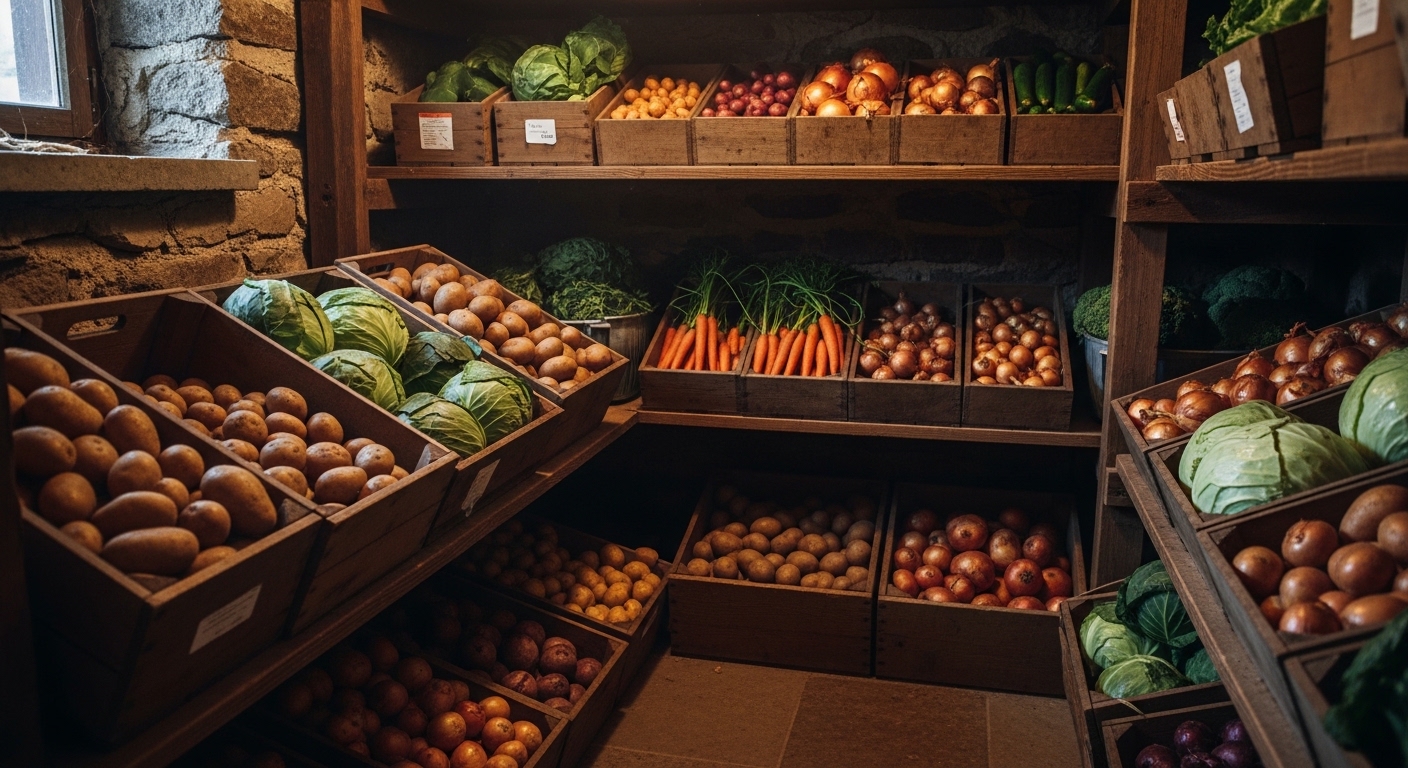
- 🌾 What a Root Cellar Looks Like

Not all foods store the same way, and setting up your space properly helps everything last longer. If you’re just getting started, even a cool basement or insulated room can work well. (👉 See: How to Build a Simple Root Cellar)
🥕 Best Foods for Root Cellar Storage
🥔 Root Vegetables (Longest Storage)
These are the backbone of any root cellar.
Best choices:
- Potatoes (4–6 months)
- Carrots (store in damp sand or sawdust)
- Beets
- Turnips
- Parsnips
- Storage Tips:
Keep in high humidity (85–95%)
-
Store in boxes filled with sand or sawdust
👉 A simple set of wooden crates or stackable storage bins works really well here, especially if you’re organizing multiple crops in one space.
🧅 Bulbs & Alliums
These need a completely different environment than root crops.
Best choices:
- Onions
- Garlic
- Shallots
Storage Tips:
- Keep dry (low humidity)
- Store in mesh bags or hang
👉 Hanging mesh storage bags or wall-mounted racks help prevent moisture buildup and extend storage life.
🥬 Leafy & Brassicas
These can last surprisingly long when stored properly.
Best choices:
- Cabbage (wrap in paper or hang)
- Brussels sprouts (store on stalk)
Storage Tips:
- Cool and slightly humid
- Good airflow is key
🍎 Fruits That Store Well
Fruit adds variety to your winter food supply.
Best choices:
- Apples (longest lasting varieties)
- Pears (shorter storage life)
Important Tip:
-
Keep fruit separate from vegetables (ethylene gas causes spoilage)
🎃 Winter Squash & Pumpkins
These are incredibly reliable storage foods.
Best choices:
- Butternut squash
- Acorn squash
- Pumpkins
Storage Tips:
- Slightly warmer (50–55°F / 10–13°C)
- Dry conditions
👉 Shelving or simple wire racks work well to keep squash dry and allow airflow around each piece.
🌡 Ideal Root Cellar Conditions
Getting this right is the key to success.
-
Temperature: 32–40°F (0–4°C)
-
Humidity:
-
High → carrots, beets
-
Low → onions, garlic
-
👉A small thermometer and hygrometer is one of the best low-cost tools you can add to your setup to keep conditions consistent.
⚠️ What NOT to Store Together
This is where a lot of beginners go wrong.
- Apples + potatoes → faster spoilage
- Onions + potatoes → rot quickly
- Ethylene-producing fruits damage vegetables
🪵 Storage Methods (Simple & Effective)
- Wooden crates
- Sand-filled boxes
- Wire baskets
- Hanging mesh bags
👉 If you’re building out your setup, start simple and expand over time. Even a few well-placed bins can make a big difference.
🌱 Beginner Root Cellar Tips
- Start small with a few crops
- Don’t wash produce before storing
- Check regularly for spoilage
- Label harvest dates
- Rotate older food first
❌ Common Mistakes to Avoid
- Storing damaged produce
- Wrong humidity levels
- Poor airflow
- Mixing incompatible foods
❓ FAQ Section
How long do foods last in a root cellar?
Many vegetables last 3–6 months, some even longer.
Can you store potatoes and onions together?
No, they cause each other to spoil faster.
Do I need a root cellar?
A cool basement or insulated space can work too.
🌿 Conclusion
Root cellaring is one of the simplest ways to become more self-sufficient. With just a little planning, you can turn your garden harvest into months of reliable food without relying on electricity.
Start with a few easy crops, learn what works in your space, and build from there.
Disclosure: This content is for informational purposes only and reflects personal experience. Always evaluate safety and security solutions for your specific location. Some links may be affiliate links.
© 2026, Teresa. All rights reserved.