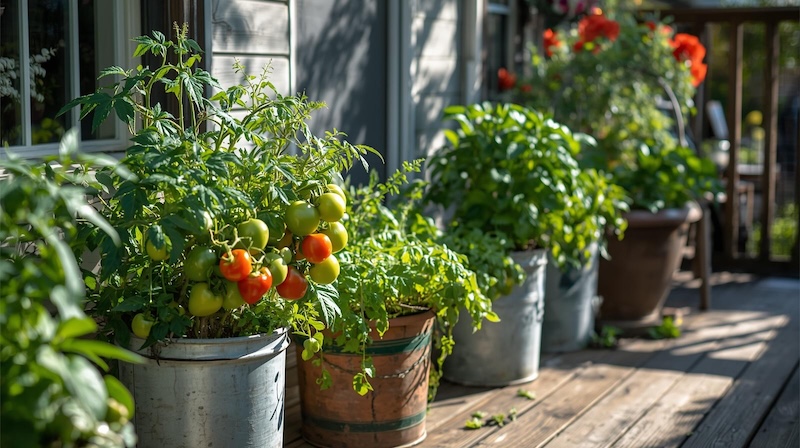
Growing vegetables in 5 gallon buckets opens up a world of possibilities, even if you don’t have acres of backyard space or rich garden soil. Bucket gardening is one of the easiest ways to grow fresh food in small spaces, patios, balconies, and off-grid cabins.
It’s an approach I’ve found super handy for off-grid homes, cabins, renters who want to avoid tearing up a yard, and anyone dealing with rocky, sandy, or clay-heavy soil. If you’re short on garden space or struggling with poor ground, 5 gallon bucket gardening can be your ticket to fresh vegetables right outside your door.
Why 5 Gallon Bucket Gardening Works So Well
There’s something freeing about being able to move your whole vegetable garden if you want to.
Folks in rentals often aren’t allowed to dig garden beds, but buckets give you the flexibility to grow food anywhere you can get a bit of sun — from fire escapes to patios and rooftops.
Off-grid homes and cabins also benefit from bucket gardening because you can get started with minimal tools and no major construction. Instead of trying to improve poor soil across an entire yard, you simply build the perfect soil mix in each bucket.
Buckets are also portable, which means you can:
• Move plants to chase the sun
• Bring plants inside during a cold snap
• Place a small kitchen garden close to your door
For people in urban apartments, seniors with limited mobility, or families just starting with gardening, growing vegetables in buckets is simple, flexible, and rewarding.
Before You Start: Tips for Bucket Gardening Success
A few small steps make a big difference when growing vegetables in 5 gallon buckets.
Drainage Holes
Every bucket needs several holes drilled in the bottom so excess water can drain away. Without drainage holes, roots will sit in standing water and rot.
A simple cordless drill with a 1/2-inch drill bit works perfectly for this.
Soil Choice
Always use a quality potting mix instead of garden soil. Potting mixes stay loose, hold moisture properly, and allow roots to grow easily.
(Amazon link placement – potting mix)
Watering
Buckets dry out faster than garden beds, especially during hot weather. Check soil moisture often, sometimes daily in mid-summer.
Fertilizer
Container vegetables use nutrients quickly, so mix a slow-release organic vegetable fertilizer into the soil when planting.
Sunlight
Most vegetables need at least 6 hours of direct sun each day. Buckets make it easy to move plants around to find the best sunlight.
Bucket Color
Light-colored buckets stay cooler in hot weather. Dark buckets can heat up and stress plant roots. If you only have dark buckets, place them where they get afternoon shade.
Food Safety
If you are growing food, try to use food-grade 5 gallon buckets. Always wash reused buckets thoroughly before planting.
Best Vegetables You Can Grow in 5 Gallon Buckets
Not every vegetable is suited for containers, but many thrive in buckets with just a little care.
Here are 25 vegetables you can grow in 5 gallon buckets along with quick tips for each one.
Tomatoes
Choose determinate (bush) varieties which stay compact. Add a tomato cage early for support.
Peppers (Bell & Hot)
Peppers do extremely well in containers. Keep soil evenly moist to prevent cracked fruit.
Lettuce
Perfect for buckets. Plant several seedlings together and harvest leaves as needed.
Radishes
One of the fastest vegetables to grow. Sow seeds thickly for baby radishes or thin them for larger roots.
Spinach
Spinach prefers cooler weather and does very well in containers during spring and fall.
Kale
A hardy plant that keeps producing leaves for months. Both curly and Lacinato kale grow well in buckets.
Basil
Pinch the tops often to encourage bushy growth and more leaves.
Swiss Chard
Chard produces harvests for months if you continually pick the outer leaves.
Green Onions (Scallions)
Plant many in a single bucket and snip what you need for meals.
Bush Beans
Choose bush varieties, not pole beans. Four or five plants per bucket works well.
Carrots
Short varieties like Parisian or Little Finger grow best in buckets with loose soil.
Beets
Beets give you two crops in one — edible roots and nutritious greens.
Cucumbers (Bush Varieties)
Look for compact types like Bush Pickle or Spacemaster. A small trellis helps.
Eggplant
Grow one plant per bucket and add support once fruit develops.
Celery
Celery needs consistent watering but grows well in containers.
Arugula
Fast-growing greens that are perfect for container gardens.
Pak Choi (Bok Choy)
Short roots make this vegetable well suited for bucket gardening.
Turnips
Small round varieties grow nicely in containers.
Mustard Greens
Very easy to grow and extremely productive.
Parsley
Plant several plants together for a steady supply of fresh herbs.
Dill
Needs a bit of support in windy areas but grows easily in containers.
Zucchini (Bush Type)
Compact varieties such as Patio Star work well in buckets.
Peas (Dwarf Varieties)
Dwarf peas grow nicely with a small trellis.
Broccoli (Small Varieties)
Baby broccoli types like De Cicco grow surprisingly well in buckets.
Mint
Mint spreads aggressively in the garden, so growing it in a bucket actually keeps it under control.
Best Vegetables in Buckets for Beginners
If you’re just starting container gardening, some vegetables are easier than others.
These are my favorite beginner bucket vegetables:
• Tomatoes
• Peppers
• Lettuce
• Bush beans
• Kale
• Radishes
These crops grow quickly, produce well, and don’t require complicated care.
Vegetables That Don’t Grow Well in 5 Gallon Buckets
Some vegetables simply need more root space than a bucket provides.
These are usually best grown in the ground.
Corn
Corn requires lots of soil volume and wind pollination.
Pumpkins and Large Squash
The vines grow far too large for small containers.
Full-Size Potatoes
Early potatoes can work in containers, but large potato crops usually need bigger grow bags.
Asparagus
Asparagus develops deep roots and grows for years in the same spot.
Melons
Melons need a lot of water, nutrients, and spreading space.
Bucket Gardening Supplies I Actually Recommend
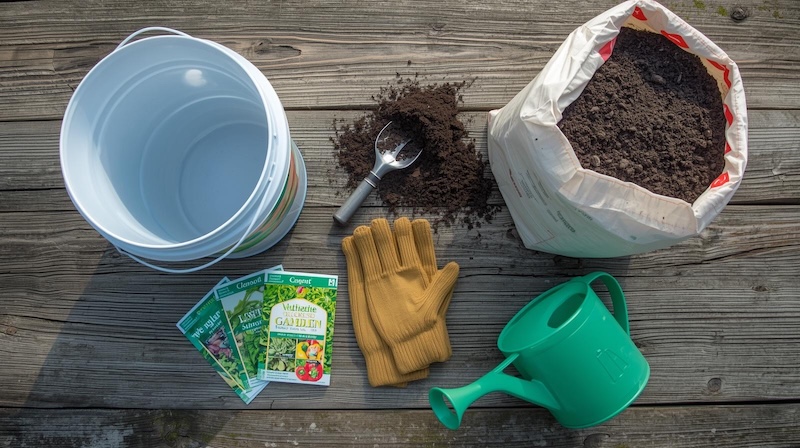
If you’re starting a bucket garden, a few simple supplies make things easier.
Cordless Drill for Drainage Holes
High – Quality Potting Soil for Containers
Tomato Cages or Plant Supports
With just a few buckets, good soil, and sunlight, you can grow an impressive amount of food.
If you’re interested in building a larger food system, you might also enjoy my guide to setting up an off-grid garden and greenhouse where we grow much of our own food at the cabin.
Final Thoughts
You don’t need acres of land or perfect soil to grow your own food.
Growing vegetables in 5 gallon buckets makes gardening possible almost anywhere — patios, balconies, small yards, or off-grid cabins.
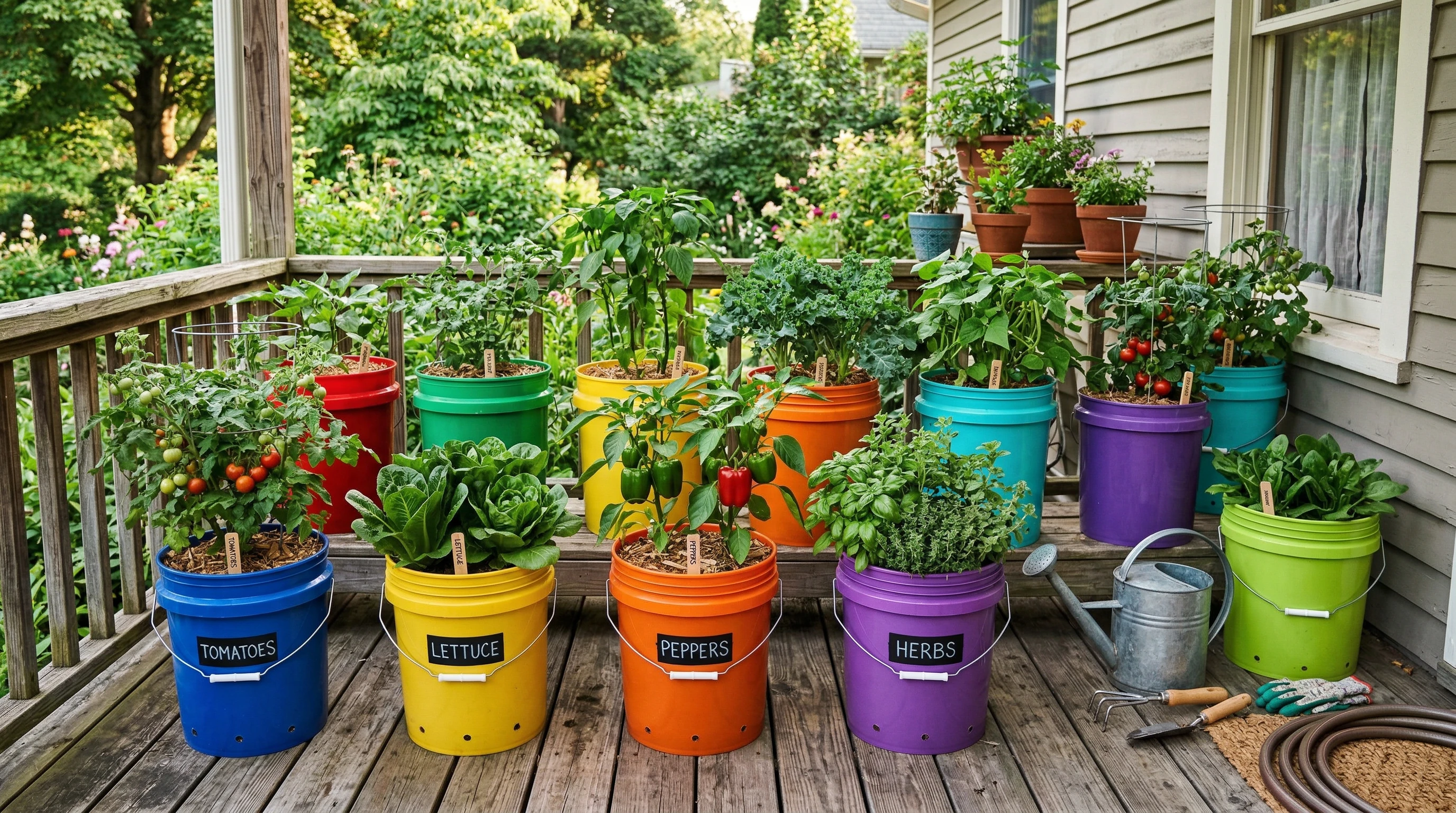
Even a handful of buckets can give you fresh lettuce, herbs, peppers, and tomatoes right outside your door.
Start with a few easy vegetables, experiment each season, and before long you’ll have a productive little bucket garden supplying fresh food for your kitchen.
Sometimes the simplest garden setups turn out to be the most rewarding.
This article may contain affiliate links. As an Amazon Associate, I earn from qualifying purchases at no extra cost to you.
© 2026, Teresa. All rights reserved.
I just read the article on vegetables you can grow in 5‑gallon buckets and it’s a really inspiring resource for anyone interested in container gardening. I appreciate how it not only lists a wide variety of plants — from tomatoes and peppers to leafy greens like lettuce and spinach, as well as herbs like basil and dill — but also gives practical advice on things like choosing quality soil, creating drainage holes, and managing watering since buckets dry out quicker than garden beds. I liked the mix of easy beginner options and slightly more advanced choices like broccoli and bush cucumbers. It makes me curious about your own experience. Have you tried growing any of these vegetables in buckets before, and if so, which ones produced the best results for you this season
I grow my peppers and tomatoes in 5 gallon buckets every year and they do very well. I’ve also grown cucumbers, zuchinni, cantaloupe and herbs. They have all done well.
This was a great read. I’ve actually tried growing a few things in buckets before—mostly tomatoes and peppers—and it surprised me how well they did, especially compared to fighting with poor soil in the ground.
I like how you mentioned being able to move them around. That’s honestly one of the biggest advantages. Being able to chase the sun or bring them in during rough weather makes a huge difference.
I haven’t tried root vegetables like carrots or beets in buckets yet, so that part caught my attention. Have you found they need a deeper bucket or just really loose soil to do well?
This makes me want to expand what I’m growing this season
Hi Jason, I have grown beets and carrots in buckets and they do very well. I use 5 gallon buckets which are plenty deep enough for them.